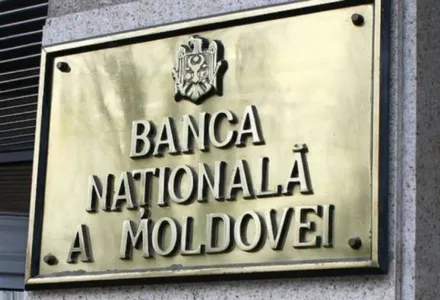
News about Monetary policy
The increase of the prime rate by the National Bank of Moldova from 5% to 6.5% has caused mixed reactions among MPs. Some consider the measure necessary to curb inflation, while others warn of negative consequences for investment, lending and living standards.

The Executive Committee of the National Bank of Moldova (NBM), at its meeting held on May 7, 2026, unanimously increased the prime rate by 1.5 percentage points at once, in order to prevent the risks of increasing inflationary pressure amid the global price situation.
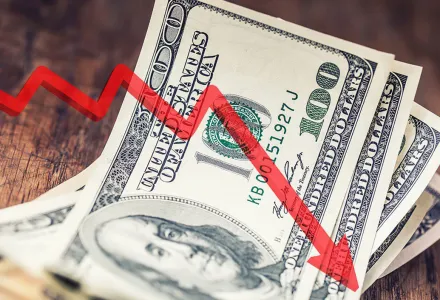
By the end of the day on May 6, the dollar exchange rate fell to the lowest level since the beginning of the war in the Middle East. The reason was the appearance of information that Washington and Tehran came close to signing a peace agreement.
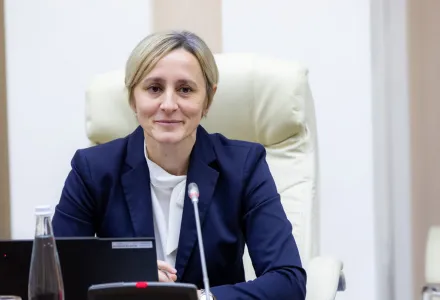
Anca Dragu, Governor of the National Bank of Moldova (NBM), has outlined Moldova’s prospects for capital market and mortgage development. Dragu made a speech entitled “Mortgage lending in Moldova: market perspectives and development directions” in Stavanger, Norway, where she is participating in the 38th plenary meeting of the European Council for Secured Bonds (ECSB).

Prime Minister Alexandru Munteanu urged the ministers and all the involved institutions to ensure a close and productive cooperation with the International Monetary Fund (IMF) mission, which will visit Chisinau between May 7 and 20, and to take the visit “with the utmost seriousness”.

A mission of the International Monetary Fund (IMF), headed by Alina Iancu, will visit Moldova from May 7 to 20, 2026. The purpose of the visit is to coordinate policies under the new program.
European Union countries’ oil and gas import costs rose sharply in March-April 2026, exceeding an additional €30 billion, European Commissioner for Energy Dan Jorgensen told a briefing in Brussels.

The number of payments made with cards issued in Moldova continues to grow.

The Romanian leu weakened to a new historic low against the euro on Monday, according to the National Bank of Romania (NBR).
It is established that the subscription period for SS for individuals opens at 00:00 hours on the first day of its announcement and closes at 15:00 hours on the closing day.
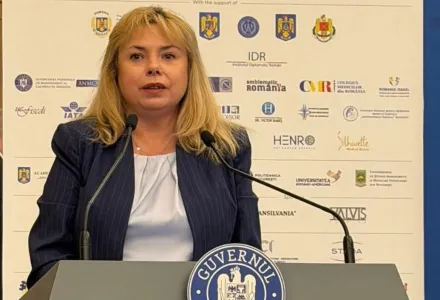
Moldova has saved almost 7 million euros in 6 months after joining the Single Euro Payments Area (SEPA), as the commission for transfers has been reduced to 0-3 euros, Anca Dragu, Governor of the National Bank of Moldova, said at the official opening of the event “Bucharest Leaders’ Summit: United for a Better World”.
NEW YORK – As the economic consequences of U.S. President Donald Trump’s war against Iran become clear, policymakers around the world are losing patience. That became abundantly clear at the recent spring meetings of the International Monetary Fund and World Bank in Washington, D.C., where British Finance Minister Rachel Reeves bemoaned the “madness” of a war that is “not ours.”
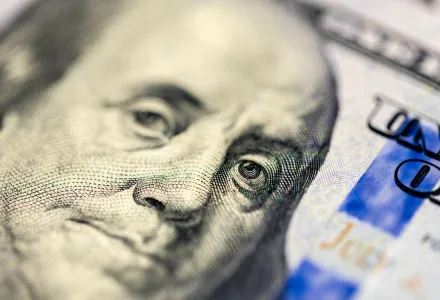
The U.S. national debt has exceeded 100% of GDP, reaching $31.27 trillion for the first time since 1946. Thus, the country is rapidly approaching the historical record debt-to-GDP ratio of 106%, set in 1946. Now the U.S. national debt is $31.27 trillion, the volume of the economy – $31.22 trillion

The dollar strengthened after the Federal Reserve kept interest rates unchanged, signaling a mood for policy tightening. The latest Federal Reserve (Fed) meeting showed the central bank’s increasingly hawkish stance. The trend has put pressure on most Asian currencies, including emerging market currencies.
EU expands subsidies for businesses affected by rising fuel prices. The European Commission has allowed EU countries to increase state subsidies for businesses to cover part of the additional costs of fuel and fertilizers.

The dollar is falling at the start of the week amid forecasts of US-Iran talks and central bank action. Waning hopes for an agreement to end the war in the Middle East are keeping investors on edge ahead of a series of central bank meetings later this week.
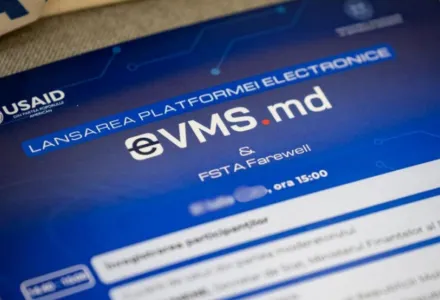
In April 2026, Moldova recorded an agiotic demand of the population for government bonds, which exceeded the authorities’ expectations. Within the April subscription, citizens invested more than 131.5 million lei through the eVMS.md platform, given that the Ministry of Finance’s offer amounted to 85 million lei.

Central banks of the world are preparing for a “stable state of affairs” against the backdrop of worsening volatility in the energy market and are in no hurry to change the cost of borrowing. Many financial analysts come to this conclusion in their publications, considering this position to be fundamentally different from the inflationary crisis of 2022.

So far, 376 decisions on the merger of mayoralties have been taken at the local level, said Alexei Buzu, secretary-general of the government, in connection with the parliamentary approval of a law that simplifies the process of voluntary merger.

The union demanded “legislative predictability” and the urgent implementation of European norms that require the minimum wage to be 50% of the projected average wage.