Send us a message, and we will definitely consider your suggestions and comments.

Prime Minister Vasile Tofan met today with representatives of the National Confederation of Employers of Moldova and business associations. During the dialogue, the parties discussed measures to reduce red tape and improve conditions for investment and business development.

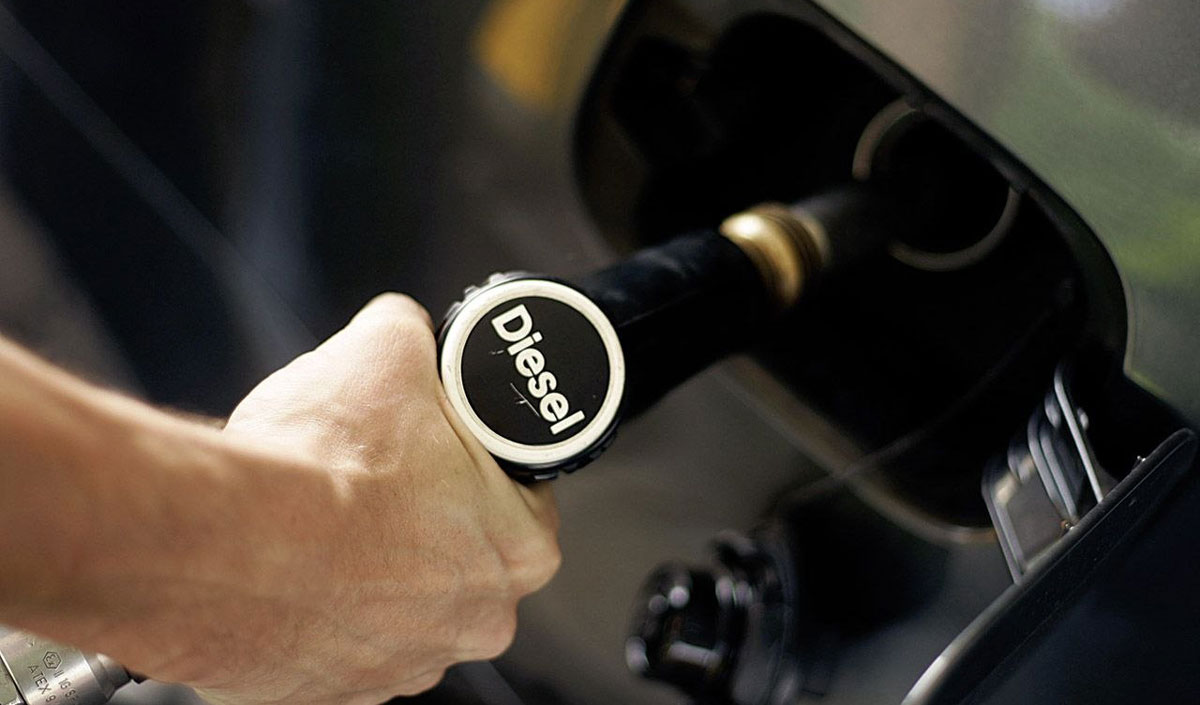
From 15 September, the National Energy Regulatory Authority (NARE) set new price caps: A-95 petrol – 33.26 lei per litre, plus 22 bani. Diesel – 34.97 lei, plus 51 bani. A full 50-litre tank of diesel now costs around 1,749 lei.

From 1 January 2027, the new Classification of Economic Activities of Moldova, Edition 2 (CEAM Ed. 2.1) will come into force. It will replace the current CEAM-2.

On 16 September, the National Energy Regulatory Agency of the Republic of Moldova updated the record for the maximum retail price of diesel fuel on the country’s market to 35.16 lei per litre (+0.18 lei per litre). The price cap for COR 95 petrol is 33.35 lei per litre (+0.09 lei per litre).
In 2027, the wages of staff at healthcare institutions funded under the compulsory health insurance (CHI) scheme may be increased. As this category is not covered by the draft law on public sector wages, which the government plans to adopt in October, the issue of increasing their wages will be dealt with separately – using funds from the Compulsory Health Insurance Fund.

The issue of streamlining and speeding up freight transport via the Danube navigation channel (the Reni–Giurgulești section) and via road border crossings from the Republic of Moldova to Romania was analysed yesterday at meetings between senior officials from the MAIA and MIDR ministries and operators in Moldova’s grain sector. Following the discussions with business representatives, a meeting between the MIDR Minister and the European Commissioner is scheduled for today, and a working visit by the MAIA Minister to the port of Giurgiulești is planned for Wednesday.

Finance Minister Victoria Belous explains the Government’s proposal to abolish the tax relief for private schools and maintains that the measure does not signify a withdrawal of support for education. According to the minister, the tax will be levied on profits, not on the schools’ revenue or the fees paid by parents.
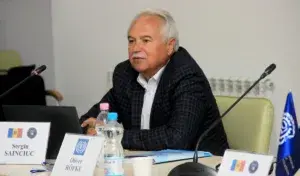
The national minimum wage must ensure a decent standard of living for low-income workers, argues Sergiu Sainciuc, vice-president of the National Confederation of Trade Unions of Moldova. He says that a figure of 8,000 lei could provide better protection for low-income workers and would take into account the minimum necessary for a decent standard of living.
The authorities are considering changes to the way social assistance is provided, including the introduction of a maximum period during which a family can receive this support.
The National Bureau of Statistics (NBS) is today publishing an official flash estimate of GDP for the second quarter and the first half of 2026, according to which a persistent stagnation in economic growth has become apparent.

In Moldova, it is proposed to establish the principle of a uniform mark-up on medicines throughout the country, regardless of where they are sold.

The state intends to provide official support for export credits to small and medium-sized enterprises. Moldovan legislation will therefore be amended to include the concept of an ‘export credit’, as well as related guarantee instruments.

The Government of the Republic of Moldova is examining a draft agreement with Mongolia on the abolition of visas for holders of diplomatic and service passports.

Environment Minister Gheorghe Hazder stated that, with the onset of cold weather, the number of cases of illegal felling and the sale of timber without documentation is increasing in the country. The authorities therefore intend to monitor the harvesting and transport of timber, as well as to verify its origin in people’s yards and on their properties.

Huawei Technologies has joined the National Confederation of Employers of the Republic of Moldova (CNPM).

One of the most hotly debated topics in the 2027 budget and tax policy remains the increase in the VAT rate on HoReCa services from 8 per cent to 12 per cent. Experts and market participants agree on one thing: it is already a positive sign that the government has reined in its enthusiasm and abandoned its initial intention to raise VAT for hotels and catering straight away to 20 per cent.

The total balance of deposits in Moldova’s banking sector at the end of the first half of 2026 increased by 8,002.2 million lei, or 5.5 per cent, to 152,425 million lei. This is evidenced by the latest data from the National Bank of Moldova (NBM), which reflects sustained demand for the country’s financial sector services.
The government is considering reducing the state’s involvement in the economy through the transparent and competitive privatisation of certain companies, provided there are no clear grounds for retaining them in state ownership. This was stated by Prime Minister Vasile Tofan following a meeting with Svetlana Cerovic, the International Monetary Fund’s (IMF) Resident Representative in the Republic of Moldova.

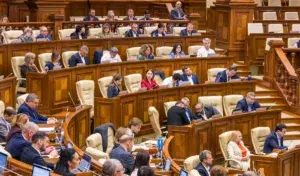
The draft budget and tax policy bill was passed at first reading by 54 votes. The debate lasted almost six hours. The document contains over 1,600 pages.”
Prime Minister Vasile Tofan, as promised, presented on Wednesday 9 September a deregulation concept which provides for the abolition of excessive permits and duplicative procedures, the digitisation of a number of processes, and a reform of the system of state inspections of businesses. The proposals affect around 100 regulatory acts and provide for a transition to a more risk-based approach to the supervision of businesses.