From 25 September 2026, the National Bank of Moldova will issue a commemorative coin marking ‘35 years since the founding of the Academy of Economic Sciences of Moldova’.

The limits on foreign exchange transactions carried out without authorisation from the National Bank of Moldova will be gradually increased. The draft law amending the Law on Foreign Exchange Regulation was adopted by Parliament at its second reading.

At the end of the second quarter of 2026, the financial sector of the Republic of Moldova remains stable and demonstrates an adequate level of resilience to external and internal economic risks. These conclusions are set out in the official Financial Stability Assessment Report published by the National Bank of Moldova (NBM).
Parliament will examine at first reading a draft law setting out measures to strengthen the independence of the National Bank of Moldova (BNM). The Committee on Economy, Budget and Finance has approved the report on the draft.

Moldova’s banking sector is seeing high levels of activity from corporate clients. According to the National Bank, in August 2026 the total volume of new deposits attracted reached an impressive 27,085 million lei. The volume of new deposits in August, however, fell compared with July, when banks attracted 30,678 million lei.
In August 2026, the net demand for foreign currency from economic agents in Moldova was fully met by the net supply of currency from private individuals. According to data from the National Bank of Moldova (NBM), the coverage ratio stood at 110.3 per cent, which is higher than July’s figure of 100.2 per cent.

The Ministry of Finance has announced the start of a new subscription round for government securities from 21 September to 5 October 2026 via the eVMS.md platform.

In August 2026, the banking lending market showed signs of cooling. According to the latest report from the National Bank of Moldova (NBM), the volume of loans granted fell by 2.5 per cent compared with the previous month.

The outflow of cash from the banking system in August exceeded the inflow by 20 million lei. Regular reports from the National Bank confirm an established trend: demand for cash remains high against a backdrop of seasonal holidays and retail activity, whilst cash returns to the system with delays.
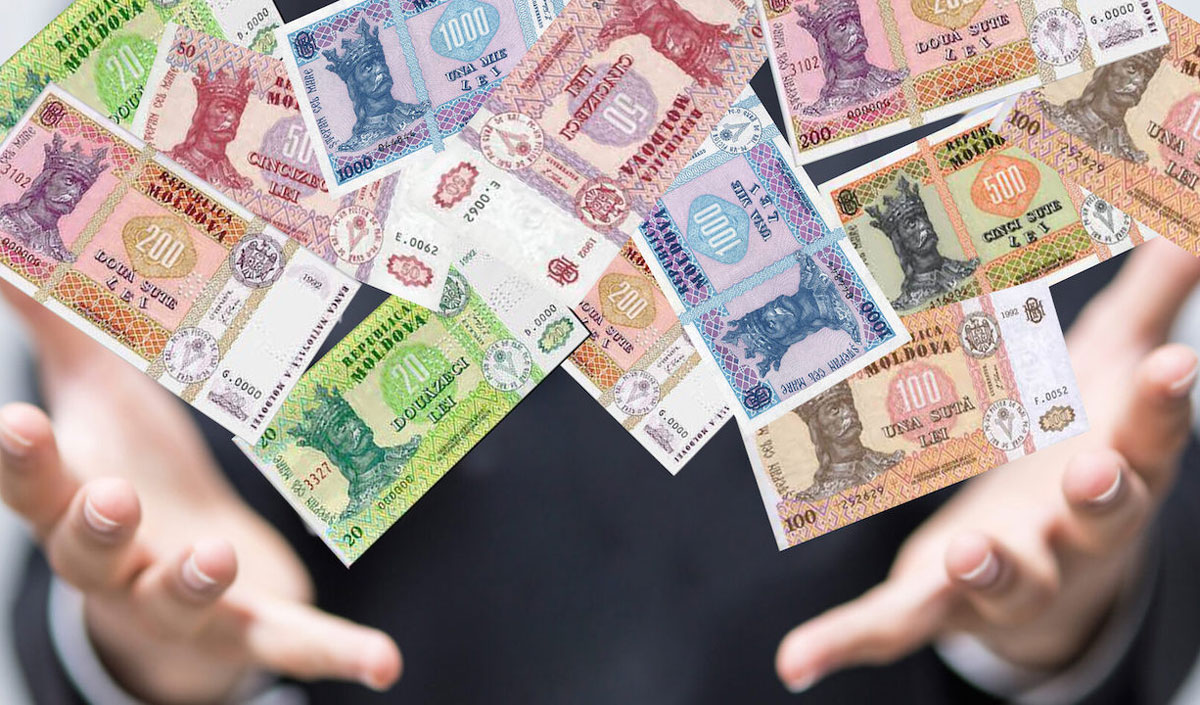
The National Bank of Moldova (NBM) is seeking recognition from the European Banking Authority (EBA) that the Republic of Moldova’s prudential banking system is equivalent to that of the European Union. The European Bank for Reconstruction and Development (EBRD) has expressed its full support for these efforts.