By the end of the day on May 6, the dollar exchange rate fell to the lowest level since the beginning of the war in the Middle East. The reason was the appearance of information that Washington and Tehran came close to signing a peace agreement.

The dollar weakened against most major currencies on Wednesday after the U.S. signaled it may be close to an agreement with Iran. President Donald Trump said he would briefly suspend the operation to escort ships through the Strait of Hormuz, citing progress toward a comprehensive agreement with Iran.

According to the National Commission on Financial Market, at the end of April the second issue of corporate bonds within the IV program of public offering of commercial bank maib was successfully registered in the Register of securities issuers.

The Romanian leu weakened to a new historic low against the euro on Monday, according to the National Bank of Romania (NBR).

Moldova has saved almost 7 million euros in 6 months after joining the Single Euro Payments Area (SEPA), as the commission for transfers has been reduced to 0-3 euros, Anca Dragu, Governor of the National Bank of Moldova, said at the official opening of the event “Bucharest Leaders’ Summit: United for a Better World”.

NEW YORK – As the economic consequences of U.S. President Donald Trump’s war against Iran become clear, policymakers around the world are losing patience. That became abundantly clear at the recent spring meetings of the International Monetary Fund and World Bank in Washington, D.C., where British Finance Minister Rachel Reeves bemoaned the “madness” of a war that is “not ours.”

The dollar strengthened after the Federal Reserve kept interest rates unchanged, signaling a mood for policy tightening. The latest Federal Reserve (Fed) meeting showed the central bank’s increasingly hawkish stance. The trend has put pressure on most Asian currencies, including emerging market currencies.

Coca-Cola, one of the world’s largest beverage makers, started 2026 with results above market expectations, raising its full-year profit forecast. Against this backdrop, the company’s shares rose more than 2% in pre-market (before the start of main trading).

Leading banks recommend their clients to buy commodity currencies amid the ongoing conflict between the U.S. and Iran. In the developed countries segment, these are the Norwegian krone and the Australian dollar, and in the developing countries segment – the Kazakh tenge, the Brazilian real and the Nigerian naira.

The dollar is falling at the start of the week amid forecasts of US-Iran talks and central bank action. Waning hopes for an agreement to end the war in the Middle East are keeping investors on edge ahead of a series of central bank meetings later this week.

After a decline in previous years, diaspora remittances have shown an upward trend since the beginning of 2026, remaining an important source of support for the solvency of the Moldovan population. In March, $175 million was received. This is more than in January and February and even surpassed the record of the traditionally peak December 2025 ($173.77 million).

As of spring 2026, the foreign exchange market of Moldova is characterized by high volatility and instability. At the same time, the situation with meeting the demand for currency is difficult, but does not indicate a complete deficit.

The dollar, considered a defensive asset, rebounded amid renewed tensions between the US and Iran. Hopes for a peace agreement are fading as Iran has said it will not participate in the talks. The Strait of Hormuz in the spotlight: Iran has once again blocked this crucial waterway.

Due to the Gulf War, the inaction of the U.S. Federal Reserve and tightening policies in Europe and Asia-Pacific, some currencies are pulling away from the weakening U.S. dollar.

Major Wall Street banks, including Deutsche Bank and Wells Fargo, believe that the dollar’s rise is over. The reason is the decline in tensions around Iran and the return of investors to risk.

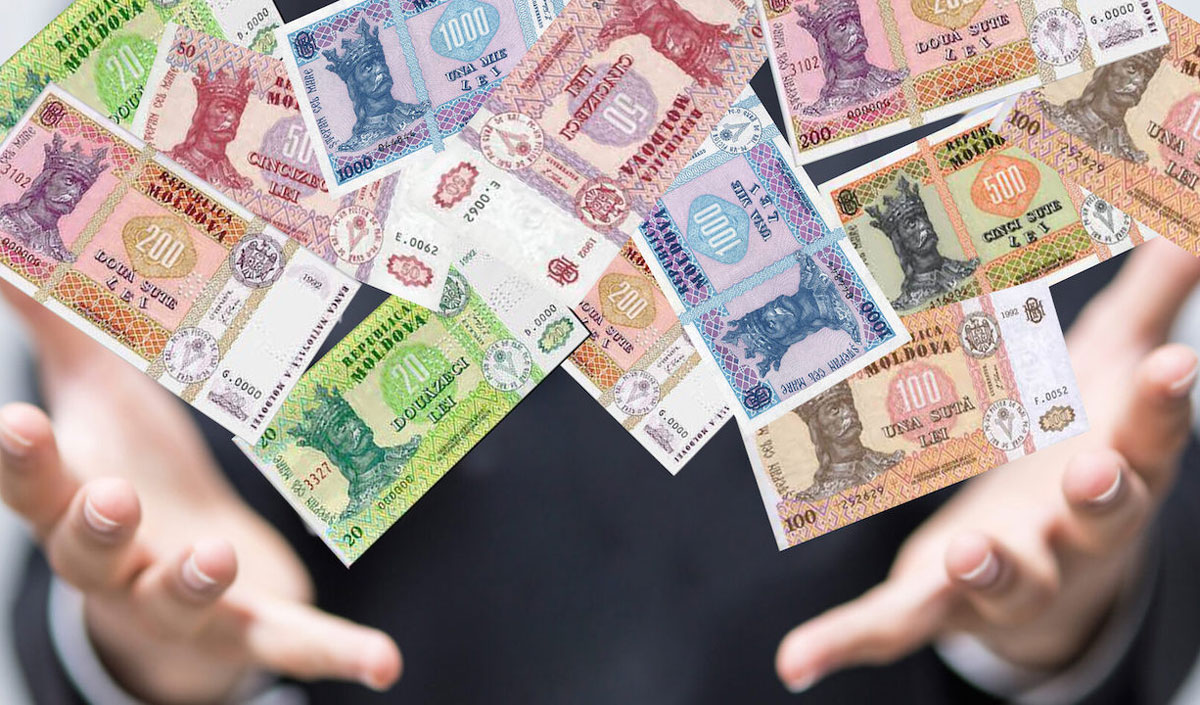
In April, the Moldovan leu showed a moderate strengthening against the US dollar and a slight weakening against the euro.

Polish Finance Minister Andrzej Domanski has urged Poles to keep cash at home in case of possible emergencies.

The dollar is nearing six-week lows as hopes for talks with Iran offset the military risk premium, dampening hopes for a constructive outcome to U.S.-Iran talks and raising risk appetite among investors in financial markets.

The weakening of the dollar in the current environment may be mainly due to changes in US monetary policy and geopolitical factors affecting commodity markets.

The price of the first cryptocurrency rose to $75k for the first time since mid-March.