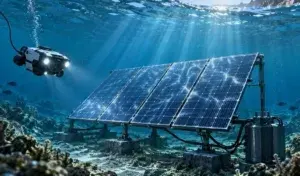
Scientists tested perovskite solar panels at a depth of 10 metres in the South China Sea. Over two hours of operation underwater, they generated 324 milliwatt-hours of electricity. Laboratory tests show that, under such conditions, the panels could potentially operate for around five and a half years.
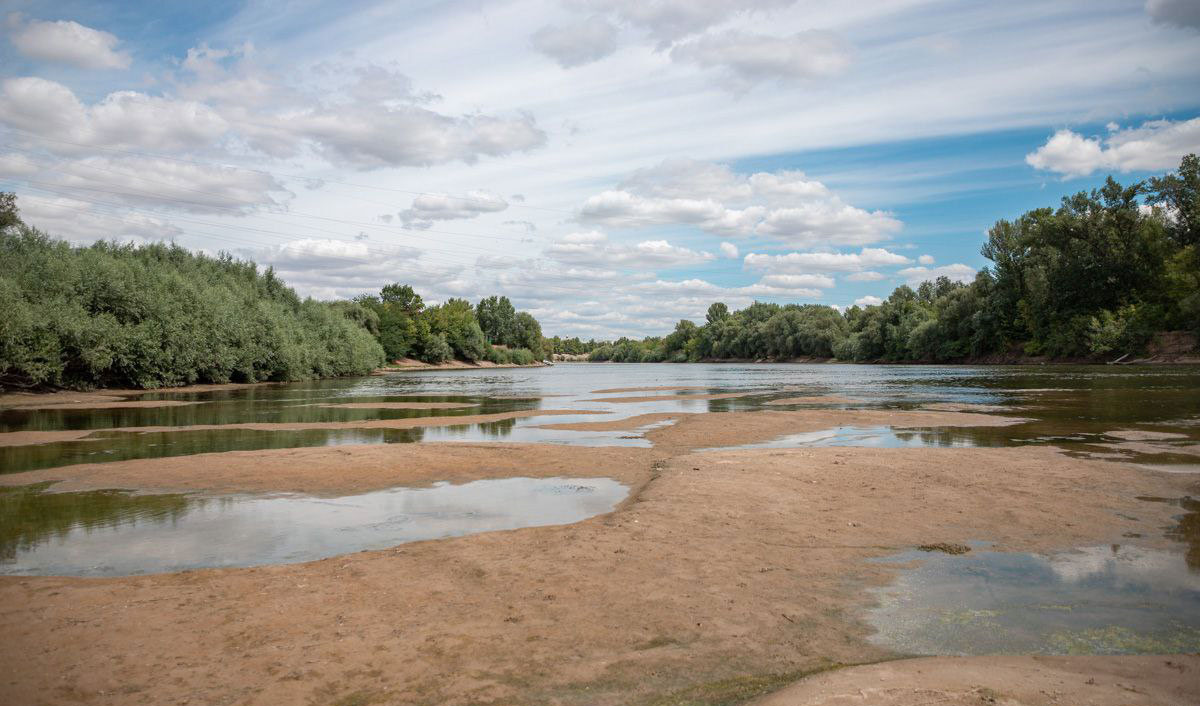
For the duration of the state of emergency, Moldova is suspending water abstraction from the Dniester and Prut rivers for irrigation purposes. At the same time, restrictions are being introduced on the use of drinking water and surface water for watering green spaces, street cleaning and filling swimming pools.
Over 5,000 charging stations for electric vehicles are set to be installed in the Belarusian capital by 2030. Around 70 per cent of these will be for fast or super-fast charging, with the latter allowing a vehicle to be charged in 10–20 minutes.

In Chișinău, staff from the Environmental Protection Inspectorate identified a number of serious breaches of environmental legislation. During on-site inspections, inspectors put a stop to the illegal trade in natural resources and documented instances of improper waste management.

The Chisinau Municipality took part in the international conference ‘Tomorrow.City Shanghai 2026’, held in Shanghai.

An excise duty on electricity will be introduced from 1 January next year, but only for businesses. It will not apply to electricity and fuel used by households.

The water level in the Dniester Reservoir has fallen to the psychological threshold of 111 metres above sea level. Consequently, the Moldovan-Ukrainian Commission on the Dniester will have to take a difficult decision that has been postponed time and again. Whatever that decision may be, the consequences will be severe.

Bentley has unveiled its first fully electric car – the Torcal, priced at £173,000, or around $229,000. For the British manufacturer, this marks its first step into the fully electric luxury car segment.

At present, there are two Ukrainian missions in Moldova – one for monitoring and the other for financial and technical planning – as part of the Intergovernmental Commission on the Dniester. It appears that within a few days they will reach a decision regarding the volume of water to be released from the Dniester Reservoir downstream (for the time being) of the river.

Moldova and Kazakhstan are due to organise, in the near future, a meeting of the Intergovernmental Commission on Trade and Economic Co-operation, which will help to identify and establish areas of collaboration between the two countries. The matter was discussed by the Deputy Prime Minister and Minister for Foreign Affairs, Mihai Popșoi, and the Minister for Foreign Affairs of Kazakhstan, Mukhtar Tileuberdi, during a meeting in New York.