News about Ukraine
Dan Dungaciu, a Romanian sociologist and first deputy chairman of the Alliance for the Unification of Romanians (AUR) party, believes it is time for Romania to stop providing financial support to other countries during this extremely difficult period. He criticizes the lack of transparency in how these funds are used.

Ukrainian President Volodymyr Zelenskyy has proposed appointing Serhiy Koretsky, the CEO of Naftogaz of Ukraine, as prime minister. The nomination has already been submitted to the Verkhovna Rada, where lawmakers are expected to consider it in the near future.

German Chancellor Friedrich Merz outlined two main negative scenarios for Ukraine and Moldova: the threat of direct military aggression in the event of a Ukrainian defeat, as well as a significant slowdown or change in the format of their European integration.

European Union member states have agreed to extend temporary protection for Ukrainians for another year—until March 4, 2028. At the same time, the Council of the European Union approved new conditions for granting this status to some future applicants.

The Russian military carried out a series of strikes on Ukrainian port infrastructure. According to the Russian Ministry of Defense, four vessels used to deliver cargo for the Ukrainian Armed Forces were struck on the night of July 15.

On Tuesday, July 14, 2026, negotiations between the European Union and representatives of Moldova and Ukraine officially began in Brussels on the sixth cluster, titled “External Relations” and comprises two negotiation chapters—Chapter 30 (“External Relations”) and Chapter 31 (“Foreign Policy, Security, and Defense”).

Trade volume in the Kyiv Customs District for January–June 2026 totaled $18.2 billion—$4.3 billion more than in the first half of 2025.

Olga Stefanishyna, Ukraine’s ambassador to the United States, will step down amid an investigation into her family’s purchase of an apartment in Kyiv at a price significantly below market value.

The anniversary of the Volhynia tragedy has sparked a new round of political tensions between Poland and Ukraine. Poland’s main opposition party, Law and Justice (PiS), has introduced a resolution in the Sejm opposing Ukraine’s membership in the European Union, while the country’s president, Karol Nawrocki, has announced his intention to legislatively ban the symbols of the Ukrainian Insurgent Army (UPA) within the republic.

Incumbent Prime Minister Yulia Sviridenko is stepping down. According to members of the country’s legislature, she may be appointed head of the Ukrainian Embassy in the United States. President Volodymyr Zelenskyy also announced a cabinet reshuffle and a personnel overhaul of Ukraine’s law enforcement agencies.

U.S. President Donald Trump stated that the United States will grant Ukraine a license to manufacture an unspecified type of interceptor missile for the Patriot air defense systems, which are crucial to Ukraine’s ability to defend itself against Russian ballistic missiles. He added that production could begin in two to three months.

Bulgarian Prime Minister Rumen Radev stated that the country has exhausted its capacity to provide military aid to Ukraine.

Romania has approached Ukraine with a proposal to change the operating algorithm for maritime drones. Bucharest is also in talks to strengthen its air defense system following a recent drone incident.

Moldovan farmers have a chance to harvest the best wheat crop since the beginning of this decade. Officials at the Ministry of Agriculture and Food Industry (MAIA) estimate the potential 2026 harvest from 339,000 hectares of wheat crops at 1.58 million metric tons (4.6 metric tons per hectare).

Greece, Bulgaria, and Romania are jointly developing a new multimodal transport corridor that will connect ports on the Aegean and Black Seas to the Danube via a network of roads, railways, and seaports. The project will be part of the EU’s Trans-European Transport Network (TEN-T) and is expected to strengthen the region’s transport connectivity.

Kyiv and Berlin have established a working group to facilitate the return of Ukrainians of draft age who have left the country illegally. The mechanisms are already being discussed officially, but the details have not yet been disclosed.

Ukraine is tightening controls over its organic food market. The country’s parliament recently passed a new law on state regulation of organic production, distribution, and labeling of organic products.

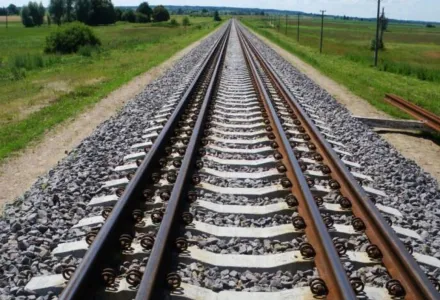
The European Commission is urging Ukraine to accelerate the expansion of the European rail network in the country. The new transport link is intended to provide a direct connection to the EU’s transport system. Officials in Brussels note that such steps will facilitate integration into the Trans-European Transport Network (TEN-T) and aid in the country’s post-war reconstruction. This was reported by the Odessa Journal website.
Officials from the National Anti-Corruption Center (NAC), acting under the procedural guidance of the Anti-Corruption Prosecutor’s Office, detained Tatyana Nistorica, State Secretary of the Ministry of Agriculture and Food Industry, as well as a representative of one of the commercial companies. The detention took place as part of a criminal case initiated on charges of corruption.

Ukraine can leverage its strengths in the agricultural sector in its relations with third countries and opt out of the subsidy system in place in the European Union. This view was expressed by Katarina Maternová, the EU Ambassador to Ukraine.