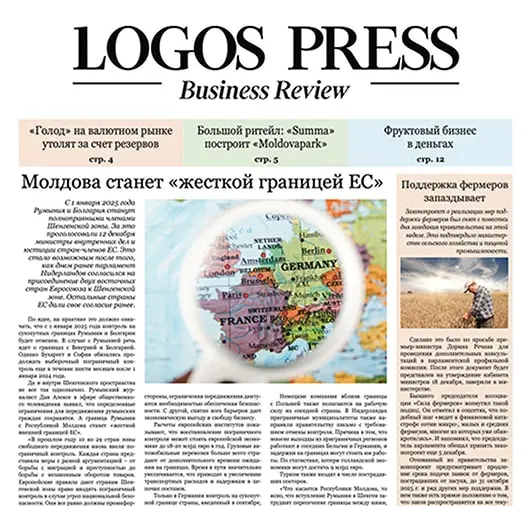
News about Economy of Moldova
Fuel prices in Moldova continue to rise rapidly. As of today, the National Energy Regulatory Agency (ANRE) has set new price caps for gasoline with an additive at 15 bani—up to 28.53 lei, and for diesel fuel, an immediate increase of 44 bani—to 27.11 lei.

Alexandru Slusari, director of the Forța Fermierilor Association, announced on his Facebook page that he was resigning from his position as a member of Energocom’s board of directors. According to him, he will submit his resignation in protest of the company’s decision to ask ANRE to raise the natural gas tariff.

Table grape growers are beginning to share their thoughts on the size of the harvest and purchase prices. Opinions vary.

Reducing bureaucracy, promoting integrity, and strengthening cooperation between the private sector and government agencies were discussed today at a meeting at the Agency for Agricultural Interventions and Payments (AIPA). The event was organized as part of the “STIC – Building Trust Between IMM and the Public Sector in the Republic of Moldova” project. The project is supported by the Swiss government.

Farmers in Moldova are once again struggling with a seasonal shortage of labor. This is a problem for all agricultural producers, but it is particularly acute for fruit growers.

The Economic Academy of Moldova (ASEM) and FPC Bioprotect SRL have signed a five-year agreement on cooperation in workforce training. Strengthening ties between the academic and business communities will create opportunities for professional training for students and the implementation of dual education programs.

While Moldova’s population continues to decline, the size of the government bureaucracy, on the contrary, is growing. Economic expert Tatiana Iovv reported this on her social media page.

Companies that incur expenses for training employees through the dual education system will be able to receive reimbursement for those expenses even if they owe money to the state budget.

Opportunities for the development and financing of decarbonization projects in the Republic of Moldova were discussed during an official meeting between Carolina Novac, State Secretary of the Ministry of Energy (ME), the head of the Department of Renewable Energy and Green Mobility, Nicolae Magdil, and representatives of SDG Impact Japan, a company specializing in the creation and development of new enterprises aimed at addressing sustainable development challenges.

Moldova’s domestic public debt continued to grow steadily in June 2026, reaching 57.34 billion lei by the end of the month. In the first half of this year, it increased by more than 5.34 billion lei due to the active issuance of government securities.
Big things start small. A 1.23-kilometer “white version” of a rural road has been built in the village of Telitsa (Anenii Noi District) with support from the International Fund for Agricultural Development (IFAD) program in Moldova.

Following the rise in wheat prices in Ukraine and Romania, triggered by the blockade of shipping in the Sea of Azov, wheat prices have risen in Moldova. Whether this is an isolated (and short-term) occurrence or the beginning of a widespread (and sustained) trend will become clear within one or two weeks.

Some destinations are overrun with tourists, while others remain virtually unknown.

Vasile Tofan, the prime minister-designate of the Republic of Moldova, announced the conclusion of consultations with the interim ministers on the preparation of a governance program and the formation of the future executive branch, whose composition is expected to be announced on Friday.

In the first quarter of 2026, according to data from the Ministry of Economic Development and Digitalization, the average wage in the private sector rose by 5.9% in real terms, while in the public sector it fell by 1.5%.

Chisinau International Airport ended 2025 with a sharp increase in financial performance, becoming the leading source of revenue among Moldova’s state-owned enterprises. Its net profit reached 712 million lei—twice as much as in 2024, when it stood at 337 million lei.

Progress on the “Moldova – Sustainable Water Supply (Irrigation) Project” were discussed during an official meeting between Liudmila Catlabuga, Minister of Agriculture, Food, and Rural Development (MAIA), and Elena Gordeeva, Director of the Infrastructure Department for Europe at the European Bank for Reconstruction and Development (EBRD).

Restrictions on commercial shipping in the Sea of Azov and the Kerch Strait as early as last Friday triggered a 10-euro-per-metric-ton increase in food wheat prices on the Paris Matif (Euronext) exchange. This week began with a significant rise in prices in major European grain-exporting countries, including Romania.

The company is requesting an increase in the drinking water supply rate from 13.99 lei per cubic meter to 15.55 lei per cubic meter. The rate for sewer services may increase from 7.40 lei per cubic meter to 7.68 lei per cubic meter.

The rainfall that fell last week and at the beginning of this week was not heavy enough to damage the first-group winter crop harvest, but it was enough to slow down the harvest campaign in Moldova somewhat. However, the weather forecast for the near future is improving, albeit not dramatically. The harvest will pick up speed. And while there may not be a comprehensive overview, at least the official data on its interim results—as promised by the Ministry of Agriculture, Food, and Industry (MAIA)—will be released in the coming days.