

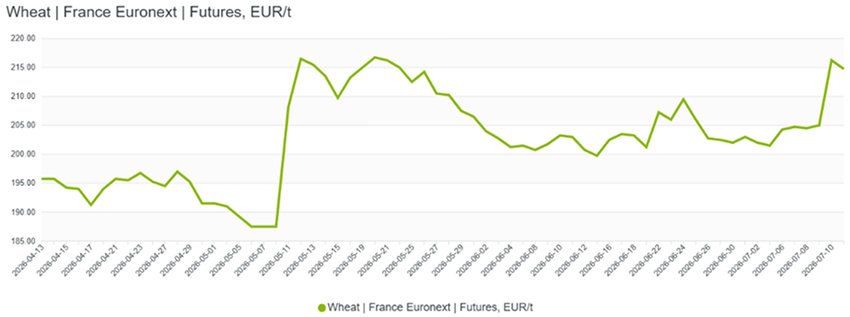
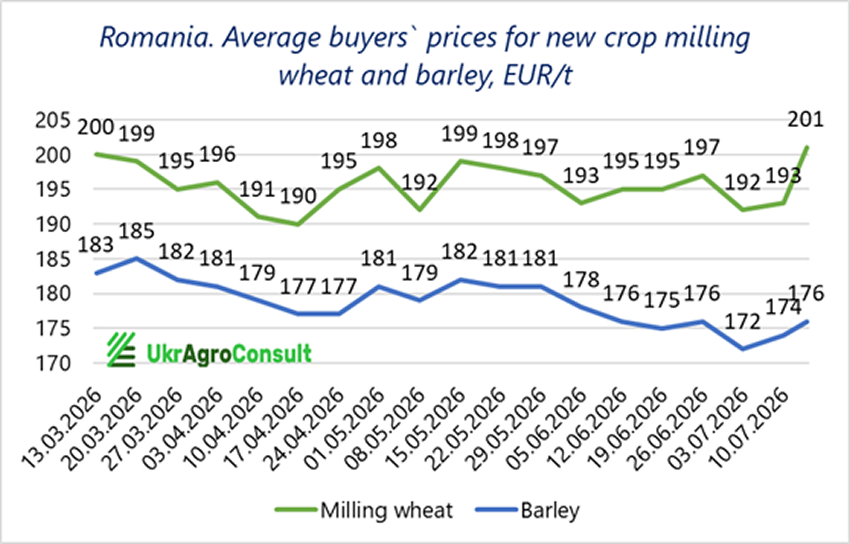
Thus, the average purchase price for Romanian food-grade wheat (12% protein) reached 201 euros/metric ton (on a CPT basis), which is 8 euros/metric ton higher than Friday’s level. The price of food-grade wheat with a protein content of 12.5% rose by 7 euros per metric ton to 205 euros per metric ton (CPT). Wheat buyers view the port of Constanța as a safer and more or less guaranteed alternative to prompt grain deliveries from the Black Sea region, according to ucragroconsult.
Market participants are monitoring the situation, especially in July, when traders must fulfill contracts for large volumes of wheat sold at international tenders. If the naval blockade continues, it will further shift attention toward safer routes and support prices for Romanian, Bulgarian, and French wheat.
Ukraine
In Ukraine, traders also feel that prices have bottomed out and have risen by a couple of dollars over the past week. This is happening despite high initial yield estimates and favorable prospects for the wheat harvest. Some market participants are raising their estimates to 24 million metric tons (compared to 23.3 million metric tons last year and 22 million metric tons—the estimate from May of this year).
Among domestic factors, the market is being supported by the risk of a slowdown in the harvest due to rains in the central part of the country and farmers’ reluctance to sell at rock-bottom prices when production costs have risen. Thus, the market has several reasons for an upward trend.
However, experts from the aforementioned analytical agency advise market participants to keep in mind potential logistical risks related to the conflict, including damage to port and rail infrastructure. This could hinder export growth and put downward pressure on domestic prices.
Moldova
As Logos Press previously reported, Moldovan farmers are also preparing for a harvest of first-group grains that, if not record-breaking, will at least be very good. Weather conditions here have also slowed the harvest somewhat, but not critically. Moreover, according to weather forecasts, the weather is expected to improve. Moldovan farmers are also unlikely to actively sell grain right from the start—they will likely focus on selling oilseeds, rapeseed, and sunflower seeds (as was the case at the beginning of last fall). At the same time, military risks in Moldova are incomparably lower than in Ukraine. Consequently, Moldovan traders, like their Romanian and Bulgarian counterparts, will likely try to take advantage of this “window of opportunity.”


