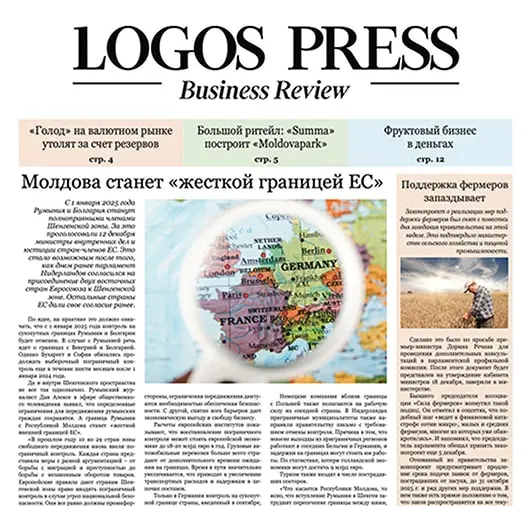
News about European integration
The prospects of Moldova’s future membership in the European Union have long been at the center of discussions – both political and “kitchen” discussions.

Moldova has officially handed over to the Principality of Monaco the chairmanship of the Committee of Ministers of the Council of Europe. The ceremony took place at the end of a ministerial meeting in Chisinau, which was attended by almost 50 delegations.

Production of TV series within the framework of international coproduction will become more accessible. Moldova has signed the Council of Europe Convention on the coproduction of audiovisual works in the form of serials.

“The pressure on Russia must not abate,” Moldovan President Maia Sandu said at the opening of the Council of Europe’s ministerial session, which saw the signing of a Partial Enlarged Agreement on the establishment of a Committee for the Management of the Special Tribunal for the Crime of Aggression against Ukraine.

The Moldovan authorities are studying the possibility of creating a specialized national institution, which will deal with the implementation of large-scale projects. It is about the formation of a single structure capable of managing large-scale investments and increasing the efficiency of the utilization of European funds.

The European Parliament has banned the Georgian TV channel Imedi TV from accessing its building for one year. It is also reported that Moldova has denied accreditation to Imedi TV, Rustavi 2 and PosTV to cover the 135th session of the Committee of Ministers of the Council of Europe in Chisinau. It is noted that the Georgian Foreign Minister plans to participate in the session. In response to these decisions, Tbilisi criticized Strasbourg and Chisinau.

The European Parliament will award the Order of European Merit for the first time. This is a new award established on the eve of the 75th anniversary of the Schuman Declaration to recognize contributions to European integration and the protection of EU values. Among the first recipients are 13 prominent politicians, diplomats and public figures, including President Maia Sandu, former German Chancellor Angela Merkel and former Polish President Lech Wałęsa.

The problems of harmonization of the national tax system with the EU standards and, in particular, the EU VAT Directive were the subject of a training seminar held from 13 to 15 May at the Ministry of Finance.

Drivers of cars with foreign license plates will no longer be able to ignore traffic rules on Moldovan roads. The Parliament adopted a new legislative initiative that introduces a clear mechanism for cross-border data exchange.

Romania’s economy contracted by 1.7% in unadjusted terms in the first three months of the year compared to the same quarter of 2025 and by 0.2% compared to the previous quarter, according to data released on Wednesday by the National Institute of Statistics (INS).

Moldova will host the 135th ministerial session of the Committee of Ministers of the Council of Europe. About 50 delegations of member states, including more than 20 foreign ministers, are expected to participate. The official event will take place on May 15, but delegations will start arriving as early as Thursday, May 14. In this regard, from May 14 to 17, 2026, a special regime of access and movement will be introduced in a number of central zones of the capital, as well as on the routes leading to the airport.

At a meeting on May 13, the Moldovan cabinet approved the appointment of Ambassador Corina Călugăru to the post of state secretary at the Foreign Ministry. Prior to this appointment, she served as ambassador for special missions within the Foreign Ministry.

On the sidelines of a working visit to Bucharest, Moldovan Parliament Speaker Igor Grosu was received at the Elizabeta Palace by Her Majesty Margareta. He thanked the Royal House of Romania for its constant support for Moldova and for its active participation in the development of economic, cultural and European ties between the two countries.

Moldova is in the process of active implementation and adaptation of the European System of Integrated Social Protection Statistics (ESSPROS – European System of Integrated Social Protection Statistics). This process is part of the EU accession commitments, aimed at modernizing the social sector and implementing European standards. The National Bureau of Statistics (NBS) has launched a pilot study.

The director of the National Anti-Corruption Center will be able to serve two terms of five years each, but not consecutively. The relevant draft law was considered on Wednesday, May 13, by the parliamentary commission for national security, defense and public order.

Moldova’s chairmanship of the Committee of Ministers of the Council of Europe ends this week. The “farewell” ceremony will take place in a solemn atmosphere in the presence of numerous delegations, after which Moldova’s mandate will pass to the Principality of Monaco.

The National Bank is stepping up efforts to transition to “environmentally friendly” credit instruments, which should give borrowers significant advantages and enter the country’s “green transition” system in accordance with European requirements. The Central Bank is already holding training seminars with professional participants in the banking system to assess such business initiatives and create appropriate financial conditions for green loans.

The standards governing noise from outdoor equipment will be harmonized with those in Europe.

European Commission President Ursula von der Leyen is causing growing discontent among some EU countries and officials in Brussels. Critics believe that excessive centralization of decisions is beginning to affect the effectiveness of governance and the EU’s ability to respond quickly to economic and geopolitical challenges.

The National Bureau of Statistics (NBS) will conduct a pilot study of income and living conditions in accordance with the EU statistical legislation in the period from May 13 to June 2, 2026. The main objective is to obtain statistical data on living conditions of the population taking into account social aspects: income, housing conditions, health status, education, employment, provision of housing with various amenities and durable goods, etc.