News about Economy of Moldova
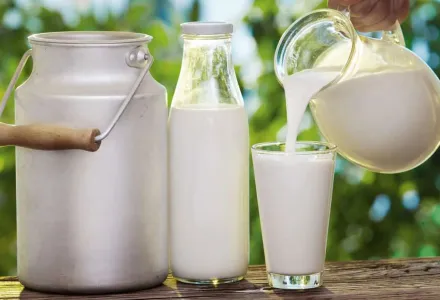
The milk production sector (raw milk) is undergoing a period of structural transformation: the gradual (though not very rapid) expansion of industrial dairy farms is accompanied by a steady decline in milk production on small farms and in the households of the country’s rural population.
UPDATED. Chisinau Mayor Ion Ceban is calling for an urgent extraordinary session of Parliament, urging the government to present a public report on its eight months in office.

Vasile Tofan, senior partner and member of the Horizon Capital Investment Committee, states that Moldova finds itself at a crossroads and that its current resources are virtually exhausted. In his view, the future government needs a “reformer-surgeon”—a leader capable of implementing tough and unpopular economic measures.

UPDATED. Posts are circulating on Facebook and TikTok calling on citizens to gather today, July 4, at the Great National Assembly Square for a flash mob in support of the ruling party and President Maia Sandu. While some posts are urging people to take to the streets, another segment of the online community is calling on the public not to participate in this event.

The Moldovan Ministry of Foreign Affairs and the Ministry of Agriculture and Food Industry organized the “Diplomatic Peach and Cherry Harvest.” According to the organizers, the event is intended to promote Moldovan agriculture and strengthen economic diplomacy.

Logos Press is launching a series of articles by Elena Radu, co-founder and director of the Alfa Institute for Strategic Branding (INBRASA), on creating a new model of statehood through the deliberate restructuring of the country amid the phased crisis of the 21st century.

Representatives from the Ministry of Agriculture and Food Industry participated in the Global Conference on Smart Farming, which took place July 1–3 at FAO headquarters in Rome.

Parliament Speaker Igor Grosu promised farmers that the issue of a potential increase in the VAT on agricultural products to 20% would be resolved in a way that was “better than they had asked for.”

In 2025, investment in Moldova’s free economic zones (FEZs) totaled $36.1 million, a 9.3% increase from the previous year.

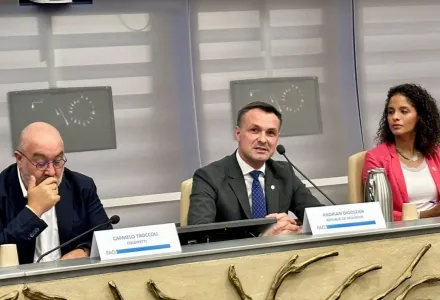
Technical talks between Adrian Digolean, State Secretary of the Ministry of Agriculture, Forestry, and Food (MAIA), and Viorel Guts, Deputy Director-General and Regional Representative of the UN (FAO) Viorel Gutsa took place as part of the Global Conference on Smart Agriculture, held July 1–3 at FAO headquarters in Rome.
Ukraine is tightening controls over its organic food market. The country’s parliament recently passed a new law on state regulation of organic production, distribution, and labeling of organic products.

President Maia Sandu denied rumors of any potential political or structural issues that might have caused tension within the executive branch. The head of state clarified that during the discussions, the former prime minister did not express dissatisfaction with the fight against corruption or other issues, but merely pointed out a problem related exclusively to interpersonal communication with Minister of Education and Research Dan Perchun.

President Maia Sandu stated that the reforms—particularly those related to tax policy and the wage system—could have been developed, coordinated, and explained more effectively to ensure public support and trust. She made this statement at a press conference following Alexandru Munteanu’s announcement that he was stepping down as prime minister.

Agri-food producer associations did not appreciate “Minister MAIA’s ostentatious intolerance of any form of corruption, abuse of power, or protectionism.” However, the leaders of these organizations—some openly, others anonymously—felt it necessary to remind the head of the Ministry of Agriculture and Food Industry of the existence of “the presumption of innocence, professionalism, and human decency as a matter of principle.”

Parliament has established an investigative commission to review the operations of state-owned enterprises. The commission consists exclusively of lawmakers from the ruling PAS party’s faction. The opposition refused to nominate its own representatives, since leadership and control remain in the hands of the ruling party.

In the first six months of 2026, the National Health Insurance Company generated revenues of approximately 7.3 billion lei. These revenues increased by 444 million lei, or 6.5%, compared to the same period in 2025.

Starting in 2027, farmers will be able to take advantage of the “zero VAT rate,” said Parliament Speaker Igor Grosu. According to him, the main problem lies not in the VAT rate itself, but in the accumulation of VAT in the accounts of economic entities and delays in its payment.

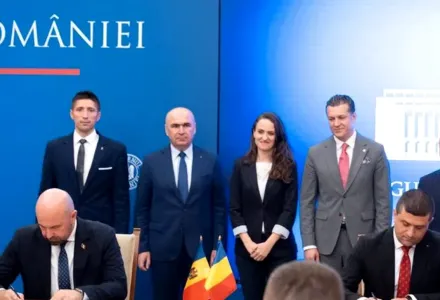
A consortium of Italian companies will begin construction of the first few kilometers of a highway in the Republic of Moldova next year—this will be an extension of the A8 highway currently under construction in Romania.
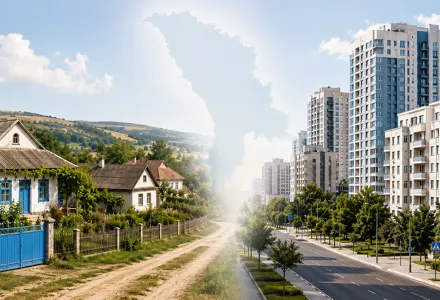
According to data from the State Agency “Real Estate Cadastre” and local public administration bodies, as of January 1, 2026, the officially registered housing stock of the Republic of Moldova (occupied and unoccupied residential units) stood at 1,365,300 units, an increase of 2.1% compared to the situation as of January 1, 2025.
This year, 300 Moldovan companies—twice as many as last year—will participate in the second “Domestic Product” exhibition. It will take place August 28–30 at “Moldexpo” in the capital.