News about Regulation
PARIS—For many years, Europe and China have embodied competing models of development and energy transition. Europe has emphasized markets, common rules, and multilateral organizations, while China has focused on industrial policy, infrastructure investment, and manufacturing. Europe developed regulations that often became global benchmarks (the “Brussels effect”). Meanwhile, China built factories.

Ukraine’s ability to obtain a license to manufacture certain components of the Patriot systems depends not only on the U.S. government’s political stance, but also on the decisions of the companies that own the relevant technologies.

Employees with special status at the Ministry of Internal Affairs are now prohibited from using symbols, statements, or gestures on the internet or in public spaces that incite hatred, insult human dignity, or damage the ministry’s reputation. These requirements are enshrined for the first time in the new Code of Conduct for Employees with Special Status at the Ministry of Internal Affairs, which has entered into force.

The government will provide support to the public during the cold season and will reimburse part of the expenses associated with rising gas prices. This was announced by Parliament Speaker Igor Grosu.

Currently, their operations are regulated by the Capital Markets Act and the Act on Alternative Collective Investment Organizations. The National Financial Market Commission proposes to consolidate the rules, regulate areas not yet covered by the law, and bring it into line with EU regulations.

Starting August 3, the United States will implement a permanent visa bond requirement for certain foreign nationals applying for tourist and business visas. According to a notice from the State Department, consular officers will be able, at their discretion, to require applicants to post a bond of up to $20,000 as a condition for issuing a visa.

Belarusian President Alexander Lukashenko has once again spoken about a return to the Soviet model of governance.

Telephone scams have become one of the main threats to financial security. Agents from the FBI and the U.S. Diplomatic Security Service discussed with Moldovan law enforcement officials efforts to combat transnational call centers that defraud citizens on both sides of the Atlantic.

A National Risk Register will be established to assess threats to national security.

UPDATED. Property confiscated by the state—including real estate, vehicles, equipment, and other assets—may be transferred free of charge to government agencies and organizations that meet the established requirements, for use in social projects and projects in the public interest, rather than being sold solely for commercial purposes.

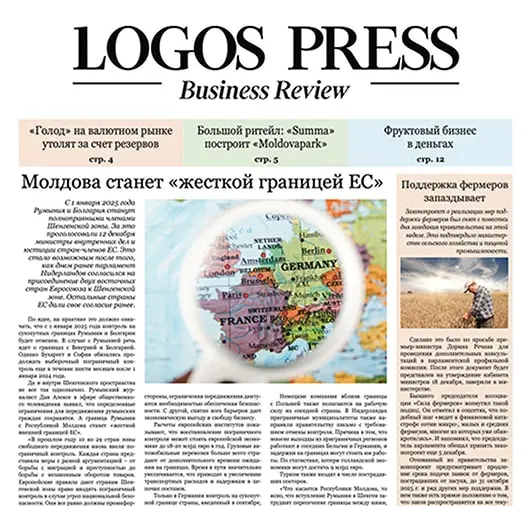
Italy has suspended the Schengen Agreement with Spain, stepping up controls at its sea and air borders. The government of Giorgia Meloni made this decision following a sharp escalation of the migration crisis in the Spanish enclave of Ceuta, where thousands of migrants have arrived.

The excessive growth in lending during the first half of 2026 did not undermine the stability of the banking system. The National Bank of Moldova (NBM) reached this conclusion, noting that while risks do exist, they are moderate. In addition, banks have taken steps to create a safety cushion as required by the regulator, raising the countercyclical capital buffer rate to 2.5% as of the end of May.

Media freedom, European integration, and reform processes in Moldova are the main topics of a recent shadow report published by the Independent Journalism Center (IJC) in collaboration with OBCT and ActiveWatch.

Law enforcement officials uncovered a fraud scheme in which the perpetrators posed as representatives of the “Ukrainian Financial Academy.”

The Parliamentary Committee on Legal Affairs, Appointments, and Immunities is organizing public consultations on a draft law amending the Electoral Code, which provides for changes to the rules governing elections in Gagauzia.

Statements made by representatives of a number of ministries during a meeting of the parliamentary commission investigating the activities of state-owned enterprises point to serious administrative chaos in the public sector management system.

Although the market value of apartments has increased by a factor of 2.9 on average, this does not mean that the property tax will rise by the same proportion. The final decision on the tax rate rests with local authorities.

The government is proposing amendments to the legislation governing the operations of a number of special economic zones (SEZs) and free enterprise zones (FEZs). This decision stems from the findings of an audit by the Accounts Chamber, which identified problems with cadastral registration, property management, and land use.

Spain is facing new political pressure within the European Union over the migration crisis in Ceuta. Following statements by Italian Prime Minister Giorgi Meloni calling for a review of Madrid’s participation in the Schengen Area, Finland has taken a similar stance.

In government agencies and state-owned companies, 439 people—or 1.1% of the total workforce—receive high or very high salaries. Of these, 152 employees earn more than 80,000 lei per month. These figures were presented by Prime Minister Vasile Tofan, who announced a package of measures to reduce unjustified spending and increase transparency in the use of public funds.