News about International trade
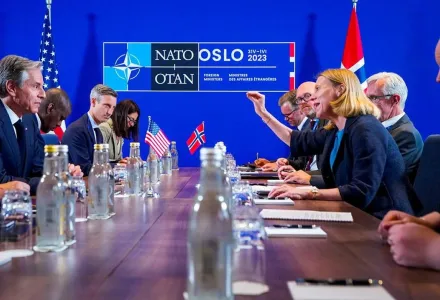
NATO countries were unable to agree on a draft joint statement for the Ankara summit, which will take place on July 7–8. The reason was disagreements among the allies over Ukraine and military infrastructure in Eastern Europe.
The Moldovan Ministry of Foreign Affairs and the Ministry of Agriculture and Food Industry organized the “Diplomatic Peach and Cherry Harvest.” According to the organizers, the event is intended to promote Moldovan agriculture and strengthen economic diplomacy.

On Friday, Ukraine and Moldova cleared another hurdle on their path to joining the European Union. EU member states unanimously agreed to open another cluster of accession negotiations with Ukraine and Moldova—on external relations. An official ceremony is expected on July 14.

Representatives from the Ministry of Agriculture and Food Industry participated in the Global Conference on Smart Farming, which took place July 1–3 at FAO headquarters in Rome.

Copper prices rose along with other industrial metals amid a weaker U.S. dollar and easing concerns that the Fed would raise interest rates in the coming months.

In 2025, investment in Moldova’s free economic zones (FEZs) totaled $36.1 million, a 9.3% increase from the previous year.

Turkey has submitted an official application to the European Payments Council (EPC) expressing its intention to join the Single Euro Payments Area (SEPA). The document emphasizes that Ankara’s participation in this area will enable faster, safer, and cheaper cross-border transfers, which will give a powerful boost to mutual trade and investment with European Union countries.

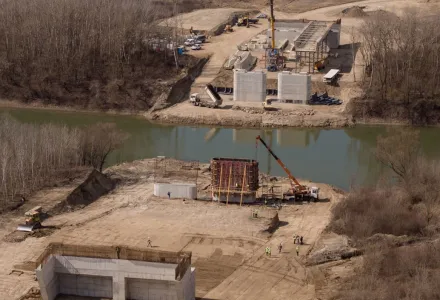
A consortium of Italian companies will begin construction of the first few kilometers of a highway in the Republic of Moldova next year—this will be an extension of the A8 highway currently under construction in Romania.
The 2026 World Cup is still far from over, but even now we can talk about a controversial phenomenon surrounding the tournament. Almost immediately after national teams are eliminated, a wave of coaching changes begins—some step down voluntarily, while others are forced out by circumstances.

The searches and the detention of an official at the Ministry of Agriculture, Food, and Industry (MAIA) are related to Order No. 263 dated June 18, 26, signed by the Director General of the National Food Safety Agency (ANSA) Radu Mustiață. According to information on the agency’s website, the order remains in effect and has not been revoked.

“We’ll run out of money by September. We’re waiting for funds to come in so we can keep going after September,” said Chandramuli Ramanathan, Assistant Secretary-General for Program Planning, Finance, and Budget, on July 1.

The Volkswagen crisis is no longer just a problem for a single automaker. Large-scale layoffs and the possible closure of plants in Germany are becoming one of the most visible signs of the structural decline of European industry, which is rapidly losing ground to its Chinese competitors.

European Commission President Ursula von der Leyen announced in Yerevan that the European Union will provide Armenia with 18 million euros to strengthen and diversify its trade. According to her, the EU intends to help its partners in the face of external pressure and is ready to take practical steps to support them.

As of July 1, new customs rules for low-cost goods ordered from overseas online stores have taken effect in the European Union. Now, for commercial shipments valued at up to 150 euros, a flat customs fee of 3 euros is imposed for each category of goods listed on the declaration.

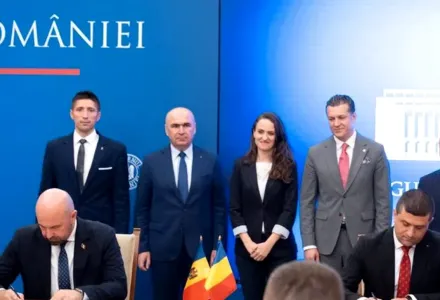
The Moldovan government has approved the signing of an agreement between Moldova and Romania on the development of strategically important transportation infrastructure.
Bitcoin rebounded above the $60,000 mark on Thursday as investors await U.S. employment data, which could provide new clues regarding the Federal Reserve’s policy. This comes after one of the cryptocurrency’s weakest first-half performances in recent years.

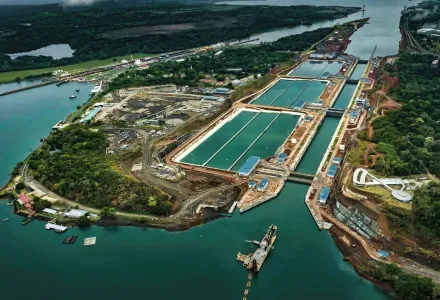
U.S. President Donald Trump stated that Washington will not allow China to gain control of the Panama Canal, once again highlighting the strategic importance of one of the world’s most vital transportation arteries to U.S. national interests.
Global coffee and sugar prices continue to rise amid concerns about future harvests in the major producing countries. Investors are reacting to prolonged rains in Brazil and a lack of rainfall in India, which could reduce supplies of these two key agricultural commodities.

This year, Moldova—which has traditionally been the largest importer of butter from Ukraine—increased its share by nearly 30%.

The “high season” for sales of late-season sweet cherries is beginning in Moldova. This is typically a period when prices rise, and sometimes the quality and volume of exports of these fruits also increase. This year, due to weather conditions, the season began significantly later than usual. Market operators see this as a “window of opportunity” in foreign markets.