News about Territorial reform
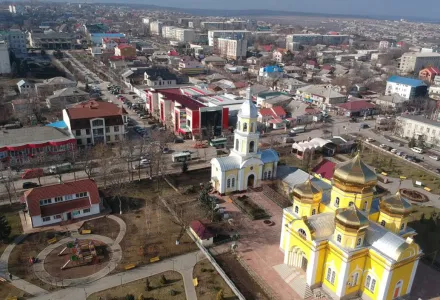
Comrat is the administrative center of the Gagauz Autonomous Region, a university hub in the south of the country, and the second-largest of Moldova’s small towns with special status.
One of the most convenient illusions of modern administrative policy is the notion that digitalization can replace development. Whereas in the past, a poor region was promised roads, water, schools, factories, a labor market, and jobs, it is now increasingly promised e-services, platforms, digital offices, online applications, integrated registries, and a reduction in administrative burdens.

A new video message explaining the local government reform being undertaken by the government has been circulating in Moldova.

Opposition lawmakers have joined the initiative launched by the National Alternative Movement (MAN) Party to hold a referendum on local government reform.

Although arrears owed to local budgets have exceeded 220 million lei over the past five years, the draft tax policy for 2027 does not include effective tools for city halls to enforce the collection of tax debts.

The city administrations of the two capitals have assessed the financial impact on local budgets of the Ministry of Finance’s proposals included in the draft budget and tax policy for 2027. They warn that local authorities will be unable to perform their functions and fulfill their responsibilities to citizens to the same extent with drastically reduced budgets.

Moldovan regional thinking follows a simple pattern: the farther away from Chișinău, the worse it is; the closer to the border, the better the prospects. This holds true on the map, but not in the economy.

Residents of the village of Batyr, in the Chimishlia district, oppose the merger. At a village-wide meeting, 1,024 people signed a petition addressed to the Office of the President, Parliament, the government, and the Congress of Local Authorities of Moldova (CALM).

The administrative reform proposed by the authorities seeks a one-size-fits-all solution for different regions. The government looks at a map and sees city administrations, budgets, and population sizes—and is tempted to think: if the problem looks the same, it can be solved the same way. That is a mistake.

The Ministry of Health has revised the regulations governing primary health care. The reform involves the administrative merger of several medical centers and a shift to regional management. The authorities assure the public that this measure will not result in the closure of rural clinics or staff reductions.

Representatives of the Chisinau City Hall are insisting on the lifting of restrictions on local taxes, the fair refund of taxes collected by the municipality, and financial support for the powers delegated to local authorities.

Over the past four years, the staff of government agencies and ministries has nearly doubled. As part of the administrative reform, the authorities are curtailing local power with one hand while expanding central power with the other.

Poverty is a state of being. Depression is a mechanism—one that operates over a long period of time. It is no longer merely stagnation or a recession. Depression reflects the absence of any possibility for change. Poverty shows how much a region has today. Depression shows whether it is capable of shaping its own future. These are fundamentally different questions that require fundamentally different answers.

The Congress of Local Authorities of Moldova (CALM) has sent a letter to the government, the presidential administration, and parliament requesting that its proposal for reforming local public administration be considered within the framework of the existing joint commission.

A depressed region has another dangerous characteristic. Over time, it ceases to be merely an economic problem and becomes a model of governance.

UPDATED. The ruling Action and Solidarity Party (PAS) has set itself the goal of winning all elections over the next four years “to ensure political stability and accelerate Moldova’s accession to the European Union.” The party’s commitments for the 2026–2030 electoral cycle were announced by party chairman Igor Grosu during the party’s fourth congress, held on Sunday, June 14.

Galina Șelari, Ph.D. in Economics, appeared on the program “Expertise” that, when assessing the state of Moldova’s economy, it is necessary to look not only at the numbers but also at the presence of key factors that depend solely on the population and domestic resources—and in this sense, the Moldovan economy does not inspire confidence in the future.

The government has launched a campaign to promote local public administration reform. Its goal is to inform citizens about the need for the process of transforming the structure of local government that the authorities have initiated.

Liliana Iaconi, Chair of the Parliamentary Committee on Public Administration and Regional Development, proposes abolishing the mandatory minimum property tax rate for individuals, so that local public authorities can adjust tax rates based on the economic realities of their communities.

According to government data, 790 municipalities have already announced their participation in the voluntary consolidation process.