News about Territorial reform
The mayor of the capital continues to comment on the RESTART education reform. The government intends to create more than 30 agencies under the education departments, warns Mayor Ion Ceban.

A week before the deadline for voluntary mergers, another 165 municipalities decided to merge. This was announced by Government Secretary-General Alexei Buz.

The heads of localities in Gagauzia adopted a declaration following their meetings with Maia Sandu, President of the Republic of Moldova, and members of the People’s Assembly of Gagauzia.

This was announced by Government Secretary-General Alexei Buzu as he presented today another group of villages that have decided to merge and establish a single municipal administration.

As representatives of the business community had anticipated, the draft budget and tax policy for 2027 will be revised. However, it will still include provisions for tax increases and the elimination of tax breaks.

The Congress of Local Authorities of Moldova (CALM) presented Prime Minister-designate Vasile Tofan with a package of proposals for reforming local public administration.

Logos Press continues its series of articles by Elena Radu, co-founder and director of the Alfa Institute for Strategic Branding (INBRASA), on creating a new model of statehood through the deliberate restructuring of the country amid the phase crisis of the 21st century.

Prime Ministerial candidate Vasile Tofan and representatives of local government have found common ground on the issue of implementing local government reform. That common ground is European integration.

This is the view expressed by Sergiu Cornea, Ph.D., professor. A hasty and ill-prepared reform risks jeopardizing not only the functioning of the administration but also Moldova’s path toward Europe.

In 2025, the amount of investment attracted by Moldova’s industrial parks totaled 316.8 million lei, which is 2.2 times more than in the previous year.

The authorities have decided not to change course and to continue reforming local public administration (LPA) through voluntary consolidation. They plan to revisit the issue of municipalization during the next election cycle.

Amid government announcements regarding the completion of the voluntary merger of city governments, the Congress of Local Authorities of Moldova (CALM) issued a statement condemning the central government’s methods of exerting pressure on local elected officials.

The process of voluntary municipal mergers will conclude on July 31, and starting in August, the government will begin the process of regulatory consolidation.

The process of voluntarily merging municipalities is entering its final stages, despite attempts to spread misinformation in the public sphere. This statement was made by Parliament Speaker Igor Grosu.

What steps should the future government take to revive the economy? The independent think tank Expert Grup has prepared an interactive infographic titled “Seven Economic Priorities That Should Guide the Cabinet of Ministers in Its Work.”

A region develops not when it adopts a new administrative structure, but when it develops its own economic function. In other words, a clear answer to the question: what does this region produce, and how can it finance its future? The budget, the council, the autonomy charter, and even the university—these are all just a shell.

The Chisinau City Hall is initiating discussions with teachers and school principals regarding the implementation of the Restart reform in the education sector. This was announced by Andrei Pavalo, head of the Chisinau City Hall’s Main Department of Education, Youth, and Sports.
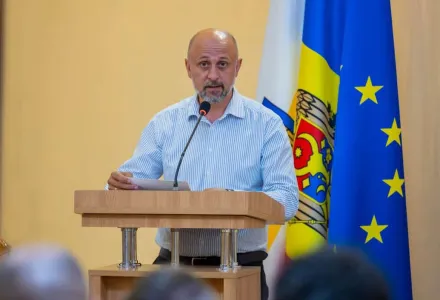
The conflict between the Gagauzia authorities and Moldova’s central government has taken a new turn. The People’s Assembly of Gagauzia (PAG) is preparing a petition to the Constitutional Court demanding that certain provisions of the Electoral Code be declared unconstitutional, and on July 7, the Constitutional Court is scheduled to consider a petition from the Ministry of Justice regarding a number of the autonomy’s powers.

The municipality accuses the Central Election Commission and the State Chancellery of obstructing the will of the citizens.

Five localities in the Floresti and Soldanesti districts have decided to merge into a single municipality to improve the quality of services and attract new investment in infrastructure. As a financial incentive, the government will provide them with approximately 26 million lei for development.