News about military conflict
The Danish shipyard Fayard remains the last facility in the European Union that continues to service specialized Arc7 ice-class gas carriers used to transport Russian liquefied natural gas from the Yamal LNG project.

On the morning of July 4, St. Petersburg came under a large-scale attack by Ukrainian drones. Air defense systems are operational in the city, and residents have been urged not to leave their homes until the drone threat alert is lifted.

Kyiv and Berlin have established a working group to facilitate the return of Ukrainians of draft age who have left the country illegally. The mechanisms are already being discussed officially, but the details have not yet been disclosed.

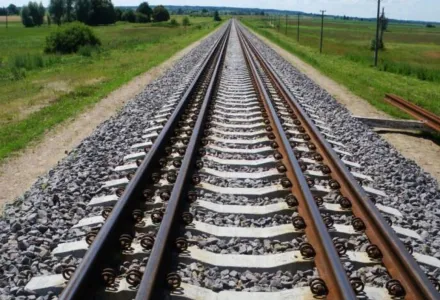
The European Commission is urging Ukraine to accelerate the expansion of the European rail network in the country. The new transport link is intended to provide a direct connection to the EU’s transport system. Officials in Brussels note that such steps will facilitate integration into the Trans-European Transport Network (TEN-T) and aid in the country’s post-war reconstruction. This was reported by the Odessa Journal website.
Two-thirds of Ukrainian citizens believe it is necessary to begin negotiations with Russia to end the war, while 24% of Ukrainians support continuing the fighting.

Russian President Vladimir Putin publicly acknowledged for the first time that the country is facing a fuel shortage due to Ukrainian drone strikes on oil refineries and energy infrastructure facilities. He emphasized, however, that the situation is not critical.

“Tit-for-tat” economic wars threaten global growth. The Financial Times reports on the views of outgoing IMF Chief Economist Pierre-Olivier Gourinchi regarding geopolitical fragmentation and the future of the global economy.

The conflict between the U.S. and Iran is escalating. The U.S. military has launched new strikes against Iran’s military infrastructure following an attack on an oil tanker in the Strait of Hormuz. In response, Tehran announced strikes against U.S. targets in Kuwait and Bahrain.

The U.S. launched strikes against Iranian military targets following an attack on a merchant ship in the Strait of Hormuz. As a result, the situation has sharply escalated since the ceasefire;

On Thursday, June 26, Kyiv is set to receive the first tranche of 3.2 billion euros from the 90 billion euro loan from the European Union that was previously agreed upon.

On June 26, Crimean Head Sergey Aksyonov and Sevastopol Governor Mikhail Razvozhayev jointly declared a state of emergency in the region.

The Islamic Revolutionary Guard Corps (IRGC) attacked a Singapore-flagged cargo ship in the Strait of Hormuz.

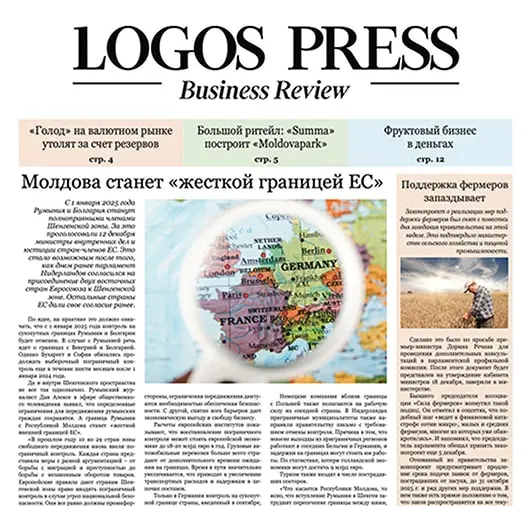
Moldova has become an important route for commercial, transportation, and energy flows connecting Ukraine with the European Union, and it is ready to continue strengthening its role as a logistics hub to support the recovery of its neighboring country.

On Tuesday, June 23, the U.S. Senate passed a resolution requiring President Donald Trump to withdraw U.S. forces from the combat zone against Iran.

U.S. automakers will begin manufacturing weapons, U.S. President Donald Trump said.

Following technical talks, Iran and the United States have formed four working groups that will address the lifting of sanctions, the nuclear program, reconstruction and economic development, as well as monitoring compliance with the agreements. This was announced by Iran’s Deputy Foreign Minister Kazem Garibabadi.

Ukrainian law enforcement officials suspect a group of government officials and private entrepreneurs of organizing a scheme to embezzle budget funds allocated for humanitarian demining of agricultural land in the Mykolaiv, Kherson, and Chernihiv regions.

The Moldovan Parliament will consider a bill to ratify the Convention Establishing an International Commission for the Settlement of Claims for Ukraine, signed in The Hague on December 16, 2025.

U.S. President Donald Trump has effectively derailed negotiations with Iran.

Iran announced that it had reached a number of agreements with the United States, including the establishment of an emergency mechanism to ensure the safe passage of ships through the Strait of Hormuz—one of the world’s key oil and gas supply routes.