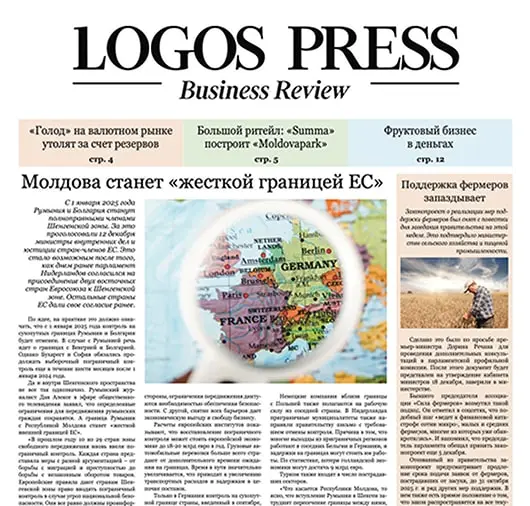
The German ambassador to Moldova made controversial statements about the Romanian language and unification with Romania during a live broadcast on a Moldovan television channel. Hubert Knirsch’s remarks sparked a wave of reactions in the public sphere.

Germany, traditionally considered one of Europe’s most efficient economies, has faced an unexpected paradox. Despite an increase in the number of civil servants and the large-scale digitization of government services, citizens and businesses do not perceive any noticeable improvement in the efficiency of the government apparatus.

On July 9, Volkswagen’s Supervisory Board will review a plan for a large-scale restructuring of the company, which calls for additional job cuts and the possible closure of several plants in Germany.

A few days before the NATO summit in Ankara, the German chancellor and the leaders of the Baltic states agreed in Berlin to strengthen deterrence against Russia, increase defense spending, and expand aid to Ukraine.

According to media reports, Volkswagen is preparing for the most radical restructuring in its history: up to 100,000 jobs could be cut worldwide—twice as many as previously reported. Four plants in Germany are at risk of closure.

Elon Musk doesn’t do anything on a whim. He retweeted a post by a X user named Rothmus that analyzes the “green transition” in China and Europe (primarily in Germany).

The number of citizens willing to take up arms to defend Poland has nearly halved over the past three years. This trend is particularly alarming among young people under the age of 29.

House prices in Germany will continue to rise until at least 2028, despite expensive mortgages and weak consumer demand. The main driver will remain the shortage of new housing against the backdrop of high construction costs.

The initiative of German Chancellor Friedrich Merz, proposing to introduce the status of “associate member” for Moldova, Ukraine and Western Balkan countries, is regarded by experts as a creative but purely political solution, which risks turning the path to full membership into a “receivership” for an indefinite period of time.

For the first time after 2022, German businessmen are again officially participating in the St. Petersburg International Economic Forum (SPIEF-26). The relevant information is contained in the program of the event.