News about Macroeconomics
Bitcoin stabilized on Monday, squandering much of the weekend’s gains amid escalating tensions over Iran, which offset optimism over progress on the U.S. regulatory framework for cryptocurrencies.

Russia expects clarifications from Armenia in connection with the visit of Ukrainian President Volodymyr Zelensky to that country, Russian presidential spokesman Dmitry Peskov has said.

President Maia Sandu held talks with a mission of the International Monetary Fund (IMF) on a new cooperation program under the Policy Coordination Instrument (PCI). The meeting took place on Sunday, May 10, during the visit of the IMF mission to Chisinau between May 7 and 20.

Iran’s record-long internet outage is hitting private businesses hard. Business owners warn that it could lead to mass layoffs and business closures. Losses from lack of access “to the net” are estimated in the billions of dollars.

Romanian President Nicusor Dan made a video message on the occasion of Europe Day and Romania’s Independence Day, in which he spoke about what his country has achieved during almost 20 years in the EU (Romania officially joined the Community on January 1, 2007).

CAIR – A group of developing countries launched the Borrowers’ Platform on April 15 to create a stronger collective voice in debt management discussions and international financial negotiations.

The period from 2026 to 2035 has been declared the “Decade of Family and Demography” in Turkey.

The ruling Labor Party suffered heavy losses in the UK local elections, losing a significant portion of seats to the right-wing populist Reform UK. Voting took place this week in England, as well as in elections for the Scottish and Welsh parliaments.

PARIS – The war in Iran has caused a dramatic redistribution of global wealth.

The European Union remains Moldova’s key financial partner, providing more than 72% of direct foreign investments, about 59% of external grants and more than 19% of the country’s external loans. This was stated by IDIS Viitorul expert Veaceslav Ionita.

The National Bank of Moldova (NBM) reported a favorable economic growth forecast for the first quarter of 2026, noting positive dynamics in industry, agriculture and retail trade. However, along with this, the National Bank decided to tighten monetary policy to control inflation by raising the prime rate to 6.5% per annum.
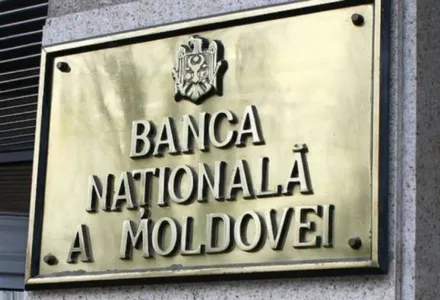
According to the National Bank of Moldova (NBM), the official reserve assets at the end of April 2026 amounted to 5,209.83 million euros, decreasing by 56.71 million euros year-on-year. The main factors for the decrease were the depreciation of the dollar against the euro (40.69 million euros) and payments for servicing the external public debt (21.53 million euros).

Rumen Radev officially took office as prime minister. He resigned early from his largely ceremonial position as president to lead the government.

Russia’s federal budget deficit in January-April 2026 amounted to 5.877 trillion rubles (about 60.3 billion euros). This figure was twice as high as in the same period last year and was more than a third higher than the plan for the whole of 2026.

US efforts to mediate the conflict between Russia and Ukraine have reached a dead end, US Secretary of State Marco Rubio said at a meeting with Italian Prime Minister Giorgio Meloni.

Next week it is planned to present a new concept of the Law on the unified system of labor remuneration in the public sector. The document will become the basis for a new architecture of labor remuneration in the public sector.

Today, May 8, European stock markets fell sharply after a new round of escalation between the United States and Iran. Investors began to withdraw from risky assets amid fears that the fragile truce between the parties could finally break down and the conflict could hit global oil supplies.

The National Bank of Moldova increased the prime rate by 1.5 p.p. at once. – From 5% to 6.5% – to prevent inflation growth against the background of rising world prices caused a lot of questions and comments of experts.
The International Energy Agency (IEA) said the medium-term outlook for the natural gas industry is likely to last longer than previously thought. The conflict with Iran has already led to a loss of about 120 billion cubic meters of liquefied natural gas between 2026 and 2030, Gergely Molnar, an IEA expert, said Thursday.

According to market analysts, published in an interview with CNBC, the growth of gold and silver prices may resume if a peace agreement is reached between the U.S. and Iran. During the conflict, gold price fluctuations have been subdued, moving in opposite directions to fluctuations in oil prices and the U.S. dollar. However, gold and silver market growth will resume this year as momentum forces resume.