News about Energy
After analyzing the commodity structure of Moldova’s exports and imports for January through March of this year, economist Vladimir Golovatiuc reached conclusions that were “disappointing, to say the least.”

Most state-owned companies in Moldova do not disclose how effectively they use state-owned assets. An audit by the Court of Auditors revealed a low level of transparency and problems in the management of state-owned enterprises.

Logos Press continues its series of articles by Elena Radu, co-founder and director of the Alfa Institute for Strategic Branding (INBRASA), on creating a new model of statehood through the deliberate restructuring of the country amid the phase crisis of the 21st century.

Energy consumption for air conditioning in Europe is growing rapidly. Moldova ranks second in terms of growth rate.

The notion that Moldova will soon no longer need natural gas is dangerous and could be harmful. Vadim Cheban, chairman of the board of “Moldovagaz,” expressed this view on social media.

The National Energy Regulatory Agency (NARE) has set new maximum fuel prices, which will take effect tomorrow, July 15.

More than 1,113 MWh of electricity was sold on the OPEM platform in a single day, accounting for about 9.2% of Moldova’s average daily consumption. This is a new record.

Demand for transport capacity on the Vertical Gas Corridor exceeded expectations last week, even during the very first auctions for capacity reservations. Interest from market participants underscores the growing role of this new gas supply route to Southeast Europe, which is set to become one of the alternatives to Russian gas.

Elon Musk has once again drawn attention to one of the most ambitious technological concepts—harvesting solar energy in space. In his view, if humanity learns to harness this resource on an industrial scale, the economic value of such technology will exceed the size of Earth’s entire modern economy.

Constantin Cuiumju, a member of parliament from “Our Party,” stated that government representatives on the Moldovagaz Supervisory Board rejected a proposal to cancel payments to board members, even though Gazprom had put forward that initiative.

During a meeting in Chisinau, Corina Călugaru, State Secretary of the Moldovan Ministry of Foreign Affairs, and Ulvi Bahshaliyev, Azerbaijan’s Ambassador to Moldova, discussed the current state of bilateral relations and prospects for expanding cooperation in the economic, energy, agriculture, and transportation sectors.

The massive artificial intelligence boom that has shaped global markets over the past few years has run into a harsh economic and infrastructure hangover.

The National Energy Regulatory Agency (ANRE) has set new maximum fuel prices, which will take effect tomorrow, July 10.

The parliamentary opposition will establish an investigative committee to examine the situation at state-owned enterprises and public institutions, as well as the salary system.

The Ministry of Energy has confirmed that negative electricity prices may emerge in Moldova in the near future—that is, producers will pay consumers to dispose of the excess electricity they generate.

The global economy is facing new risks: inflation is picking up again, and Europe’s largest economies will grow more slowly than expected. This is the conclusion reached by the International Monetary Fund (IMF), which, in its new World Economic Outlook report, revised its forecasts for a number of countries and warned of the consequences of rising energy prices and geopolitical tensions.

News from the NATO summit currently taking place in Ankara extends far beyond the scope of the Alliance’s activities. In addition to the now-familiar political statements and internal squabbles among the bloc’s members, there are also major economic initiatives that have the potential to reshape many existing perceptions of development in various regions.

At the annual NATO summit being held in Ankara, the North Atlantic Treaty Organization member states will announce the expansion of the Cold War-era oil pipeline network to Eastern Europe and Turkey, which will ensure a supply of oil to military bases in the region in the event of a crisis.

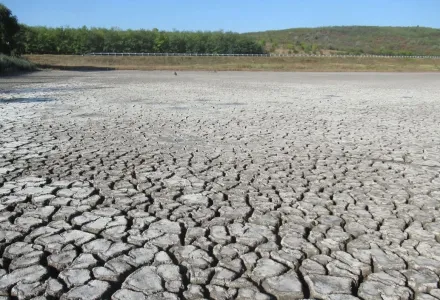
The inflow of water from the Carpathians into the Dniester Reservoir (Ukraine) has been below 30 cubic meters per second for several days now. As a result, the water level in the reservoir has dropped below 114 meters above sea level and continues to fall. At the same time, the outflow from the reservoir to the lower reaches of the river—including the Moldovan section—remains at the previous rate of 100 cubic meters per second.
Leading OPEC+ members agreed to another moderate increase in oil production quotas for next month. On Sunday, during a video conference, seven countries led by Saudi Arabia and Russia agreed to increase the production target by 188,000 barrels per day. This decision increases the likelihood of rising supply in the market, provided the interim peace agreement between the U.S. and Iran remains in place. Since the start of the military conflict, the alliance has increased its quotas by a total of 940,000 barrels per day—a volume equivalent to nearly 1% of global demand.