News about Energy
Leading OPEC+ members agreed to another moderate increase in oil production quotas for next month. On Sunday, during a video conference, seven countries led by Saudi Arabia and Russia agreed to increase the production target by 188,000 barrels per day. This decision increases the likelihood of rising supply in the market, provided the interim peace agreement between the U.S. and Iran remains in place. Since the start of the military conflict, the alliance has increased its quotas by a total of 940,000 barrels per day—a volume equivalent to nearly 1% of global demand.

Romania became the largest recipient of the latest tranche of funding from the European Union’s Modernization Fund, receiving 636.9 million euros for investments in the energy sector out of a total of 2.5 billion euros, allocated to 11 EU member states.

In June, the state-owned company Energocom purchased 41.3 million euros worth of electricity, a 12% increase from May, amid a heat wave and a sharp rise in prices on the stock exchange.

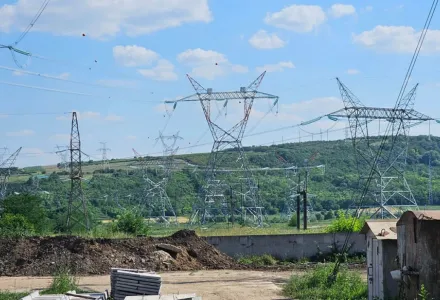
According to a statement from the Ministry of Energy, construction work on the 400-kV Vulcănești–Chișinău overhead power line and related infrastructure has been completed, and the “Energy Independence” line has entered the final stage of testing prior to its commercial commissioning.
On the OREM electricity exchange on June 30, transactions with a volume of at least 1 MW·h, indicating growing activity among companies operating in the renewable energy sector, as well as the effective functioning of market mechanisms.

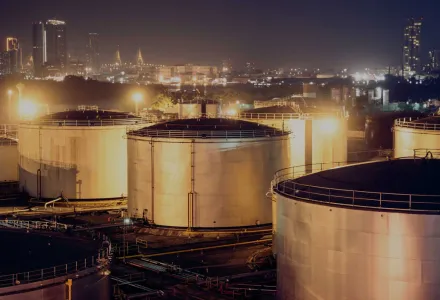
In Moldova, on June 30, 2026, Law No. 119 of June 26, 2026, on the security of petroleum product supplies, entered into force. The purpose of the law is to establish a comprehensive regulatory framework necessary to ensure the security of petroleum product supplies by creating an effective storage system.
Romania has increased its natural gas supplies to Moldova by 50% compared to last year, raising them from 2 million m³ to 3 million m³ per day.

U.S. President Donald Trump has demanded that companies that sell gasoline in the United States immediately lower their prices.

The British energy company Petrofac has agreed to pay £569,000 to HM Revenue & Customs (HMRC) following a violation of rules related to sanctions against Russia.

During trading on Monday, June 29, the market price of Brent crude, the benchmark North Sea oil, began to rise amid renewed mutual missile strikes between the U.S. and Iran in the Middle East.

The 400-kV Bălți–Suceava power line, dubbed the “Line of Sustainability,” will be built by the Turkish company SA-RA, which won an international tender; the contract between SA-RA and the state-owned company Moldelectrica was signed last Friday.
Using land for both electricity generation and food production is a promising solution.

Russian President Vladimir Putin publicly acknowledged for the first time that the country is facing a fuel shortage due to Ukrainian drone strikes on oil refineries and energy infrastructure facilities. He emphasized, however, that the situation is not critical.

The Russian-Moldovan company MoldovaGas JSC reported a net profit of 1.165 billion lei for 2025. A year earlier, the company had posted a loss of 627.6 million lei.

The Russian-appointed authorities in Crimea and Sevastopol have declared a state of emergency. The decision was made amid a worsening situation with fuel, electricity, and food supplies following a series of Ukrainian strikes on logistics and energy infrastructure.

On Thursday, June 26, Kyiv is set to receive the first tranche of 3.2 billion euros from the 90 billion euro loan from the European Union that was previously agreed upon.

At the annual General Meeting, the shareholders of Moldovagaz JSC heard reports on the activities of the Management Board, the Supervisory Board, and the Audit Commission for 2025.

Today, June 26, a contract will be signed at the Government House for the design and construction of the Moldovan section of the 400-kV Bălți–Suceava overhead power line, the second of three lines connecting the country to the European ENTSO-E grid.

The Foreign Policy Committee of the Moldovan Parliament approved an advisory opinion on opening negotiations with the International Bank for Reconstruction and Development (IBRD) regarding a grant of approximately $1.7 million.

Moldova has become an important route for commercial, transportation, and energy flows connecting Ukraine with the European Union, and it is ready to continue strengthening its role as a logistics hub to support the recovery of its neighboring country.