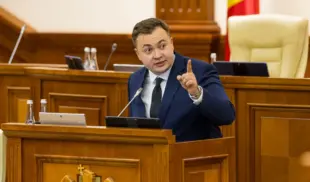
Mihai Popșoi și Velislava Petrova
Special status and municipal status
The Taraclia district, home to around 50,000 Bulgarians, has retained its special administrative status and, as part of the administrative reform in Moldova, has been granted the status of a municipality, reports bgnes.com.
According to Petrova, the new status elevates Taraclia to a higher administrative level.
“Thanks to this decision, the Taraclia district has been granted a legal status equal to that of the capital, Chișinău, and the country’s second-largest city, Bălți. This demonstrates the firm determination of the Government of the Republic of Moldova to ensure that our community in the country receives the recognition it deserves,” she emphasised.
The Foreign Minister noted that Bulgaria and Moldova are linked first and foremost by their people, and that relations between the two countries are built on a solid historical and cultural foundation.
“The Bulgarian national minority in the Republic of Moldova, living in the southern part of the country – in the Taraclia district – occupies a special place in relations between our states. Around 50,000 Bulgarians live there. They are an important element of our bilateral relations and one of the powerful drivers for the development of our cooperation,” Petrova stated.
She thanked the Moldovan authorities for creating favourable conditions for the realisation of the ethnic and cultural rights of the Bulgarian community, particularly in the field of education.
As the most striking example, Petrova cited the transformation of the Grigori Tsamblak State University of Taraclia into a branch of the Angel Kanchev University of Ruse.
“This is the first independent Bulgarian higher education institution outside the Republic of Bulgaria. Currently, more than 400 students are studying here, and interest in the university continues to grow,” noted the Foreign Minister.
She described this development as exceptionally positive and once again expressed her gratitude to the Moldovan authorities.
Petrova also personally thanked President Maia Sandu for fulfilling the commitment she had made to the then President Rumen Radev and the current Prime Minister of Bulgaria: that the administrative reform in Moldova would not harm the Bulgarian national minority.
“The result is clear to see. The Taraclia district has been preserved as a separate administrative-territorial unit and has been granted the status of a municipality. This marks a transition to a new, higher level,” the minister emphasised.
At the start of her speech, Petrova welcomed her Moldovan counterpart and noted that quite some time had passed since the Moldovan Foreign Minister’s last visit to Bulgaria.
“Your visit reflects the mutual desire of our countries to maintain active cooperation and develop it further,” she told Popșoiu.
Support on the path to the EU
According to Petrova, in recent years relations between Bulgaria and Moldova have entered a new phase, characterised by Chisinau’s aspiration to join the European Union.
“Bulgaria has consistently supported Moldova’s European integration. We welcome your efforts and the progress made on the path to European integration. Moldova clearly demonstrates that, with political will and a readiness to undertake reforms, accession to the European Union is possible,” Petrova stated.
She emphasised that this progress had been achieved despite the deteriorating security situation and hostilities taking place in the immediate vicinity of Moldova’s borders.
Bulgaria will continue to support Moldova on its European path, based on the principle of merit-based assessment, the Foreign Minister noted. According to her, this position was reaffirmed during talks with Popșoi.
“We believe that Moldova should have the right to move forward along this path at a pace determined by the progress of its own reforms and its fulfilment of the established criteria,” said Petrova.
In her view, the Moldovan government has demonstrated the readiness, political will and maturity necessary for a confident move towards EU membership.
Energy
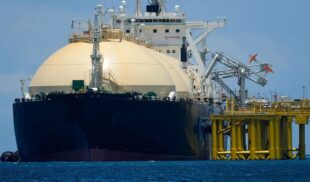
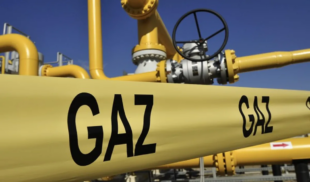
Another key topic of the talks was energy security. Petrova stated that Bulgaria is helping to strengthen Moldova’s energy security by facilitating gas transit and participating in the diversification of supplies via the ‘Vertical Gas Corridor’.
“This is an area in which we will continue to work. We are pleased to see progress in this direction, which opens up opportunities for Bulgarian companies to operate in the Republic of Moldova. This lays the foundation for expanding cooperation in this sector,” she noted.
Petrova emphasised that Bulgaria attaches great importance to strengthening its position as a regional player in the fields of energy and stability. Moldova can benefit from this role, she said, adding that both countries share a common understanding of this issue.
An important partner
The Republic of Moldova is also an important partner for Bulgaria in the field of international development aid, the Foreign Minister stated. According to Petrova, between 2023 and 2025, more than 30 projects with a total value of 2 billion euros were implemented using development aid funds and other financial instruments, including the National Programme for the Support of Bulgarian Historical Communities.
Petrova described these initiatives as high-value-added projects, through which Bulgaria can support both Moldova and the Bulgarian community living there.
“Our bilateral and multilateral cooperation encompasses many aspects. I am pleased to see that we share a common understanding and a willingness to continue working in all these areas,” she said.
According to the Minister for Foreign Affairs, Bulgaria can simultaneously support Moldova’s European integration and demonstrate to the citizens of both countries that the European path is the right one.
“This is a path that will lead to growth and create opportunities for the country’s further development,” concluded Petrova.
Follow our updates
Have information for the newsroom? Share it with Logos-Press