Igor Chaika, head of ‘Rossotrudnichestvo’, announced the new venues a week after Germany announced the closure of the ‘Russian House’ in Berlin. It had been operating in the German capital for around 40 years.
According to Kommersant, the new centres are planned to open in Kenya, the Democratic Republic of the Congo, Madagascar, Mali, Senegal, Sierra Leone, Togo and São Tomé and Príncipe. In Armenia, the locations under consideration are Artashat and Ashtarak, whilst in Thailand there will be a single centre.
Once opened, the network of partner ‘Russian Houses’ will grow from 25 to 36 centres across 22 countries.
From 2027, the agency also plans to award microgrants for projects run by partner centres.
‘Teachers or spies?’
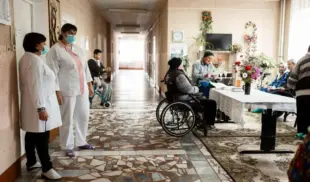
The ‘Russian Houses’ were conceived as venues for promoting language and culture, similar in function to the German Goethe-Institut, the Instituto Cervantes or the British Council. Their official remit includes language courses, educational programmes, the selection of international students for Russian universities, exhibitions and support for compatriots.
After the war in Ukraine began, attitudes towards these institutions in Europe changed dramatically. Slovenia, for instance, closed its ‘Russian House’ in the spring of 2022. Romania and Moldova subsequently took similar decisions. Germany has now joined them.
European politicians and analysts accuse Russian cultural organisations of being used not only for cultural exchange but also to promote Russian political interests.
Marie-Agnes Strack-Zimmermann, Chair of the European Parliament’s Committee on Security and Defence, stated that she regards it as a venue linked to espionage. According to her, Germany is facing Russian hybrid attacks and sabotage.
EUvsDisinfo points out that in Africa, Rossotrudnichestvo’s cultural projects are often accompanied by the promotion of Russian views on international politics. In particular, researchers draw attention to film screenings, work with journalists and programmes for young civil servants.
This does not mean that every ‘Russian House’ is an intelligence centre or that its staff are engaged in espionage. However, European governments and experts are increasingly viewing Russian cultural organisations as part of a broader system of influence operated by Moscow.
Why is Moscow moving into Africa?
Eight of the 11 new centres will be established in Africa. This is no coincidence: alongside its cultural projects, Russia is expanding its political and military ties there.
This is particularly evident in the Sahel countries. The military governments of Mali, Niger and Burkina Faso have drawn closer to Moscow following a deterioration in relations with France. Russia’s ‘African Corps’ is involved in security cooperation with these countries.
Against this backdrop, the ‘Russian Houses’ are becoming part of a broader Russian engagement with an African audience, reports Euronews.
The source provides the following detail. In January 2026, the then head of ‘Rossotrudnichestvo’, Yevgeny Primakov, stated that the ‘Russian Houses’ in Mali and the Central African Republic were initially opened by ‘a well-known African private military company’. He did not name the company.
In media reports, this statement was linked to the Wagner PMC, which was active in Africa until the death of Yevgeny Prigozhin. Subsequently, a significant portion of its functions was taken over by the Russian ‘African Corps’.
This does not in itself mean that the new cultural centres will be linked to military structures. However, the history of their emergence in certain African countries illustrates just how closely Russian humanitarian, political and security projects are intertwined in the region.
Armenia: two new centres during a period of cooling relations
Rossotrudnichestvo intends to open two more centres in Armenia – in Artashat and Ashtarak. ‘Russian Houses’ are already operating in Yerevan and Gyumri.
The choice of country is noteworthy. In recent years, relations between Yerevan and Moscow have deteriorated significantly. Nikol Pashinyan’s government is developing ties with the European Union and distancing itself from Russia.
That said, the new centres will be run on a partnership basis. They are being set up not as official representations of the Russian state, but on the basis of local organisations. This allows the network to be expanded even in places where the authorities’ attitude towards Moscow has become more lukewarm.
Follow our updates
Have information for the newsroom? Share it with Logos-Press