For businesses, this is no longer merely a matter of brand identity. The character becomes an asset that can be reused repeatedly in advertising, on social media, within the product interface and on merchandise, whilst maintaining a consistent corporate image.
A character instead of an advertising campaign
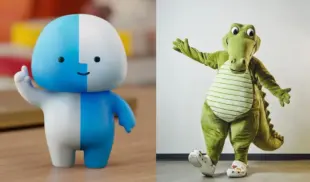
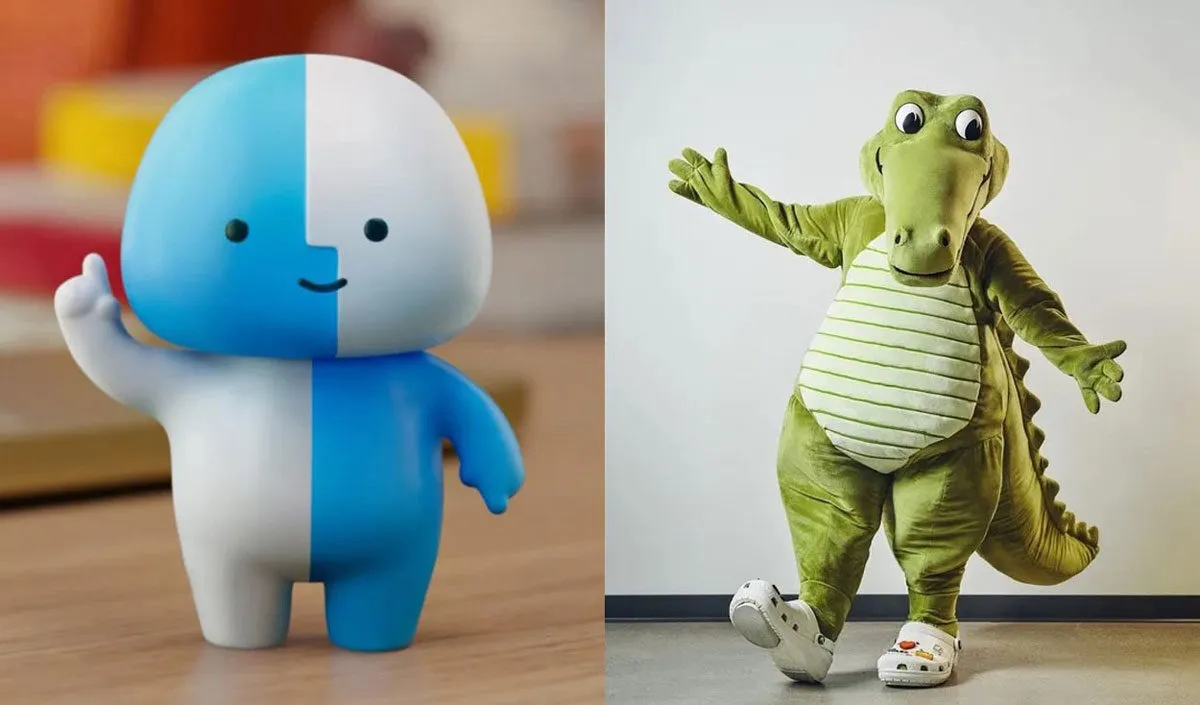
Apple demonstrated this model in its promotion of the MacBook Neo. The company used a character based on the Finder icon in a series of short videos. Users dubbed him ‘Little Finder Guy’, although Apple did not officially announce him as a separate mascot. The character appeared in a series of posts highlighting the new computer’s capabilities, notes the Wall Street Journal.
The economic rationale behind this approach lies in maximising the return on a single advertising image. Instead of a series of disparate messages, the company gains a character that can be used across different formats and reintroduced into communications without the need to create a new concept each time.
Crocs has gone a step further. The company has introduced Niles – an official mascot in the form of an anthropomorphic crocodile. The character has become the central element of a series of videos and is set to feature in the brand’s future projects. For Crocs, this is a continuation of a strategy in which the company sells not only a functional product but also a recognisable identity. The crocodile has long been part of the brand’s corporate identity, and transforming the symbol into a character allows its use to be extended beyond the product itself.
Firefox takes a different approach. Mozilla created Kit and integrated the character into the browser’s user experience. He appears when users are introduced to specific Firefox features and is also used in the company’s communications.
This format is particularly important from the perspective of the digital product’s economics: the character gains direct access to the user, bypassing traditional advertising channels. The company can use the same character at different stages of interaction — from attracting attention to working within the product itself.
Why should businesses ‘humanise’ their brand?
The reason for the interest in this strategy lies in how consumers perceive brands. Marketing research shows that people tend to attribute human characteristics — personality, emotions and intentions — to companies. Such humanisation can increase trust and brand loyalty.
However, it is not the likeability of the character itself that matters to a business. The key indicator is the ability of such an image to influence the consumer’s interaction with the brand. Research shows a positive correlation between brand anthropomorphisation, loyalty and purchasing behaviour; however, the effect depends on the product and the extent to which the character aligns with the brand.
Therefore, a mascot cannot be viewed as a standalone method for increasing sales. Its economic value lies elsewhere: it can reduce the brand’s reliance on constantly creating new advertising concepts, boost brand recognition and provide the company with a reusable communication tool.
The mascot becomes a media asset
This approach has become particularly appealing following the rise of social media and short-form video. A character can exist simultaneously in an advert, on TikTok, on YouTube, within an app’s interface and in user-generated content. If the audience begins to use the image of their own accord, the company gains additional content reach without direct advertising costs.
This also changes the very role of marketing. The mascot becomes a kind of link between advertising and the product: it can attract users, explain the service’s features, maintain an emotional connection with the brand and, at the same time, boost brand recognition.
That said, there is no one-size-fits-all commercial outcome to such a strategy. An overly obvious attempt to ‘humanise’ a company may not work if the character does not match the product or the audience’s expectations. That is why large companies use different models — ranging from Apple’s experimental character to Crocs’ fully-fledged mascot and Firefox’s character integrated into the product itself.
Follow our updates
Have information for the newsroom? Share it with Logos-Press