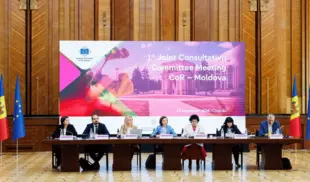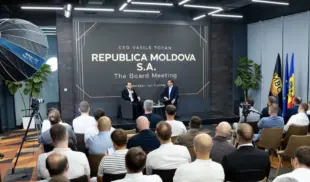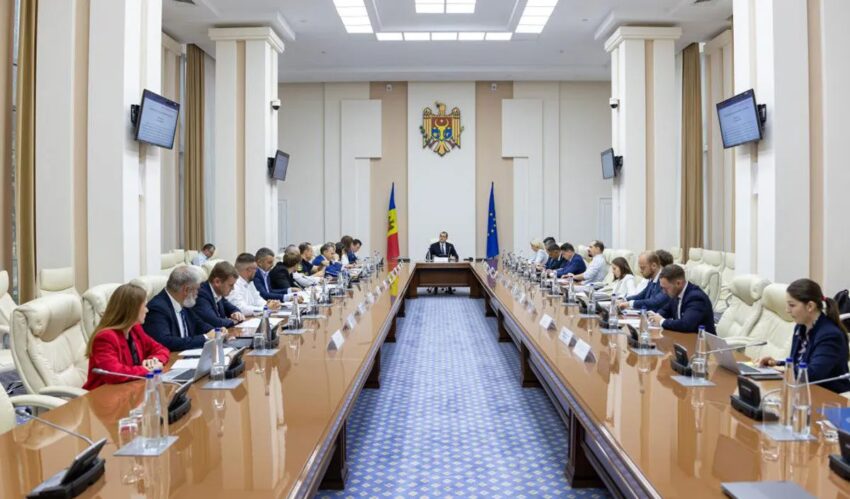
This issue was discussed at a meeting of the Joint Co-ordination Committee on the UN Framework Programme for Cooperation on Sustainable Development, chaired by Prime Minister Vasile Tofan.
At the meeting, representatives of the government and UN agencies discussed the country’s current needs, the effective use of resources and the preparation of a new Framework Programme for Cooperation for 2028–2032.
Priority areas
The government proposed that UN support be focused on areas likely to deliver the most tangible practical benefits for the population.
Key priorities include access to water and enhancing resilience to droughts, energy security and energy efficiency, as well as addressing the consequences of the war in Ukraine.
Particular attention has been paid to the integration of refugees into Moldovan society. This involves their inclusion in the education, healthcare and social protection systems, as well as their integration into the labour market.
In this context, the parties discussed the transition to a new joint funding mechanism for refugee integration. This is intended to pool partners’ resources around priorities agreed with the government and to enhance the effectiveness of support for integration processes.
Prime Minister Vasile Tofan emphasised the need to concentrate resources on a limited number of areas with maximum impact.
“Let us identify a few key priorities and direct resources to where they can have the greatest impact on people. We have a major national project – the Republic of Moldova’s accession to the European Union – and our partnership with the UN should contribute to the modernisation of the country and to results that citizens will feel in their everyday lives,” said the Prime Minister.
The programme is centred on the path towards the EU
The meeting also reviewed the implementation of the current UN Framework Programme for Cooperation for 2023–2027 and discussed the preparation of the next document for 2028–2032.
The parties agreed that the future programme should be aligned as closely as possible with the government’s priorities and Moldova’s EU accession process. Particular emphasis was placed on coordinating the resources and actions of various partners.
Moldova’s cooperation with the UN currently covers a wide range of areas — from poverty reduction, employment and social protection to the sustainability of the agri-food system, water supply, energy, digitalisation and migration management.
Support is also aimed at strengthening the country’s institutional capacity in the context of European integration.
Consequently, the forthcoming Framework Programme for 2028–2032 should set out the future directions for Moldova’s engagement with the UN system, taking into account national priorities and the objectives of European integration.
The Joint Coordination Committee is the mechanism through which the Government of Moldova and the UN define strategic areas of cooperation and monitor the implementation of the current framework programme.
Follow our updates
Have information for the newsroom? Share it with Logos-Press