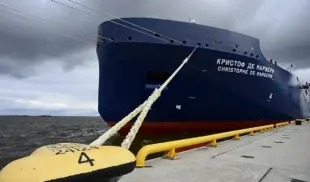
Despite public statements about severing economic ties with Russia, in the first eight-and-a-half months of this year, Europe paid around €7.28 billion for liquefied natural gas (LNG) from the Russian Arctic ‘Yamal LNG’ project, already exceeding the figure of €7.3 billion recorded for the whole of 2025.
Two European companies dominate the Arctic shipping network: the Scottish firm Seapeak and the Greek-linked shipping company Dynagas. Their vessels accounted for 72 per cent of all LNG exports from the Yamal Peninsula.
These figures were revealed during an investigation carried out by the German NGO Urgewald, which identifies financial institutions and companies supporting projects that harm the climate.
Purchases rose by 10.1 per cent
According to Urgewald, in the first eight months of 2026, 156 shipments of LNG from Yamal totalling 11.39 million tonnes arrived at European ports, whereas during the same period in 2025 (January to August), 142 shipments totalling 10.34 million tonnes were delivered. This represents a year-on-year increase of 10.1 per cent.
Operational data from the analytics firm Kpler shows that between 1 January and 5 September this year, European ports accounted for 88.9 per cent of total global exports from Yamal, whereas in 2025 this figure stood at 78.2 per cent.
“This suggests that EU buyers are seeking to maximise imports ahead of the ban coming into force in January 2027. Most of these volumes are being supplied under existing long-term contracts, as the purchase of LNG under short-term contracts was banned back in April this year,” Euronews quotes Kpler energy analyst Charles Kosterrouz as saying.
“Europe claims it is moving away from Russian energy sources. However, these figures suggest otherwise,” noted Alexander Kirk, senior campaign coordinator at Urgewald. “In the first eight months of the year, the EU purchased 10 per cent more LNG from ‘Yamal’, receiving almost 9 out of every 10 tonnes exported by this project.”
Kosterruz added that the largest importers of LNG from ‘Yamal’ in Europe include France (4.4 million tonnes), Belgium (3 million tonnes), Spain (2.7 million tonnes) and the Netherlands (1.1 million tonnes).
Follow our updates
Have information for the newsroom? Share it with Logos-Press