Shipping corridor
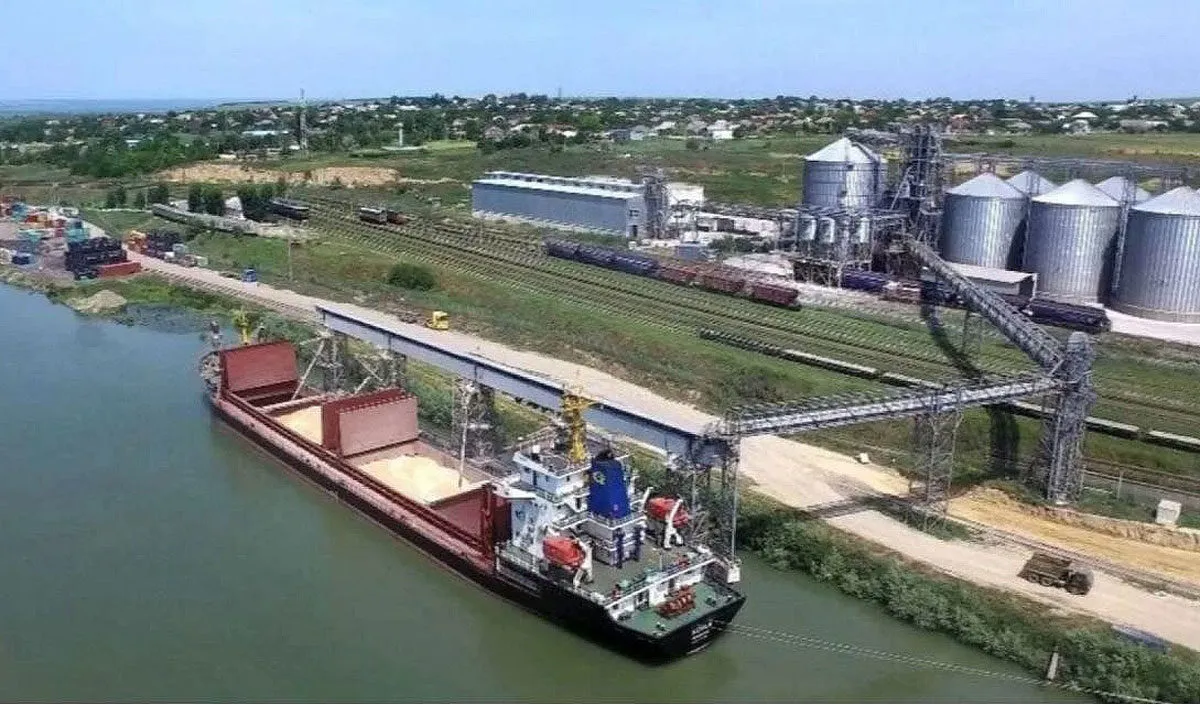
The situation on the Danube remains the most pressing of the issues mentioned. The Republic of Moldova’s sole access to maritime routes – the Giurgiulești International Free Port – depends entirely on traffic through the Sulina Canal, located on Romanian territory. Alas, Moldova can only influence shipping traffic along this waterway indirectly and to a limited extent.
As noted by representatives of business associations who took part in two meetings held yesterday at the ministries, this week, on the stretch of the river between Reni and Giurgiulești, 5–8 vessels are waiting in queue every day. Furthermore, passage through the aforementioned canal is accompanied by delays of more than 15 days. There are also restrictions on vessel draught (5.5–6.5 metres, compared with a nominal 7.20 metres). This results in vessels not being fully loaded and forces freight carriers to make additional voyages.
The solution proposed by representatives of the commercial and logistical chain in the grain sector (as previously reported by Logos Press) involves permitting ‘loading in the roadstead’—the transhipment of cargo onto a vessel at anchor, without using a quay. This measure would eliminate the long queues of vessels awaiting loading and provide the port of Giurgiulești with additional transhipment capacity (amounting to approximately 20,000–50,000 tonnes per cargo handling cycle). A request to carry out such work in the neutral zone of the Danube (in the Giurgiulești–Reni–Galați area) has already been submitted, but its implementation requires the approval of the European Commission.
It is precisely this issue that Deputy Prime Minister and Minister for Infrastructure and Regional Development Vladimir Bolea plans to discuss today, 15 September, in talks with the European Commissioner responsible for infrastructure projects in the Republic of Moldova and Ukraine. The main topic of discussion will be the optimisation of navigation on the Danube.
Road transport corridor
Following yesterday’s meeting, the leadership of the Ministry of Agriculture and Food Industry expressed its willingness to help resolve the problem of traffic congestion caused by lorries carrying agricultural produce in the Giurgiulești area.
On Wednesday, 16 September, MAIA Minister Eugen Osmochescu plans to visit Giurgiulești together with the Head of the General Police Inspectorate to assess the possibility of immediately restoring the traffic management system on the section of the Reni–Giurgiulești road (approximately 2 km) connecting the port to the customs post.
The visit is also intended to ensure the implementation of two regulatory mechanisms requested by representatives of Moldova’s grain industry. The first is advance notification to the border police, that is, the provision of a list of vehicles holding Authorised Economic Operator status. This is necessary to optimise their routes and, where possible, to provide an escort in a convoy on public roads until they enter the customs control zone. The second regulatory mechanism is the reinstatement of the previously in-force system of alternating passage for carriers from Moldova and Ukraine.
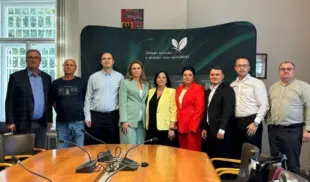
As noted by representatives of business associations who took part in yesterday’s meetings at MAIA and MIDR, ‘a distinctive feature was the specificity – clearly defined actions and deadlines, rather than mere promises’. All that remains is to await the actual decisions.
Follow our updates
Have information for the newsroom? Share it with Logos-Press