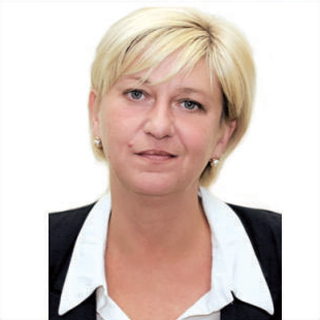

Belgium's central bank governor Pierre Wunsch. Source: The Financial Times
“If a peace deal is confirmed just before the meeting, it will be the subject of discussion. However, whether that peace will prove durable and credible, we will not know,” Wunsch said, signaling his support for a 25 basis point rate hike.
He stressed that the discussion among members of the governing council before the June 11 decision “will be pretty straightforward” if the conflict remains unresolved. If the parties agree on peace, the discussion “will be a little less straightforward, but the arguments in favor of an increase will still remain, they will just become less obvious.”
Inflation in the eurozone is well above target, and even a peace agreement in the Middle East may not be a reason to ease policy.
Pierre Wunsch is convinced that the regulator cannot rely on market mechanisms indefinitely: “At some point, we have to take a clear position”. US President Donald Trump said on Monday that peace talks were continuing “at a rapid pace”. However, on the same day, Iranian government-affiliated media reported that Tehran was suspending tacit talks with Washington over Israel’s escalating actions in Lebanon and the Gaza Strip.
The ECB is expected to become one of the first among the G7 central banks to move to tighten monetary policy. According to Reuters, traders on the swap market estimate the probability of raising the key deposit rate by a quarter point (to 2.25%) at 98%. This measure is necessary to contain inflationary pressures.
Data published on Tuesday showed that inflation in the eurozone rose to 3.2% in May, well above the ECB’s medium-term target of 2%.