News about World markets
According to a forecast by Bloomberg Economics, the global economy is set to face a prolonged period of higher interest rates. According to the agency, by the end of 2026, this rate will stand at 5.10%, up from the 4.41% projected in January—that is, before the outbreak of hostilities in Iran.

Goldman Sachs has lowered its forecast for the yen to 165 yen per dollar and joins a growing number of investors who are increasingly skeptical of the yen, which has already hit its lowest levels since 1986.

Leading OPEC+ members agreed to another moderate increase in oil production quotas for next month. On Sunday, during a video conference, seven countries led by Saudi Arabia and Russia agreed to increase the production target by 188,000 barrels per day. This decision increases the likelihood of rising supply in the market, provided the interim peace agreement between the U.S. and Iran remains in place. Since the start of the military conflict, the alliance has increased its quotas by a total of 940,000 barrels per day—a volume equivalent to nearly 1% of global demand.

The NATO summit in Ankara, scheduled for July 7–8, will focus on steps to increase defense spending, as well as the alliance’s efforts in the areas of deterrence and defense. Burhanettin Duran, director of communications for the Turkish presidency, made this statement on Sunday.

In June 2026, the average value of the FAO Food Price Index stood at 130.3 points, down 0.4 points (0.3%) from May. On average, the index for the five food commodity groups tracked remained stable over the past month, as higher global prices for vegetable oils and meat were offset by lower prices for cereals, dairy products, and sugar.

Horse sales in Russia have surged amid the fuel crisis.

U.S. President Donald Trump spoke in Washington on the occasion of the 250th anniversary of the country’s independence, declaring that “the American Dream is back.” In his speech, he spoke about American exceptionalism and U.S. foreign policy successes, and once again criticized his political opponents.

Electric vehicle batteries last significantly longer than expected just a few years ago. New data shows that battery life is becoming one of the key factors reshaping perceptions of electric vehicle ownership.

One of Georgia’s largest industrial projects—the oil refinery in Kulevi—will completely cease processing Russian crude oil starting in August–September 2026. This was announced by Black Sea Petroleum, the company that operates the facility.

At 10:00 a.m. today, 145 power plants operating under free-market conditions were shut down because they were unable to sell their electricity through OPEM.
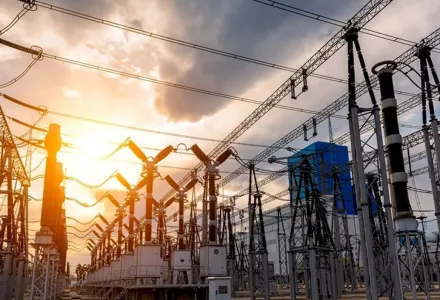
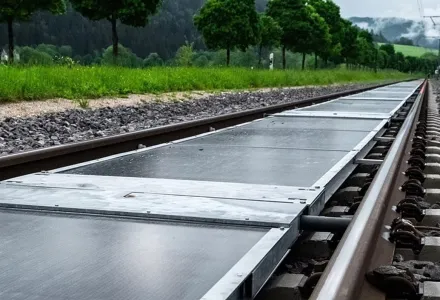
A new type of energy infrastructure may emerge in Europe: railroad tracks converted into solar power plants. The Swiss startup Sun-Ways announced the successful completion of the first year of testing a system of photovoltaic panels installed directly between the rails of an operational railroad&
Chinese authorities are discussing measures that could reduce the number of publications by Chinese scientists in foreign scientific journals. The initiative stems from concerns about technology leaks and stricter national security requirements.

Denmark, Sweden, and Finland have opposed a European Commission initiative that proposes allowing only beverages made exclusively from apple or pear juice to be labeled as “cider,” according to the Financial Times.

The Azerbaijan Food Safety Agency (AQTA) has announced the launch of a large-scale digitalization initiative for the livestock sector, under which the country will completely phase out traditional physical livestock markets in favor of electronic commodity exchanges.

On U.S. Independence Day, the American leader decided to make a scathing remark directed at his closest allies.

In 2025, Moldova ranked 95th out of 197 countries worldwide in a salary ranking.

In June, the state-owned company Energocom purchased 41.3 million euros worth of electricity, a 12% increase from May, amid a heat wave and a sharp rise in prices on the stock exchange.

The Turkish government has decided to introduce a tariff quota on imports of sunflower seeds and unrefined sunflower oil. The document provides for preferential terms for importing raw materials to support the domestic processing industry and ensure a stable supply of vegetable oil to the domestic market.

When World War II began in 1939, Canada had virtually no military-industrial base to speak of. But over the next six years, Canadian factories produced thousands of aircraft, hundreds of naval vessels, and more than 800,000 pieces of armored vehicles. A country with a population of just 11 million people transformed into a powerful military-industrial center.

Moldova’s leadership intends to finally recognize the Chinese market as strategically important for the country and to actively increase exports of domestic products to China.