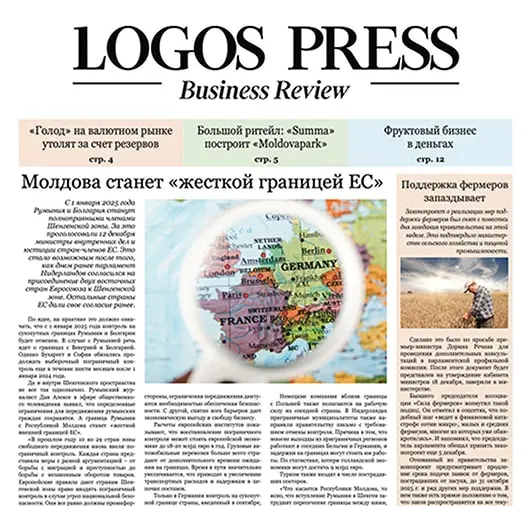
News about Legislation
The sand quarry near Cosnita commune, Dubasari district, has become the subject of a public and political dispute, which is now submitted to the direct decision of citizens.

The fifth report of the Council of Europe’s Group of States against Corruption (GRECO), published on April 8, identifies numerous problems in Moldova’s fight against corruption. Among them, one vulnerability of Moldova’s anti-corruption system that previously remained in the shadows – the lack of effective control over the so-called “post-employment” of officials – draws attention.

UPDATED. Citizens living in the state housing stock on the terms of rent will have the opportunity to privatize housing for three more years – until May 31, 2029. The corresponding initiative was considered at a meeting of the parliamentary commission for economy, budget and finance. The document will be sent to Parliament for consideration in the first reading.

Moldova is implementing new procedures for the registration of medicines and changing the approach to placing them on the market. The Government adopted a regulation on the procedure for authorization and placing on the market medicinal products for human use.

For a month and a half, the post of the chairperson of the Competition Council remains vacant after the former head, Aleksei Hercescu, left it at his own request. On Wednesday, April 8, the parliamentary commission for economy, budget and finance nominated Alina Chebotariov to head the institution.

The Council of Europe’s Group of States against Corruption (GRECO) has published the fifth report on Moldova’s implementation of the anti-corruption recommendations of the fifth round of assessment. The document deals with the prevention of corruption at the highest level of the executive branch and in law enforcement agencies – precisely where trust in the state and its institutions is formed.

More than 20 hours a week on the computer? You should see a doctor! Since April, a new regulation on medical examinations for employees exposed to occupational risks has been in force.

Employees and employers will be able to resolve individual disputes without going to court. This will be quicker, cheaper and less stressful. As early as autumn, the authorities plan to launch a specialized mediation institute for this purpose, which will provide a “negotiation process”, including for civil and family disputes.

“The Chamber of Commerce and Industry has almost completely digitized its services, including certificates of origin, which from June 1 will be issued exclusively in digital format, ATA carnets, force majeure certificates, expert and valuation reports, which serve as a support tool for businesses,” said CCI President Sergiu Harya.

Moldova appoints three new ambassadors. The Parliamentary Commission for Foreign Policy approved the respective conclusions on Wednesday, April 8. Sergiu Mihov is appointed Moldova’s ambassador to Japan; Igor Moldovan – to Kazakhstan; Victor Lapusneanu – Moldova’s permanent representative to the Council of Europe.

The financial thresholds that determine the size of a company will increase as of January 1, 2027. They may be adjusted by 25% and rounded up for inflation.

The authorities expect to increase investment attractiveness and create a more predictable environment for the development of the high-tech sector through a new law on semiconductor topographies.

The Moldovan labor market in 2026 is characterized by the transition to European standards of regulation, as well as by liberalization and introduction of new rules for employees and employers.

U.S. Immigration and Customs Enforcement (ICE) has arrested more than 800 people after receiving information from the U.S. airport security agency. The figure covers the period from the beginning of Donald Trump’s presidency until February 2026.

Tens of thousands of Romanian citizens from the Republic of Moldova were left without identity cards after legislative changes blocked their access to the documents. Now the Romanian authorities are proposing a quick and unexpected solution: the introduction of electronic identity cards. What this change entails and who it will help.

Businesses are eagerly awaiting news about the anticipated tax policy changes planned for next year. The Ministry of Finance has already unveiled some of its ideas at the annual Tax and Customs Policy Conference on March 30.

Moldova is at the final stage of implementing the European Directive PSD2 into the national legislation. The document envisages modernization of the payment services system, implementation of Open Banking and strengthening the security of online payments.

Acts on accidents at work with temporary loss of working capacity, which are completed by the employer and the State Labor Inspectorate, will be combined into one form.

Representatives of Moldovan companies claim a number of systemic problems that affect their activities and limit the development of production, including tax burden, staff shortages and bureaucratic barriers. In particular, they advocate for the elimination of import taxes on raw materials used for local production.

Moldova plans to launch a system that will enable the collection, collation and utilization of data on external assistance recipients. It will bring together information on public institutions, private organizations and NGOs that receive or participate in the implementation of external funding.