What is happening with exports and imports?
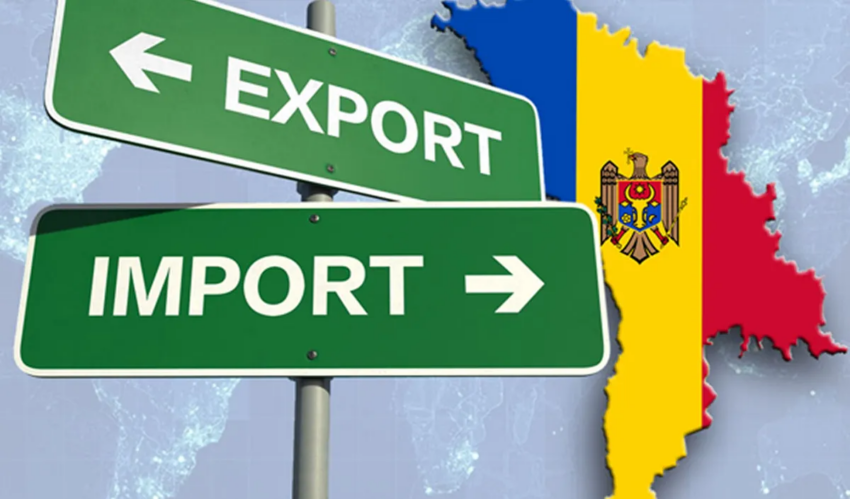
The country spends approximately three times more on imports than it earns from foreign sales.
According to data from the National Bureau of Statistics (NBS), in 2026 Moldova’s foreign trade is showing a moderately positive trend in exports, which grew by 11.7 per cent in the first half of the year (to €1,969.9 million).
The growth was driven by Moldovan-produced goods (around 80 per cent of all exports), in particular cereals, oilseeds, fruit and textiles.
However, imports over the same period rose by 7.1 per cent, coming very close to the €6 billion mark. Due to the huge difference in volumes, even a modest percentage increase in imports, in absolute terms, outweighs the successes of Moldovan exporters.
Analysts at the independent research centre Expert-Grup note: “The fact that exports of Moldovan goods are growing faster than imports in percentage terms is a positive sign for local businesses. The figures for the agricultural sector are particularly encouraging. However, the narrow export base (dependence on the grain harvest and a few markets such as Romania) makes the economy vulnerable. To reverse the trend and reduce the deficit, the state needs to stimulate the production of high value-added goods domestically, rather than simply exporting raw materials.”
Product groups: where the money goes
Three key categories of goods exert the greatest pressure on the trade balance. First and foremost, these are energy resources. Gas, petroleum products and electricity together account for around 24 per cent of the country’s total imports. Cars and machinery for modernising production facilities were also imported in significant quantities.
As for domestic consumption, dependence on external markets has long been established and is here to stay. Moreover, this applies to virtually all categories of consumer goods – from medicines to foodstuffs – for which the domestic market is unable to meet demand.
Viecheslav Ionice, an economic expert: ‘Moldova has historically faced a profound structural imbalance. We can see that domestic consumption by citizens and investment demand from businesses significantly exceed the production capacity of Moldovan enterprises.
This demand is actively fuelled by external sources – remittances from the diaspora, international financial aid and grants. People receive money from abroad and spend it domestically on imported goods. The state does the same. As a result, the currency entering the economy is almost immediately drained back out through purchases of foreign products.”
Geographical imbalance
According to the statistics, on a country-by-country basis, our country’s trade with the European Union (EU-27) in January–July 2026 accounted for 65.3 per cent of total exports and 54.6 per cent of total imports.
The EU remains the republic’s main trading partner, accounting for more than half of all trade. The trade deficit with the EU-27 rose by 5.7 per cent to €1,901.8 million. Romania remains Moldova’s main supplier and buyer.
Conversely, the trade deficit with CIS countries (excluding Ukraine) fell by 15 per cent to €36 million. However, this slight reduction is solely due to a shift towards external markets for energy imports.
Imports from CIS countries account for 2.8 per cent of Moldova’s total imports. This trend is driven by a systematic reduction in procurement volumes from the east and a reorientation of supply chains.
At the same time, the statistics show an increase in imports from China (+13.0 per cent), Romania (+7.1 per cent), Germany (+12.8 per cent), Argentina (9.3 times), Egypt (3.5 times), the Czech Republic (+30.2 per cent), Croatia (+55.4 per cent), the Russian Federation (+24.7 per cent) and Bulgaria (+26.7 per cent), which contributed to a 7.4 per cent increase in total imports.
At the same time, imports from the USA (-21.4 per cent), Ukraine (-2.3 per cent), Kazakhstan (-82.9 per cent), Turkey (-2.7 per cent), Japan (-14.5 per cent) and Sweden (-27.5 per cent), which offset the 1.4 per cent growth in total imports.
Why is the growing deficit a cause for concern?
A systematic surplus of imports over exports leads to a constant outflow of capital from the country. So far, this imbalance has been offset by external loans and donor support, which has prevented the Moldovan leu from depreciating sharply and the country from going bankrupt.
As Moldova spends three times more on imports than it earns from exports, this financial shortfall must be constantly plugged. At present, the deficit is covered by external loans, EU grants and remittances from the diaspora.
However, experts warn that international aid is not endless, and loans must be repaid with interest. The growing trade imbalance is forcing the state to take on new debt to cover old debts, thereby increasing the burden on the budgets of future generations.
A dangerous illusion of stability is being created. If the inflow of external grants or loans were to suddenly dry up (for example, due to a change in the global political climate), the National Bank of Moldova (NBM) would not be able to artificially prop up the exchange rate for long. In such a scenario, the leu would face a sharp and painful devaluation, which would instantly erode citizens’ savings.
Furthermore, when the market is protected by imports from more developed countries – which, whilst not cheap, are politically subsidised – it becomes unprofitable for local producers to develop their businesses within Moldova.
The country risks becoming permanently entrenched in the role of a supplier of cheap raw materials (grain, sunflower seeds) and labour. Instead of creating high-paying jobs in the processing and technology sectors, the country simply exports its resources and purchases finished products at a high mark-up. This encourages further population migration.
Analysts at the independent think tank Expert-Grup state: “Moldova’s main vulnerability is its narrow export structure. We remain critically dependent on climatic conditions and the harvest of cereals and oilseeds, which are sold as raw materials with low added value. To achieve a real reduction in the deficit, structural reforms are needed: the domestic processing of agricultural produce, the development of textile and automotive clusters, and a reduction in dependence on energy imports through energy efficiency.
The model of ‘sell raw materials – receive remittances from the diaspora – buy imported yoghurt and an iPhone’ is a dead end. Without large-scale incentives for domestic production and a strict policy of import substitution in the energy sector and the agri-food industry, the country will remain vulnerable to any external shocks.”
Follow our updates
Have information for the newsroom? Share it with Logos-Press