The WTO has published an interactive world map showing the dominant export sectors for each country. From this, it can be seen that in 2025, Moldova’s total goods exports amounted to $3.88 billion (excluding exports of services), placing our country 133rd (out of 189) in the world in this respect.
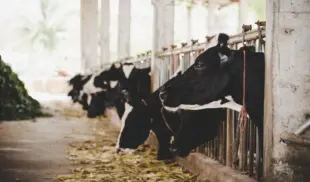
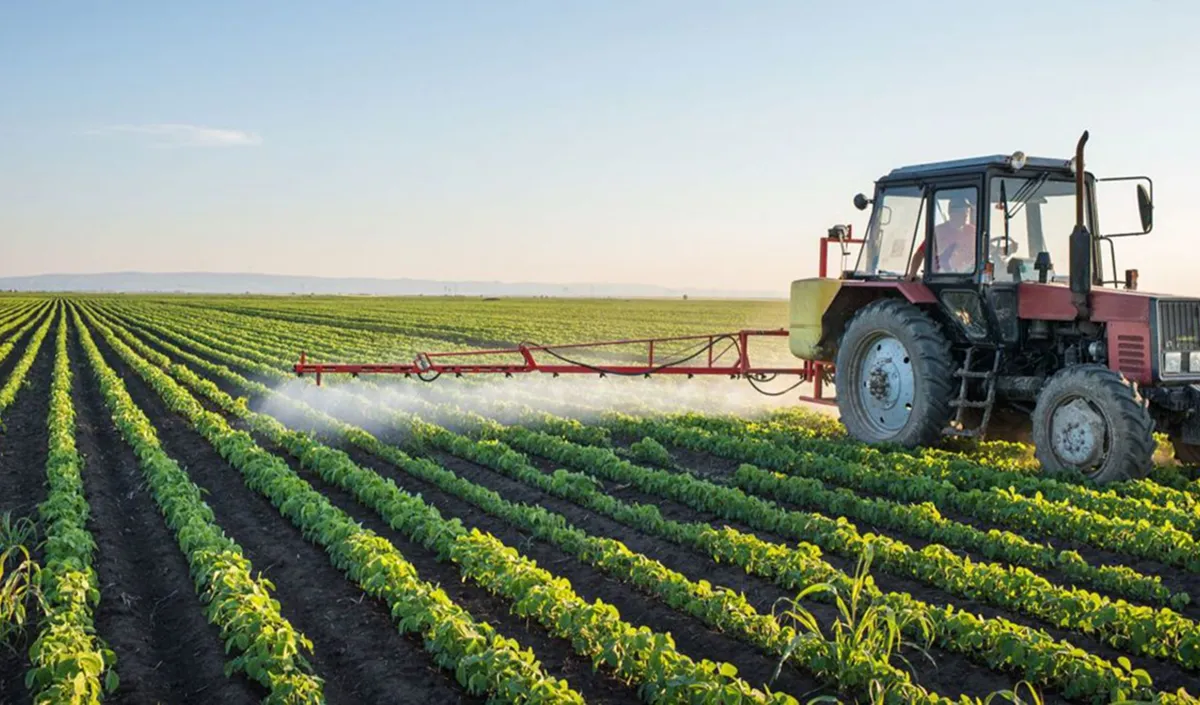
At the same time, agro-industrial products and foodstuffs were the dominant export commodities.
In principle, there is nothing negative about this. Agricultural produce remains the largest export category for almost a third of the world’s countries.
The world’s four largest economies, meanwhile, are most heavily reliant on exports of machinery and electronics.
For their part, Canada, Russia and Saudi Arabia are among the world’s largest fuel exporters.
We trade what we have
Virtually every country depends on international trade and global demand for its products. However, countries vary greatly in terms of the goods they export to the rest of the world.
When it comes to natural resources, some countries are luckier than others. For many, these resources form the basis of their exports: the extraction of raw materials and their sale to foreign buyers.
For example, countries such as Canada, Nigeria and Saudi Arabia have become major players in the global oil industry. Others, such as Algeria, Russia and Qatar, rely more heavily on their vast natural gas reserves.
Other countries possess different natural resources. Chile and Peru have historically been major copper producers, but in recent years have also made their mark on global markets thanks to their lithium reserves.
Australia, rich in iron ore, has had a similar experience, whilst the Democratic Republic of the Congo is known for its large deposits of minerals such as cobalt and coltan.
Agricultural produce and foodstuffs have become the main exports of countries such as Argentina, Brazil, Egypt, Spain and Ukraine.
In neighbouring Romania, the main export sectors are engineering and electronics.
Competition at the top level
Many countries rich in natural resources eventually move beyond extractive industries, such as mining or hydrocarbon extraction. Industrialisation and technological progress can shift the economy towards the export of higher value-added products, such as machinery and electronics.
This is the main export category for all four of the world’s largest economies: the US, China, Germany and Japan.
The sector includes high-value industrial goods such as cars and lorries, as seen in the examples of Mexico and Poland, as well as high-tech products such as microchips. Some countries even specialise in this: for example, the Netherlands is home to ASML, the largest supplier to the semiconductor industry.
China’s manufacturing might
China is the world’s largest exporter, with its trade surplus exceeding $1 trillion in recent years. The country has become the world’s leading manufacturing power, displacing the United States from that position in the 21st century.
In some sectors, this dominance in the manufacturing industry is causing concern amongst trading partners such as the US and Germany. In recent years, Washington has imposed large-scale tariffs on certain Chinese imports, primarily electric vehicles.
Nevertheless, the interdependence of global supply chains means that China remains reliant on supplies from around the world. For example, it is the largest importer of Brazilian soya, as well as a buyer of Iranian oil.
Is the industrialisation of Moldova possible?
Since 1991, the country has faced severe deindustrialisation: many large enterprises have closed due to the severing of economic ties and the loss of sales markets.
There are occasional signs of recovery in certain sectors (such as light industry or initiatives like the creation of new industrial platforms), but experts point to a lack of systemic conditions for a full-scale technological breakthrough.
Some government officials and economists are sceptical about the prospects for large-scale industrialisation due to a shortage of skilled personnel, a weak technical base in universities and external economic risks.
Even Moldova’s new Prime Minister, Vasile Tofan, has stated that he does not believe in the country’s industrialisation and even expects the automotive parts manufacturing sector – which accounts for a fifth of Moldova’s exports – to fail.
Tofan stated that “we can try to actively pursue industrialisation and spout all sorts of fine words” on the matter, but “I think that, in any case, the future of a country like Moldova lies in sectors with higher added value, because costs will continue to rise. And this mainly involves services, including tourism and medical tourism, where greater involvement of people is needed – such as medical assistants and tour guides.”
In other words, even in this situation, the Prime Minister is not talking about redirecting the main financial flows towards agriculture – or towards processing, storage and new technologies. That is, towards a sector capable of generating a substantial increase in export revenue amounting to hundreds of millions of dollars.
Whether the medical sector and tourism are capable of making an equally significant contribution to the country’s economy is a big question.
Follow our updates
Have information for the newsroom? Share it with Logos-Press