

Second-hand and resale: what’s the difference?
Before discussing the Moldovan market, it is worth clarifying the terminology.
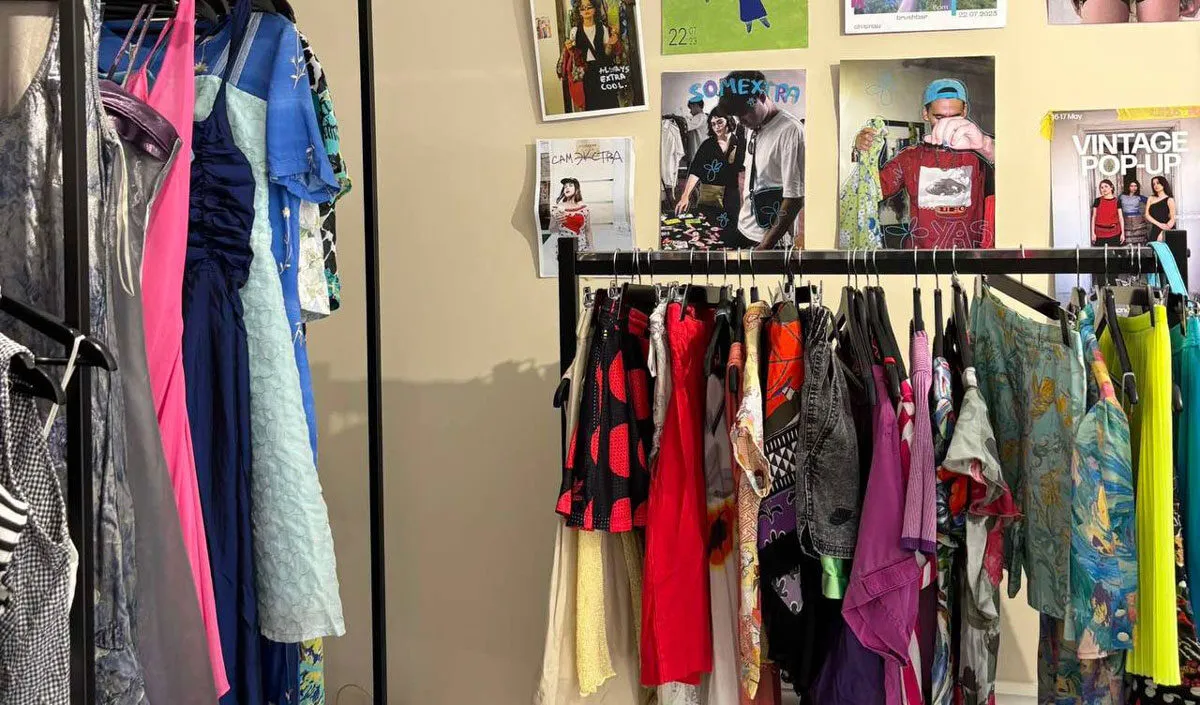
‘Second-hand’ is a general term for clothing and other items that have already been used and have entered the secondary market. They are sold in specialist shops, at markets, via social media and on online platforms. Within this market, there are various formats: from mass-market second-hand shops to vintage shops, where each item is selected based on style, quality or rarity.
Resale refers to the resale of items, which can be organised in various ways. Unlike mass-market second-hand shops, selective projects carefully curate their stock, assess the condition of items and prepare them for sale. Sellers can curate their own range, verify the authenticity of branded items, set prices for each item and promote them.
Resale encompasses various sectors: the resale of branded clothing, vintage items and luxury goods. However, the boundaries between these concepts are not always clear-cut: a vintage shop may operate as a selective second-hand shop, whilst an online platform may resell both everyday clothing and designer items.
Why attitudes towards second-hand clothing are changing
The popularity of the second-hand market is not just about saving money. Shoppers’ choices are influenced by rising prices for new clothes, a desire to find unusual items and a critical attitude towards mass consumption.
According to the American company ThredUp, by 2030 the global second-hand clothing market will reach $393 billion. It is growing twice as fast as the clothing market as a whole.
According to ThredUp, over 60 per cent of consumers say they will look for affordable options on the second-hand market if clothing prices rise. At the same time, 61 per cent are prepared to buy or sell items via resale platforms, even if they can afford to make more new purchases. Among the reasons cited by the company is the enjoyment of finding interesting items – the so-called ‘thrill of the hunt’.
The economic potential of this market is also confirmed by the results of European companies. For example, Vinted, a platform specialising in the resale of second-hand items, recorded a net profit of €17.8 million in 2023. In 2024, this figure rose by approximately 331 per cent to €76.7 million.
Environmental considerations are also fuelling growing interest in the second-hand market. According to estimates by the Boston Consulting Group, around 120 million tonnes of textile waste are generated worldwide each year. The United Nations Environment Programme estimates that the fashion industry accounts for 8–10 per cent of global greenhouse gas emissions.
That said, the environmental impact of buying second-hand clothing depends on the specific item, how it is delivered, and whether it replaces the purchase of a new item. According to a product life cycle assessment prepared by Vaayu for Vinted, emissions associated with buying a second-hand item can be 70–82 per cent lower than when buying a new one.
Young shoppers are playing a significant role in this transformation. According to a report by ThredUp and GlobalData on the second-hand clothing market, 68 per cent of Gen Z and Millennials buy second-hand items or look for them on the second-hand market before purchasing new clothes.
This global trend is gradually changing the Moldovan market too, although here it has its own history and its own economic context.
From ‘humanitarian aid’ to the hunt for vintage
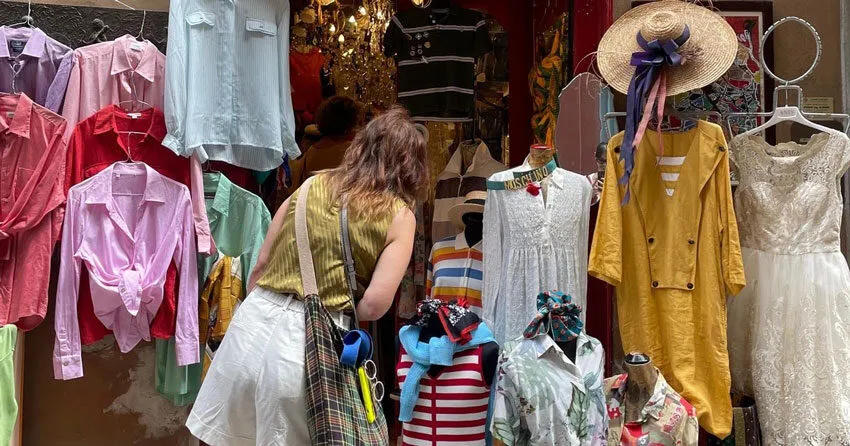
In Chișinău, the search for second-hand clothes began long before the emergence of vintage boutiques and Instagram shops. One of the main venues was open-air markets, where clothes were sold in a haphazard mix and shoppers had to hunt for interesting items themselves.
Well-known spots included ‘Golden Autumn’ in Botanica, known as the ‘second-hand market’, ‘Locomotive’ behind the railway bridge, the ‘Flakera’ market in Buiucani, the Chekan market and the market in the Old Post Office district.
In the 1990s, for many people, buying second-hand clothes was first and foremost a necessity. By the 2010s, people were also visiting these markets in search of unusual items. This practice was particularly popular amongst young people, who were trying to find rare styles or clothes that stood out from the mass-market range.
The next stage saw the spread of permanent second-hand shops. In the mass-market segment, the range is put together differently from that in vintage shops: retailers buy large consignments of clothing, often without knowing in advance exactly what items will be included. There is no individual selection of each item based on style or brand.
This model continues to form the backbone of the Moldovan market. It includes, in particular, ODEJKA and MEGAHAND, where shoppers come for affordable clothing, and the range is updated as new consignments arrive.
Alongside street markets and mass-market second-hand shops, another format has emerged: outlet stores. Unlike second-hand shops, outlet stores usually offer new clothing, most often from past collections, unsold stock or production surpluses. Examples of international chains of this type include TJ Maxx and Ross.
In Moldova, these formats are often combined. Some shops sell both stock and second-hand clothing. In particular, MEGAHAND deals in various categories of goods, whilst AZART started out as a second-hand shop with a range of stock clothing.
The rise of the mass market has changed attitudes towards buying second-hand items. On the one hand, new clothes have become more affordable; on the other, mass production has led to the standardisation of wardrobes. With the spread of social media, where people are constantly comparing outfits, the desire to find something unique has become an additional incentive to search for items on the second-hand market.
How second-hand fashion went online
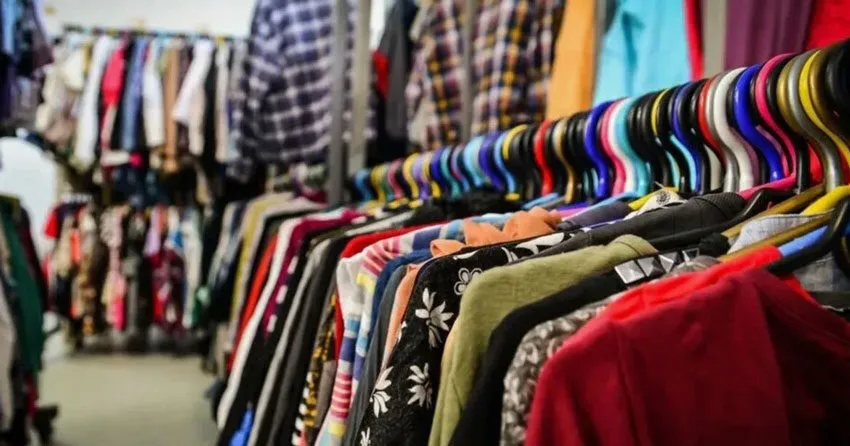
In the early 2020s, online shops selling second-hand clothing began to appear in Moldova in significant numbers. Sellers started sourcing items themselves at markets and in large second-hand shops, selecting interesting pieces and listing them on Instagram, Telegram and the 999 platform.
This gave rise to the curated second-hand and vintage segment, where the buyer pays not only for the item itself, but also for the work involved in sourcing and selecting it.
According to Lydia Litvinova, a stylist and owner of the online vintage project SOMEXTRA, there was a particularly noticeable surge in interest in such shops in 2020–2021. The popularity of vintage clothing, unusual looks and layering was influenced, among other things, by social media, particularly TikTok.
‘There was a real boom in 2020–2021. I was running my shop more actively back then and saw new vintage projects every day, although many of them were very similar. Some had no concept at all: they’d find an item, take a photo of it right on the spot and post it. After the pandemic, interest grew. People probably wanted to dress up more again, and on top of that, everyone started watching TikTok,” says Lydia Litvinova.
This business model has its advantages: the seller curates the range themselves and can offer customers unusual items that are hard to find in a regular shop. But there are limitations too. Sourcing products, preparing them, taking photos, posting them online, communicating with customers and organising delivery all take time and resources. With a low volume of sales, it is difficult to spread these costs across a large number of customers.
Consequently, some online ventures have begun to move beyond social media. They organise garage sales, pop-up shops and yard sales – temporary retail spaces where customers can view and try on clothes. Such events allow sellers to introduce customers to their products whilst avoiding the costs of a permanent premises.
Among the businesses operating in the online resale sector even before the pandemic are LookRoom and Vintage Shelf.
At the same time, sellers have to compete on several fronts simultaneously. On the one hand, there are cheap offers on the market, including from international online platforms such as Temu. On the other hand, select shops are setting a higher price point, to which some shoppers are gradually becoming accustomed.
According to Lydia Litvinova’s observations, shoppers are willing to pay more if they understand exactly what they are paying for: a rare item, a high-quality product, or careful selection or preparation of the goods. However, a high price alone does not necessarily mean that the seller has put a lot of effort into the item.
Why online sellers are in no hurry to open physical shops
Despite the growing interest in vintage fashion, the transition from Instagram to a physical shop isn’t for everyone. Rent, utility bills, the need to maintain a stock range and keep the premises in good condition all increase costs. Furthermore, a shop requires a constant stock of clothing, whereas an online seller can operate with a small number of carefully selected items.
Daniil Mikhailov, who manages several shops on Instagram, explains that the main challenge lies in the purchasing model itself.
‘We’re used to finding and selecting exactly what we need ourselves. But for a physical shop, it’s not about individual items, but volume. Buying clothes by the sack isn’t cost-effective: there might not be a single branded or genuinely interesting item in there, and then quantity won’t make up for quality. We’re used to curating, not guessing,’ he says.
There is another way: some young entrepreneurs are turning to the international market. They rent warehouses or storage spaces, select clothing and resell it via overseas platforms, such as eBay. This approach allows them to reach beyond customers in Moldova, although it requires knowledge of international trade regulations, organising shipments and dealing with customers from other countries.
Sometimes entrepreneurs organise sales directly in the premises where they store their goods. This gives buyers the chance to see the items in person, whilst allowing sellers to offload part of their stock without the costs associated with running a full-scale shop.
Brick-and-mortar vintage shops: focusing on the customer experience
One of the early examples of the transition from online trading to a physical format was VINTAGE ROOM. The project launched on Instagram in January 2018 and opened a showroom following the 2020 lockdown. The shop is now closed.
Another example is PAST PERFECT. The project operated online for about a year before opening a physical shop. According to its owner, Alexandra Brenishter, this period allowed her to gain a better understanding of the local audience and build up a base of regular customers.
For PAST PERFECT, the shop has become not just a place to sell clothes, but also a space where customers can learn about the very concept of second-hand fashion. That is why it is not only the range and prices that matter, but also the interior, the ease of browsing and the quality of service.
‘I realised that we would also have to educate people about second-hand fashion. That’s why it was important to me that we didn’t look like a run-of-the-mill second-hand shop tucked away in a basement. It had to be an attractive space with a high standard of service, where items aren’t just piled up in a heap but each one has been carefully selected. “We want to show that this is a conscious choice. People come to us because of their values, not because they can’t afford new clothes,” explains Alexandra.
This business model has a different cost structure. As well as buying stock, we have to pay for rent, utilities, storage and the upkeep of the retail space. It’s also important how quickly items sell: if items remain on the hangers for too long, they take up space needed for new stock.
The shop sources its clothing mainly from the Czech Republic, Germany and the Netherlands, focusing on specific categories. Around 80 per cent of the shop’s stock consists of vintage items.
APRIL THE SECOND also opened this year. Its owner, Alena Kretzu, immediately opted for a brick-and-mortar shop format, aimed primarily at Generation Z. The core of the range consists of curated clothing with a small proportion of vintage items. Particular attention is paid to items from the 1990s and 2000s and the Y2K aesthetic — a fashion trend associated with the turn of the millennium.
The shop buys clothing in bulk from Hungary, after which it selects individual items. There is no standard mark-up here: the price depends on the brand, condition, quality, cut and how on-trend the item is. According to the founder, the most popular price range is 300–500 lei.
Both shops store part of their stock in areas inaccessible to customers. Therefore, discounts are needed not only to attract customers but also to manage stock: items that remain unsold for a long time need to be cleared to make way for new arrivals.
A city-centre location helps such ventures attract customers from different parts of Chișinău and its suburbs, as well as tourists. However, central premises are more expensive, which is reflected in running costs and, ultimately, in prices. A similar trend can be observed in Bucharest, where many well-known vintage and curated shops are concentrated in central districts.
Why is vintage more expensive?
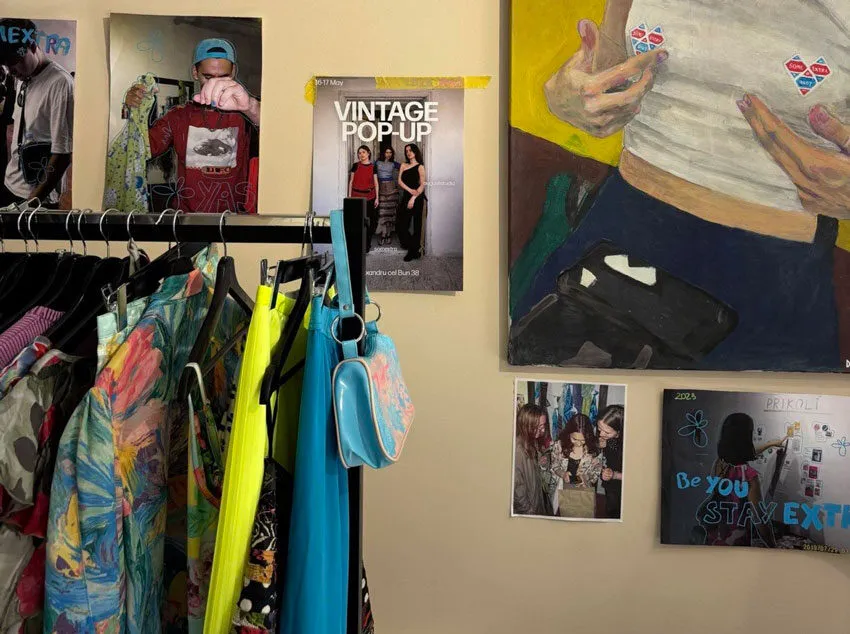
Mass-market second-hand shops and curated boutiques may sell the same type of clothing, but their business models differ significantly. This explains the difference in prices.
In the mass-market segment, the price often depends on the category of the item. For example, a pair of jeans or a jumper may have a fixed price regardless of the specific model or brand. The shop buys in large batches and does not pay separately for each item it subsequently puts on sale.
That is why you can find clothes in such shops for 50–150 lei. If a branded item in good condition happens to be included in a batch, it may be priced higher. But this is more of a lucky find than the result of a targeted search.
With curated shops, things are different. The retailer spends time searching for specific items, assesses the condition of each one, checks its quality and prepares it for sale. These costs are factored into the price from the outset.
At PAST PERFECT, the cost of clothing ranges from 200 to 1,500 lei, whilst at APRIL THE SECOND, items priced at 300–500 lei are the most sought-after. Prices are also influenced by the cost of renting premises in the city centre and other expenses associated with physical shops.
An additional challenge is the rising cost of vintage clothing in Europe against a backdrop of growing demand. This increases the cost of purchasing stock and makes it difficult to find suppliers whose prices are within the means of Moldovan shoppers.
‘We’re still battling the stereotype that the second-hand market must necessarily be cheap. That’s how people think here, but in Europe it’s no longer always the case. Due to its popularity, the vintage segment has become significantly more expensive.
If we were to source ordinary clothes from mass-market second-hand shops, we could make more profit and pay less for the goods themselves. But we try to stick to the concept that 80 per cent, and sometimes even 90 per cent, of the clothes on our racks are vintage items. We have to pay more for this. “We’re looking for a country where purchase prices remain reasonable, but growing demand is making this increasingly difficult,” explains Alexandra Brenister.
Online retailers also factor in the time spent sourcing and preparing the clothes, marketing, photography and communicating with customers. At the same time, they have to take into account the purchasing power of the local audience, who aren’t always prepared to pay as much as customers in Europe.
Luxury resale: clothing as an asset
Luxury resale – the resale of items from well-known designer brands – occupies a niche of its own. Here, the price depends not only on the condition and current popularity of the item, but also on the brand, demand and the ability to verify the item’s authenticity.
Unlike traditional second-hand shops, such projects often deal not with large batches of purchased clothing, but with items from private wardrobes.
This is how HOLY CHIC works. The project acts as an intermediary between the owner of a designer item and the new buyer. The team assesses the clothing and accessories received, taking into account their condition, current popularity and demand in the local market. Not all items offered are accepted for sale: after a photoshoot, staff carry out a further selection of items for the shop floor and social media.
The platform handles the presentation of the goods, their promotion and the organisation of the transaction. The owner receives notification once the item has been sold and is paid.
For this type of business, it is important not only to find an attractive item, but also to value it correctly, present it to the buyer and ensure trust in the transaction. That is why HOLY CHIC explicitly states its guarantee of the authenticity of its goods.
The range includes Hermès, Louis Vuitton, Gucci, Prada, Dior and other luxury brands. The price of individual items can reach tens of thousands of lei.
In this way, the luxury resale market serves two purposes: it allows the owner to receive money for an item they no longer use, whilst enabling the buyer to purchase a designer item more cheaply than a new one. However, the price depends on the specific model, its condition and demand, so a discount relative to the original price is not guaranteed in every case.
Generation Z, or who buys second-hand clothes
Generation Z and millennials are among the most prominent buyers of second-hand clothing. However, the motivations of different age groups may vary.
According to Alexandra Brenister’s observations, younger shoppers are more likely to seek out unique items and the opportunity to express themselves through their clothing. An older audience may pay more attention to the quality of the fabric, the composition, the condition and the lifespan of the item.
‘The younger generation really values uniqueness and self-expression. At the same time, they want to look distinctive without spending a fortune. A more mature audience tends to focus on quality. People want to wear clothes for longer and make more conscious choices. Many talk about the environment: clothes that are worn once and then thrown away no longer seem appealing,” notes Alexandra.
However, it would be wrong to categorise shoppers solely by age. For some, the second-hand market remains a way to save money; for others, it is an opportunity to find a rare item, buy well-known brand clothing at a more affordable price, or move away from some of the habits of mass consumption. These motivations can overlap.
The Moldovan second-hand clothing market is gradually becoming more diverse. Alongside mass-market second-hand shops, vintage shops, curated online platforms and luxury resale are flourishing. Each format has its own audience, its own cost structure and pricing logic.
Consequently, the mere fact that an item of clothing has been previously worn is increasingly less of a determining factor in its value and appeal. What matters far more is the nature of the item, its condition, how rare it is, and the value the buyer sees in it.
This story was translated with the assistance of artificial intelligence.The translation was also reviewed by the Logos Press editorial team.
Follow our updates
Have information for the newsroom? Share it with Logos-Press






















Comments
0No comments yet. You can start the conversation.
Comments are open to readers with a Logos Press account.
Sign in to comment