

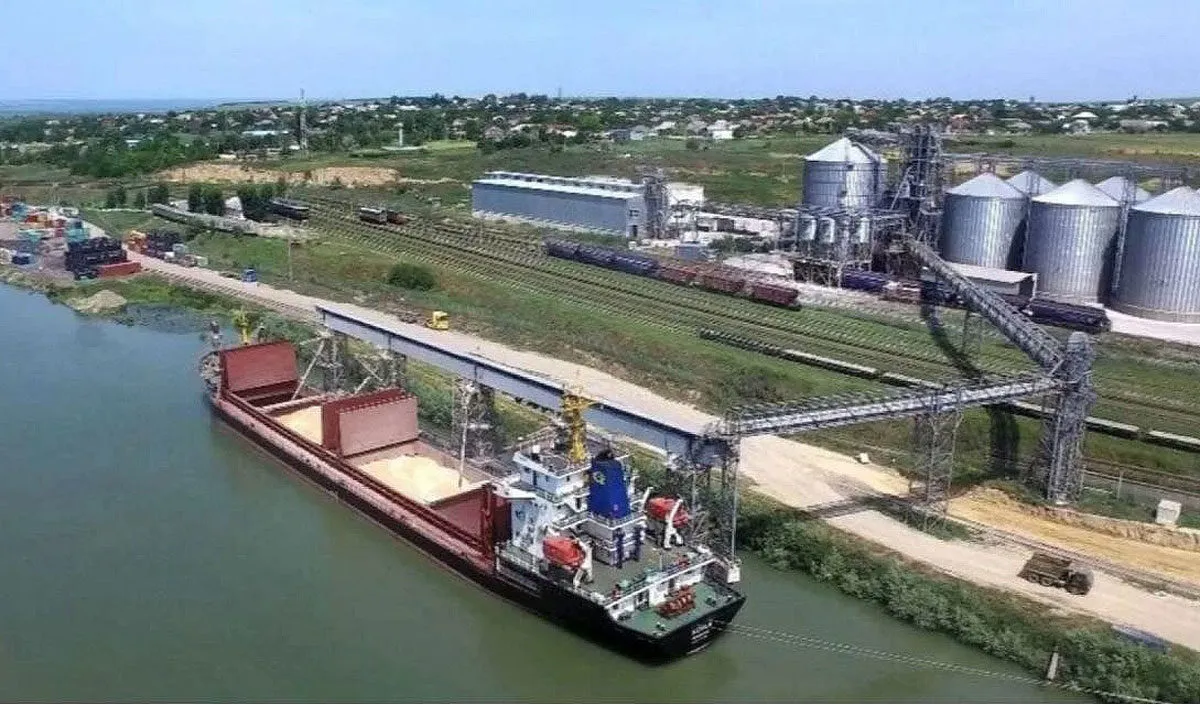
Between January and September 2026, 1.64 million tonnes of cargo were exported via the port complex in Giurgiulești. This is 16 per cent higher than the figure for the whole of 2025 (1.42 million tonnes) and 9.5 per cent higher than the 2024 figure (1.5 tonnes – the previous record for the port’s entire history).
Over the first three quarters of this year, 90 per cent of cargo transhipped through the port consisted of cereals and oilseeds. The main driver of traffic was wheat, accounting for 51 per cent of all cargo transhipped. By early October, 834,500 tonnes had been exported via the Giurgiulești complex – two-thirds more than in the whole of last year and a fifth more than in 2024 (501,000 tonnes – a record that has already been broken).
During this period, Moldova imported nearly 1.1 million tonnes of cargo via the Giurgiulești port complex. The rate of imports is also higher than last year’s, though only slightly. According to expert estimates, the final figure for imports by water will only marginally exceed the figures for 2025.
Construction materials form the bulk of imports: crushed stone, sand and gravel – totalling almost 340,000 tonnes (28 per cent of the incoming goods flow). Another important category of imports is petroleum products. For instance, just over 236,000 tonnes of diesel fuel entered the country via the southern maritime ‘gateways’ (+10 per cent compared with the total volume for the whole of last year), whilst nearly 75,000 tonnes of petrol were imported.
For Moldova’s agricultural producers, one of the most important indicators of the port’s performance is the volume of fertiliser supplies. In this regard, the trend is, unfortunately, negative – 73 per cent of last year’s volume (almost 147,000 tonnes). Despite the slow pace, the supply season for this essential resource for the 2027 sowing campaign is not yet over.
Balance and nuances
The difference between exports and imports via the Giurgiulești port complex from the start of this year to October stood at almost 550,000 tonnes – in favour of exports. This is the highest positive balance for this period of the year in the last four years. Market analysts believe that by the end of 2026, the surplus of exports over imports will increase.
Moreover, according to Yuri Riza, the author of the statistical compilation cited above, the volume of exports will increase by the end of the year, driven specifically by agricultural produce.
There is one significant nuance in the structure of trade: the specific volume of sunflower seed traffic. Exports of sunflower seeds by sea totalled 235,000 tonnes. A significant proportion of exports (around 110,000 tonnes) took place during the winter months at the start of 2026. A new development this season was the inflow of imported sunflower seeds delivered to Moldova by water – totalling almost 104,000 tonnes.
‘The barges travelled down the Danube from the ports of Constanța and Galați and were unloaded at terminals in Giurgiulești. Part of the volume received in the first half of the year was imported for processing. The remainder passed through transit, re-export and operations in the free zone of the Giurgiulești International Free Port: the cargo is unloaded from river barges and transhipped onto seagoing vessels for dispatch to end buyers,” notes Yuri Riza.
It is safe to assume that the majority (if not all) of the sunflower seeds arriving in Moldova by water are of Argentine origin.
Since the introduction of the import licensing regime on 8 September 2026, eight barges carrying sunflower seeds – totalling 5,400 tonnes – have arrived in Moldova. Moreover, half of them returned to Constanța carrying a cargo of Moldovan wheat. In other words, this year’s pattern of waterborne freight transport via the port of Giurgiulești also includes a ‘reverse loading factor’.
At the end of this month, the licensing regime for imports of agricultural raw materials into Moldova (by all routes) will expire. According to some market operators, in November–December, the sunflower seed processor operating in the Giurgiulești Free Economic Zone ‘may replace Argentine sunflower seeds with Ukrainian ones’.
This story was translated with the assistance of artificial intelligence.The translation was also reviewed by the Logos Press editorial team.
Follow our updates
Have information for the newsroom? Share it with Logos-Press













Comments
0No comments yet. You can start the conversation.
Comments are open to readers with a Logos Press account.
Sign in to comment