

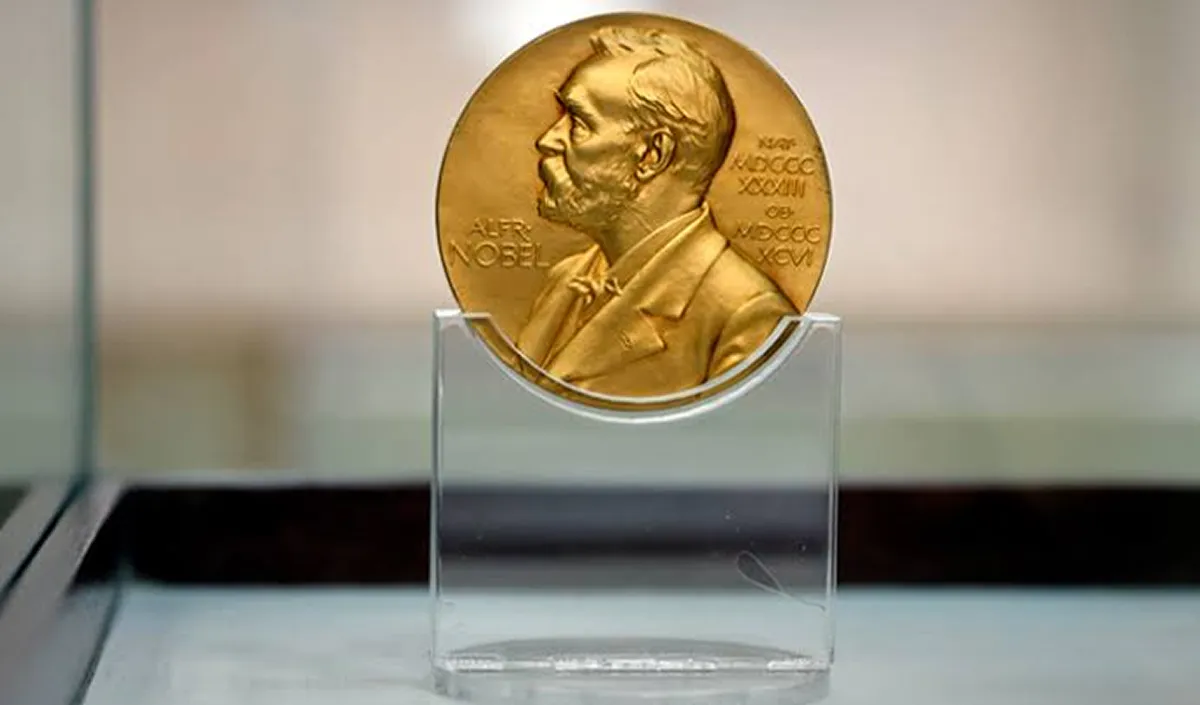
“The laureates’ work has provided us with a solid theoretical foundation for the models used today by central banks and governments around the world,” said a statement from the jury of the Royal Swedish Academy of Sciences.
“Thanks to these models, we are better prepared to cope with economic shocks, such as energy crises or sudden changes in household consumption,” Euronews quotes John Hassler, chair of the prize committee, as saying.
During the oil crises of the 1970s, Keynesian models – which had long been used to determine when and what measures should be taken to combat recessions and other economic fluctuations – ceased to work. This prompted Hall and Woodford to develop new tools to help understand which economic policy measures might be most effective.
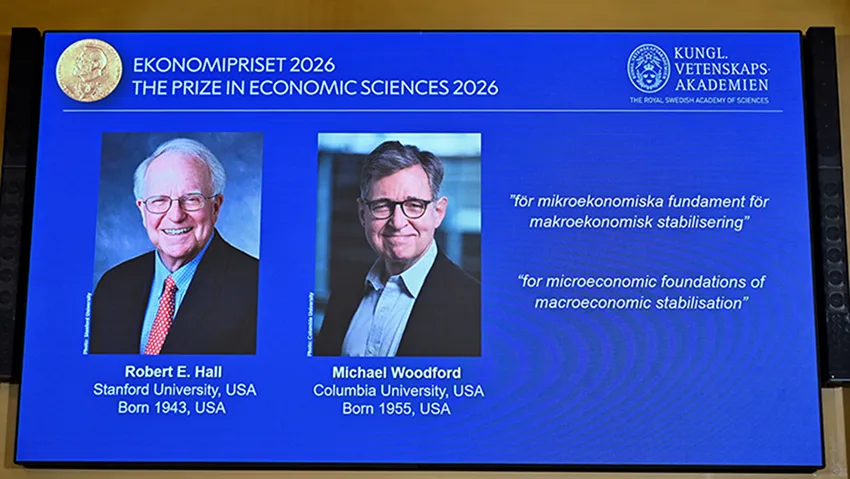
Stabilisation measures at the microeconomic level
‘Instead of basing their models on statistical relationships between macroeconomic indicators such as inflation, output and consumption, they chose to construct them at the microeconomic level,’ noted the Academy’s jury. ‘This involves understanding how the aggregate actions of individual households and firms affect the economy.’
The Prize in Economic Sciences is the only one of the Nobel Prizes that was not among the original five established in the will of the Swedish scientist Alfred Nobel, who died in 1896. It was established later, in 1968, with funding from the Swedish central bank, which is why critics often refer to it as the ‘fake Nobel’.
However, as with the prizes for chemistry and physics, the laureate is selected by the Royal Swedish Academy of Sciences, following the same selection procedure.
Last year, the prize was awarded to the American-Israeli researcher Joel Mokyr, the Frenchman Philippe Aghion and the Canadian Peter Howitt for their work on how technology stimulates and influences economic growth.
Like the other Nobel Prizes, the Prize in Economics comprises a diploma, a gold medal and a cheque for $1.2 million (1 million euros).
The prizes will be presented to the laureates at a ceremony on 10 December, the anniversary of Alfred Nobel’s death.
This story was translated with the assistance of artificial intelligence.The translation was also reviewed by the Logos Press editorial team.
Follow our updates
Have information for the newsroom? Share it with Logos-Press
















Comments
0No comments yet. You can start the conversation.
Comments are open to readers with a Logos Press account.
Sign in to comment