


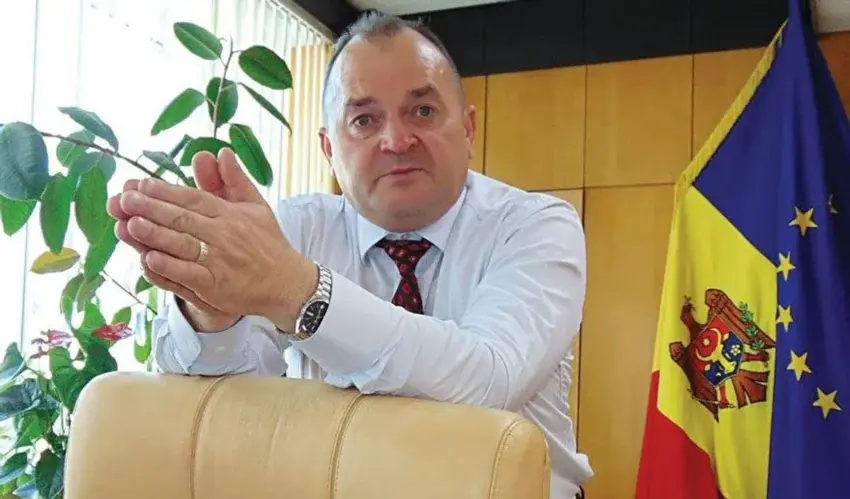
Iurie Uşurelu
the ministers have not forgotten this directive. In any case, the head of MAIA, Eugen Osmokescu, stated on a recent television programme that he is considering abolishing one of the state secretary posts. Otherwise, the ministry’s central administration will remain unaffected – there are currently 24 vacancies there anyway. However, the staffing levels of organisations under the Ministry of Agriculture’s jurisdiction will be significantly reduced – by 10–30 per cent of permanent posts.
The aim of the reorganisation is clear. Two parallel processes – the rise in civil servants’ salaries and the ‘cost-cutting of the state’ – will sooner or later collide if the size of the civil service is maintained.
Undoubtedly, downsizing the civil service is a dangerous path to take (especially if the electoral system is left in place during what is still a time of peace). After all, at this stage in history, the state in Moldova is arguably one of the largest, if not the largest, employers. Moreover, at present, it is a more generous employer than the business sector, which is strictly focused on efficiency – that is, profit.
In such a situation, cuts to the ‘large slices of the small pie’ in the public sector of the labour market will be more noticeable and have a greater impact on the public.
In this regard, the Moldovan media very helpfully reported that the cost (excluding salary, one assumes) of maintaining a single state secretary amounts to approximately 0.6 million lei per year for the ministry (the state). And the salaries of some state secretaries, taking into account length of service and other factors, exceed those of ministers.
Given this situation, something or someone will have to be sacrificed. Minister Osmokescu did not specify on air exactly who or what that would be.
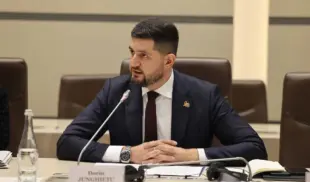
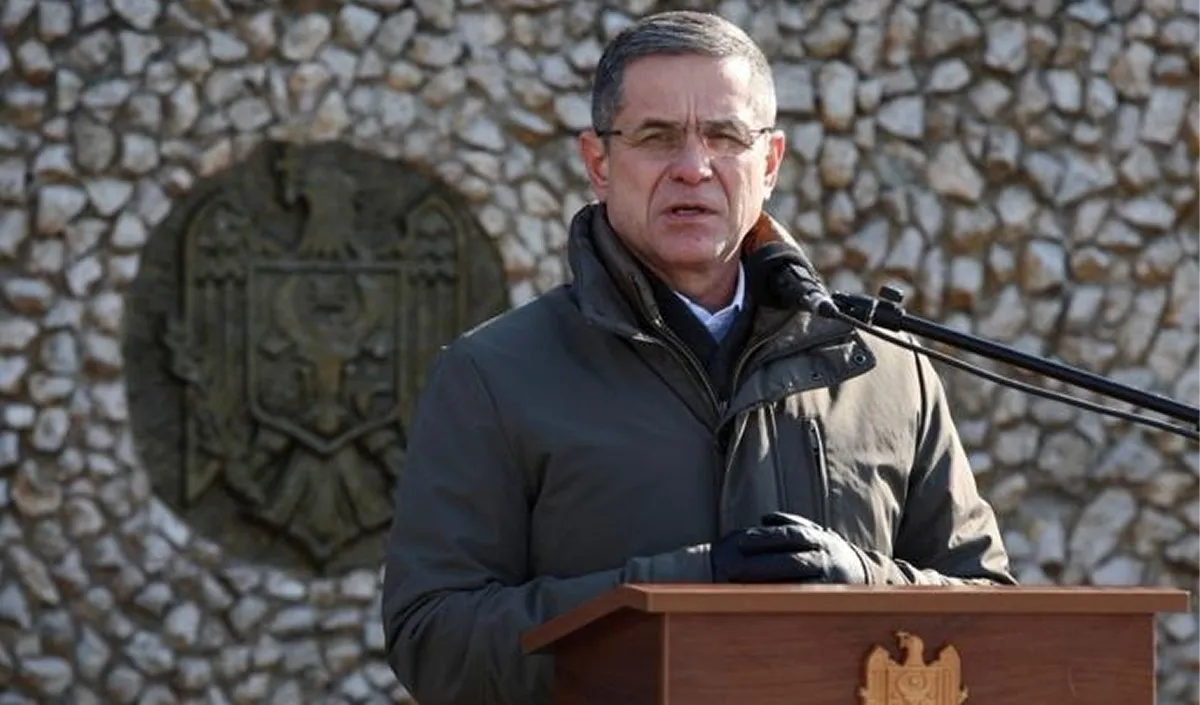
Logos Press put this question to Iurie Ușurelu, who has experience working both as a minister and as a state secretary at MAIA. Here is his detailed response.
– At present, apart from the minister, the senior management of the Ministry of Agriculture and Food Industry (MAIA) comprises the Secretary-General, his deputy and three state secretaries.
It should be borne in mind that, in the process of European integration at the institutional, legislative and regulatory levels, MAIA is responsible for the largest and most significant area of work. To a large extent, this falls within the remit of the Secretary-General and, in particular, his Deputy, who coordinates the regulatory processes.
However, in this context, it is worth bearing in mind that European integration is, to a very large extent, a technical process implemented by specialised agencies (which, incidentally, are authorised by and integrated into the relevant structures of the European Union). In other words, the responsible officials at the Ministry of Agriculture are not acting alone in this endeavour.
Another important aspect determining the organisational structure of the Ministry of Agriculture is the structure of agriculture itself. This requires the presence of two specialised state secretaries within the MAIA leadership: one oversees policy at all levels in the crop production sector, whilst the other is responsible for the livestock sector.
Historically, another State Secretary at MAIA has been responsible for the viticulture and winemaking sector. Is this appropriate in the current context, given that, firstly, a specialised body – the National Office for Grapes and Wine – already exists and is operational; and, secondly, winemaking has lost its former significance within the agri-food sector in particular and Moldova’s rural economy as a whole?
This is a complex and ‘emotionally charged’ question, to which the leadership of the Ministry of Agriculture must provide a competent response.
An equally complex question for the future is whether MAIA requires a permanent post of State Secretary for Food Industry Issues, given that the food industry is specifically mentioned in the ministry’s name? I believe it is incorrect to reduce the complex and multifaceted problem of coordinating the food industry to the level of ministerial management. This is particularly true if we take as our guiding principle the axiom that the bulk of added value is generated not in the raw materials sector, but in the production and sale of finished consumer products.
In this sense, perhaps it would make sense to expand the remit of the ‘State Secretary for Winemaking’? In that case, it is unclear which State Secretary’s area of responsibility would have to be scaled back.
What I am absolutely certain of is that the Ministry of Agriculture needs an economist at the highest level of management. A simple but provocative question: does the Strategic Programme for Agricultural Policy (PSPA), adopted this year, have a clearly and comprehensively set out economic rationale? When providing subsidies to agricultural producers in various sectors to address specific challenges, do the country’s authorities have a clear picture, in measurable terms (figures), of the objectives (results) they wish to achieve?
Of course, it is worth noting in this regard that Minister MAIA himself is a qualified and experienced economist. I am pleased that, from the very start of his tenure, he has been speaking about the economic rationale and effectiveness of decisions concerning this very important sector of the national economy. But everywhere and always, a minister is a political figure. Within the Ministry of Agriculture, an economist must be a high-ranking permanent official.
This story was translated with the assistance of artificial intelligence.The translation was also reviewed by the Logos Press editorial team.
Follow our updates
Have information for the newsroom? Share it with Logos-Press












Comments
0No comments yet. You can start the conversation.
Comments are open to readers with a Logos Press account.
Sign in to comment