


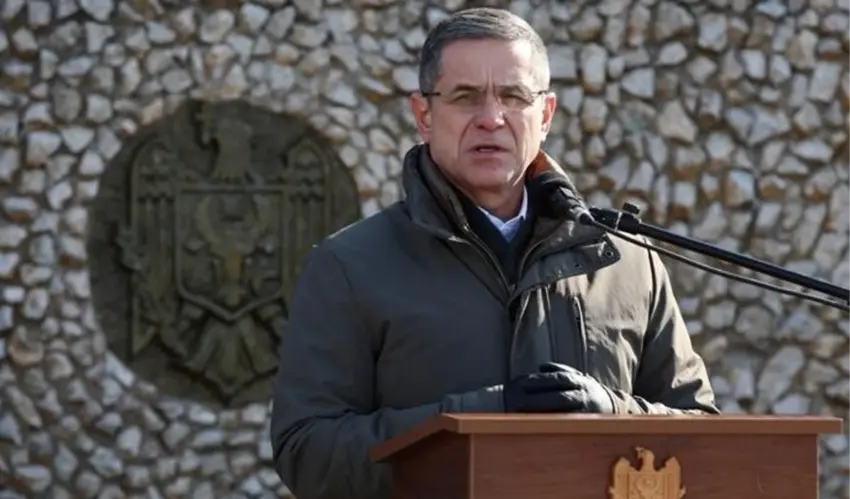
Minister of Defense Anatolie Nosatîi
According to the draft, the obligation to return will apply to citizens who are subject to mobilisation under the law. Upon receiving a summons or notification, they will be required to organise their own return to Moldova and arrive at the specified location by the set deadline.
Restrictions are also envisaged for reservists currently in the country. Once mobilisation has been declared, they will not be permitted to leave the settlement where they live or are staying for more than 12 hours without written authorisation from the military command. Authorisation may be granted if there is a valid reason.
The draft law also specifies when the authorities may impose a state of siege or martial law. The former is envisaged in the event of a threat of armed attack or a serious military threat. It may be imposed for a maximum of 30 days and subsequently extended for further periods of the same duration.
Martial law may be declared in the event of an armed attack on Moldova, a declaration of war or the commencement of military operations against the country. The President may propose such a decision to the authorities.
In both cases, the authorities will be granted the right to evacuate the population, restrict movement, introduce special rules for crossing the border and regulate the consumption of essential goods.
During a state of siege or martial law, elections and referendums will be prohibited, except in cases expressly provided for by the Constitution or an organic law. Electoral procedures commenced prior to the introduction of the special regime will be suspended.
The draft bill is currently open for public consultation. For the new rules to come into force on 1 January 2027, the document must be approved by the government and parliament, after which it must be signed by President Maia Sandu.
Read more about this in the Logos Press article.
This story was translated with the assistance of artificial intelligence.The translation was also reviewed by the Logos Press editorial team.
Follow our updates
Have information for the newsroom? Share it with Logos-Press



















Comments
0No comments yet. You can start the conversation.
Comments are open to readers with a Logos Press account.
Sign in to comment