

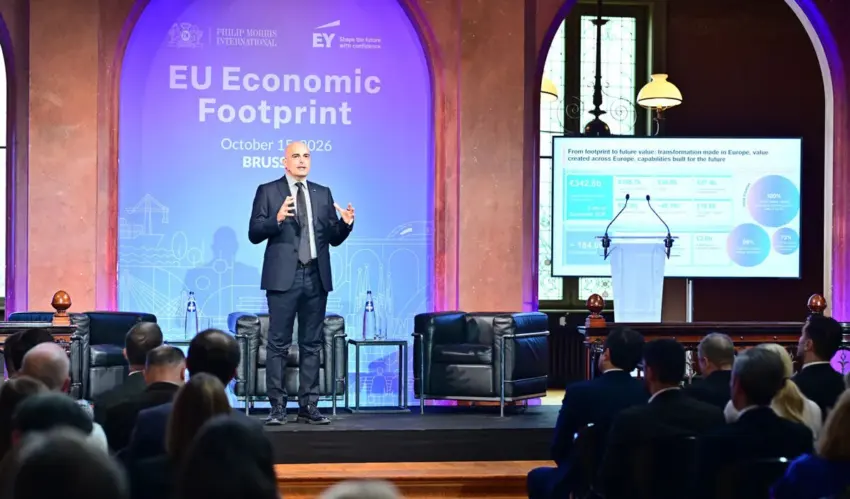
According to analysts, of the total of €342.8 billion, almost €196 billion consisted of tax revenues linked to PMI’s activities. A further €130.5 billion was attributable to the economic impact of its operational activities, whilst €16.6 billion represented the value created for retail sales.
Over five years, PMI invested €27.4 billion in its European operations, spent €22.3 billion on purchases from European suppliers and generated exports worth €39.5 billion. According to calculations by EY-Parthenon, every euro of the company’s direct economic activity generates an additional €2.02 in other sectors of the EU economy.
Over 49,000 European businesses are involved in PMI’s supply chain. Almost two-thirds of procurement expenditure in the eurozone is accounted for by Germany, Italy, Poland, the Netherlands and Belgium.
PMI is a major employer. Around 164,000 jobs supported in 2025, including nearly 22,500 direct jobs and employment across suppliers and the wider economy. The indirect effect was also estimated in this way: for every job at the company, there were a further six jobs in other sectors of the economy.
At the same time, labour productivity at PMI is 4.35 times higher than the EU average. According to EY-Parthenon’s estimates, between 2021 and 2025, PMI’s operations supported wages across the value chain, trade and agriculture to a total of around €63 billion.
Around 510,000 retail businesses across Europe are linked to this manufacturer, to which nearly €17 billion was channelled. The company invested a further €582 million in tobacco procurement and supporting agricultural employment. €422 million was invested in research and development in EU countries, and around €2.2 billion in Switzerland. A further €47 million was invested in staff training.
One of the key findings of the study is the shift in the structure of PMI’s European business. Whilst the company’s production capacity was previously focused on traditional cigarettes, a significant proportion of investment is now directed towards the development and manufacture of smoke-free products. Thus, in the fourth quarter of 2025, smoke-free products accounted for more than half of PMI’s net revenue in Europe. By way of comparison, in 2016 their share of the company’s global revenue stood at just 3%.
At the same time, Europe has become the main manufacturing hub for the smoke-free category. According to PMI, its European facilities produce 95%of the nicotine pouches and 73%of the heated tobacco products sold by the company worldwide outside the US. In total, there are 15 PMI manufacturing sites across the EU involved in the business transformation, including factories in Switzerland and Serbia.
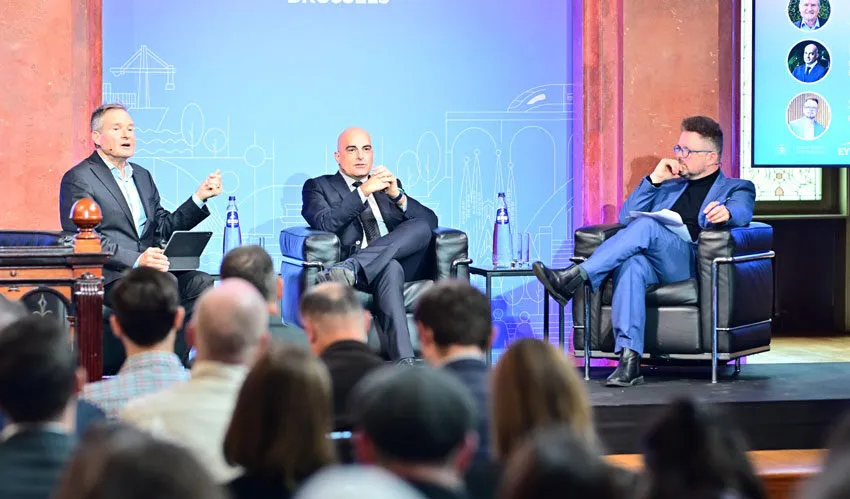
Marco Hannappel, President of PMI’s European Region, emphasized that a predictable regulatory environment is essential to support continued investment and production expansion.
“Europe has been at the heart of innovation for many years. It remains capable of staying a global centre for manufacturing and technological development, but this requires sustained investment, a scientific approach and predictable business conditions. This is particularly important in the face of growing competition from the US, China and India. Predictable rules are needed by both large multinational companies and small and medium-sized enterprises, as it is precisely these that enable them to plan their development and create long-term economic value. We must be clear about this: without predictability, there is no investment, and without capital, Europe risks missing out on opportunities for future growth and competitiveness.”
Hannappel also emphasised the importance of balanced regulation of the sector: “We welcome government regulation of our industry. The question is not whether there should be more or less regulation, but how effectively the rules work. If they are based on facts and take potential consequences into account, it is possible to strike a balance between consumer protection and economic growth. But decisions taken without proper analysis can have far-reaching consequences.”
Hannappel therefore believes that Europe needs a long-term regulatory strategy. “The precautionary principle is important, but if applied too rigidly, it can stifle innovation, investment and entrepreneurship. This does not mean that regulation should be abandoned. On the contrary, it is necessary to assess the cumulative impact of requirements, including tax measures, and to study the experience of other countries, including the US. It is important to understand whether individual regulations have become excessively restrictive and whether they are hindering economic development.”
The regulation of nicotine pouches also raised questions. PMI believes that decisions in this area should be based on scientific evidence and the experience of countries that are already applying different approaches. Particular attention was paid to the experience of Sweden, where the prevalence of alternative nicotine products is combined with a relatively low smoking rate. Experts therefore urge that the differences between tobacco and nicotine products be taken into account and that the risks of each category be assessed separately. Otherwise, a simple ban could play into the hands of the black market.
“The problem of illicit trade is becoming increasingly widespread in Europe and affects more than just the tobacco industry. I would like to point out that PMI generates around €16 billion in economic value for the retail sector. And this contribution could be even higher if the authorities were to combat illicit trade more effectively. Today, many law-abiding traders are suffering due to weak controls and the inconsistent application of existing rules. If we want Europe to remain attractive to investors, we need to create a more transparent business environment,” said Marco Hannappel.
It is worth noting that the EY-Parthenon study presented in Brussels was the second edition of an assessment of Philip Morris’s economic presence in the European Union.
Bart Deckers, a partner at EY-Parthenon Belgium, commenting on the study’s findings, emphasised that the period under review coincided with a major transformation at PMI — the transition to a business model geared towards a smoke-free future.
“PMI is reshaping its business towards a smoke-free future, and the change is visible across many aspects of its footprint. From investments in research and development and evolving manufacturing activities to changing export patterns and workforce capabilities, the company’s transformation provides important context to understand this report’s findings,” noted Deckers.
This story was translated with the assistance of artificial intelligence.The translation was also reviewed by the Logos Press editorial team.
Follow our updates
Have information for the newsroom? Share it with Logos-Press






















Comments
0No comments yet. You can start the conversation.
Comments are open to readers with a Logos Press account.
Sign in to comment