


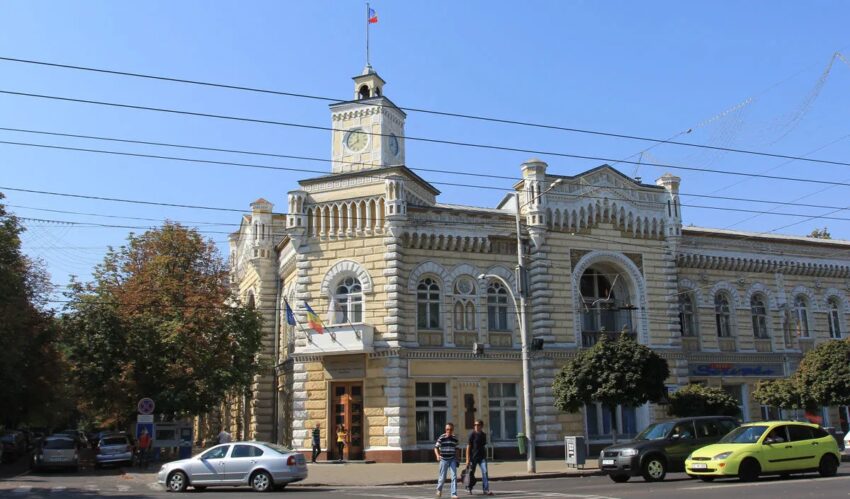
As Logos Press recently reported, the public scrutiny of the report has escalated into a debate—both in absentia and in person—between the auditors and the city hall’s management. The Court of Auditors speaks of a systemic crisis in governance and a disregard for the law, whilst the capital’s administration insists that the figures running into billions are merely ‘technical accounting errors’ that have caused no direct damage to the budget.
However, an analysis of the figures presented in the report shows that, in the opinion of the supervisory body, the problem lies not in isolated instances of misconduct, but in a deep-rooted, systemic crisis in the accounting of municipal property and weak internal controls.
Virtual accounts: 14 billion ‘off the books’
The scale of the inaccuracies is comparable in size to the overall figures for the capital’s budget. Whilst the value of all state property managed by the municipality at the end of 2025 was estimated at 24.26 billion lei, the auditors identified discrepancies in the balance sheet amounting to 14.24 billion lei. In other words, more than half the value of the city’s assets is incorrectly recorded in the documents.
The situation on the revenue side is no less alarming. With total revenue of 9.2 billion lei, discrepancies amounted to 6.30 billion lei (almost 70 per cent of total revenue). On the expenditure side (with total expenditure of 8.2 billion lei), discrepancies reached 478.3 million lei.
Such a gap between the figures on paper and reality makes proper financial planning in the capital extremely difficult: it is impossible to manage resources effectively when even the owner is unaware of their exact volume.
Different interpretations of the audit findings
In response to these allegations, Chisinau City Hall stated that ‘the public presentation of findings in the form of huge sums of money creates a false impression among the public of embezzlement or direct financial loss’, and described the reports themselves as ‘biased and accusatory’.
The Court of Auditors rejected these arguments, emphasising that its conclusions are based exclusively on verified documents and international auditing standards.
Tatyana Shevchuk, Head of the Audit Chamber, did not accept the argument regarding ‘different interpretations’ of regulations as an excuse for systemic errors in the accounting and classification of works: ‘An incorrect interpretation of the regulatory framework does not exempt one from the need to comply with the law, and the classification of works must strictly comply with current regulations.’
The Chamber of Accounts’ leadership also pointed out that, under public finance legislation, the issuance of an adverse audit opinion entails “direct liability on the part of the head of the audited body and requires the immediate strengthening of internal management controls”.
Land chaos and ‘foreign’ flats on the city’s balance sheet
The main source of discrepancies running into billions lies in the accounting for property and land. The audit revealed a paradoxical situation in which the city simultaneously ‘impoverishes’ itself on paper whilst attributing other people’s property to itself. This concerns tangible assets – both visible and ‘invisible’.
First and foremost, the undervalued land stands out. The book value of 7,287 plots of land (covering an area of almost 1,170 hectares) was found to be understated by 5.79 billion lei.
Given the buoyant property market in the capital, such a significant understatement of the book value creates risks regarding the future disposal of these plots, their valuation or their letting, say the auditors.
At the same time, 35 plots were recorded twice, whilst 9 plots that had already been sold continued to be listed as located outside the city. Whether this is due more to oversight or corruption is not for the external audit to determine. But politicians have plenty to criticise in the run-up to the expiry of the capital’s mayor’s term of office.
Another point of contention is privatised dead weight. The City Hall continues to record private flats and communal areas in residential buildings worth 4.47 billion lei on its balance sheet, as well as including repairs to private houses and blocks of flats (a further 251.55 million lei) amongst its assets. This has artificially inflated the value of municipal buildings by almost 4.8 billion lei.
And finally, so to speak, the ‘invisible assets’: 178 properties worth 5.19 billion lei have still not been identified or entered into the Property Register. The city council also lacks a unified register of green spaces — a document of critical importance for a city where disputes over the development of public gardens and parks regularly arise.
Added to this are discrepancies worth many millions in the accounting for special-purpose facilities (2.21 billion lei), electricity networks and the municipality’s shareholdings in companies.
Budget leaks in detail
Apart from the broader accounting issues, the report highlights irregularities in the day-to-day management of taxpayers’ money. Although the sums involved appear modest compared to the billions in balance sheet discrepancies, it is precisely these that directly impact the budget:
Firstly, there are non-transparent tenders. Of the 80 cultural projects funded in 2025 for a total of 9.47 million lei, 50 projects received funding without a tender process. This calls into question the objectivity of grant allocation and equal access to municipal funds.
Secondly, there are losses from lettings and tax non-compliance. Due to the application of undervalued rates when letting out municipal property, the city loses out on approximately 794,000 lei annually.
Meanwhile, errors in salary calculations led to staff being overpaid by 705,600 lei, whilst, in relation to a number of payments, municipal bodies failed to account for 2.2 million lei in social security contributions and did not deduct 680,000 lei in health insurance contributions.
Why is the situation not changing?
The key finding of the Court of Auditors’ report concerns management discipline. The municipality has complied with only 47.5 per cent of the auditors’ previous recommendations (Decision No. 52 of the Supreme Public Audit Chamber from 2022). More than half of the systemic issues have remained unresolved over the past three years.
During the audit itself, the City Hall’s departments promptly made accounting adjustments totalling 31.7 million lei. However, against a backdrop of 14.24 billion lei in identified discrepancies, this sum appears symbolic — less than a quarter of a per cent of the total volume of problems.
The Court of Auditors’ report for 2025 notes that the capital’s accounting and inventory system is lagging behind reality. Without a full audit of the land fund, the removal of long-privatised housing from the balance sheet, the creation of a register of green spaces and strict monitoring of compliance with the auditors’ recommendations, the capital’s financial statements risk remaining a mere formality, far removed from the actual state of affairs.
Follow our updates
Have information for the newsroom? Share it with Logos-Press






















Comments
0No comments yet. You can start the conversation.
Comments are open to readers with a Logos Press account.
Sign in to comment