


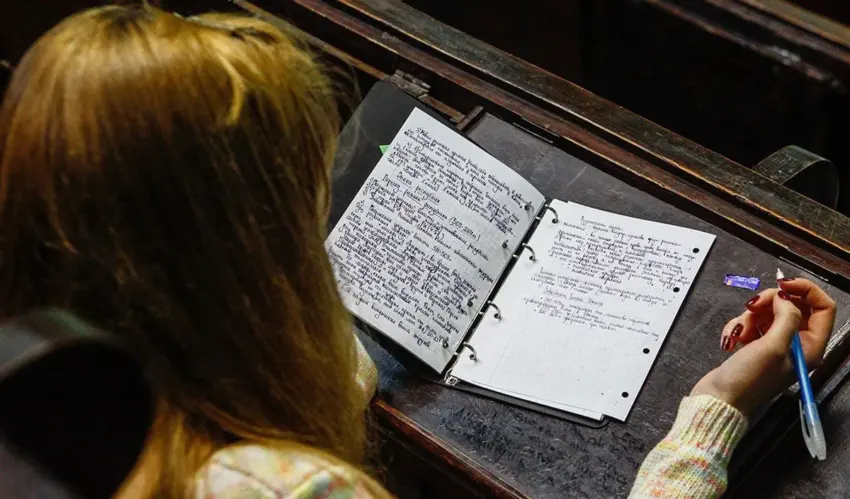
Photo: ТАСС
The new rules were published in the European Commission’s Erasmus+ Programme Guide for 2027 on 18 November.
“EMJM grants are available to students from all over the world, with the exception of those residing in the Russian Federation (who cannot be selected to participate regardless of their nationality), as well as those residing in the territories of Ukraine temporarily occupied by Russia (with the exception of Ukrainian citizens),” the document states.
This refers to residents of Crimea, as well as the Donetsk, Luhansk, Zaporizhzhia and Kherson regions. Russia announced the annexation of Crimea in 2014, and that of the DPR, LPR, Zaporizhzhia and Kherson regions in autumn 2022. Referendums were held in these regions, the results of which were not recognised by Ukraine or the majority of countries worldwide.
However, the new rules do not apply solely to the awarding of grants. The European Commission’s guidelines specifically state that Russian organisations and individuals residing in Russia may not participate in any of the Erasmus+ programmes in any capacity.
It should be noted that Erasmus+ is a large-scale European Union programme in the fields of education, vocational training, youth and sport. It funds student and teacher exchanges, work placements, voluntary projects, as well as cooperation between universities and other organisations. One of its components is Erasmus Mundus Joint Masters (EMJM), international master’s programmes run by universities from different countries. The best candidates may receive EU scholarships to study abroad.
The Erasmus+ programme aims to improve the quality of education and vocational training, foster international cooperation and expand employment opportunities. Participants may include students, teachers, trainees, volunteers and education professionals. Depending on the specific programme, eligibility is open not only to residents of EU countries but also to citizens of partner countries.
Follow our updates
Have information for the newsroom? Share it with Logos-Press










Comments
0No comments yet. You can start the conversation.
Comments are open to readers with a Logos Press account.
Sign in to comment