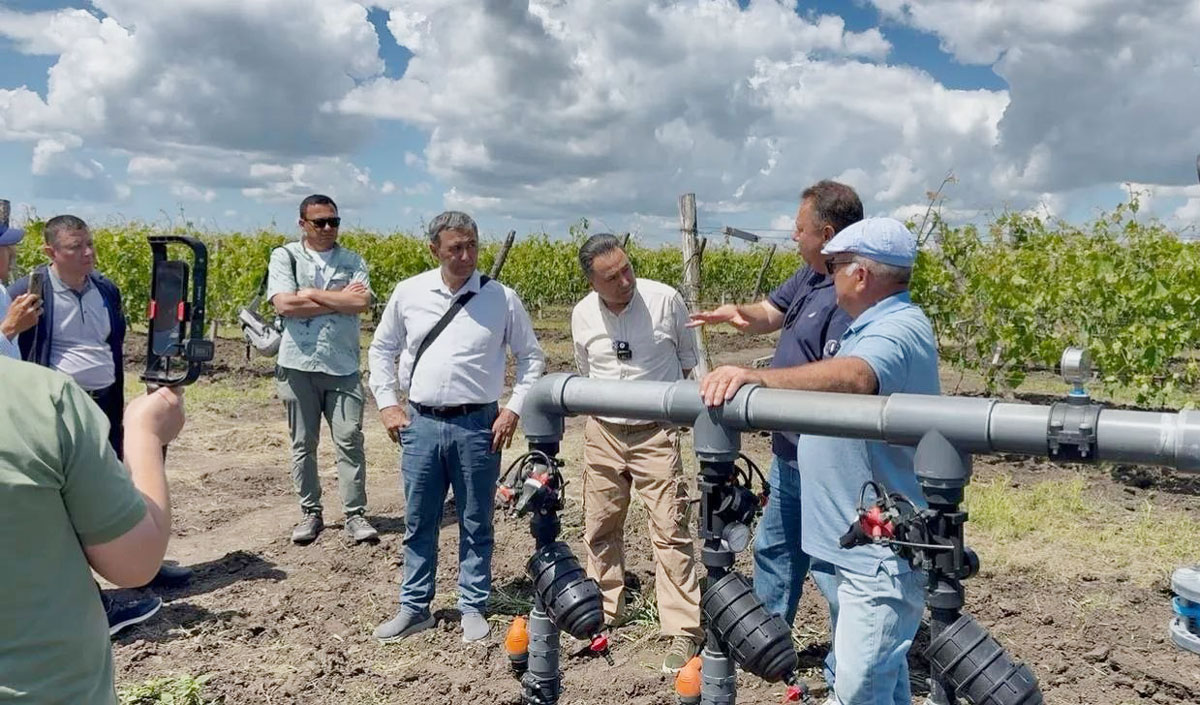

In late June 2026, the Food and Agriculture Organization of the United Nations (FAO) and the European Bank for Reconstruction and Development (EBRD), as part of a project to support agriculture in Uzbekistan, organized a study tour for a group of Uzbek farmers to Moldova. The group studied the experience of Moldovan fruit farms in using subsurface irrigation systems.
The system consists of networks of drip irrigation pipes placed in the soil at a depth of 40–50 cm, which deliver water (and working solutions of plant protection and growth-regulating agents) drop by drop to the soil layer near the plant roots. This results in higher yields and greater water savings—even compared to surface drip irrigation systems.
As Sergey Alba, an expert at Expert Agroteh, noted in an interview with Logos Press, Moldova has a long and extensive history of using subsurface irrigation systems. The first systems were installed about eight years ago by farms growing industrial crops (primarily corn) using the resource-saving (“conservative”) “mini-till” and “no-till” (without plowing or turning the soil). Currently, subsurface irrigation projects covering an area of approximately 2,000 hectares have been implemented or are under construction in Moldova. About half of these systems are in operation or will be operational in the near future in the vineyards of major wine-producing companies. In the country’s fruit-growing sector, subsurface irrigation is also being used on hundreds of hectares.
The organizers of the Uzbek farmers’ visit to Moldova are particularly pleased that the farmers have already begun to apply the information they received. “After returning from the trip, I immediately began implementing what I had seen. First, I replaced the nozzles on my sprayer with more efficient ones. Water consumption has already been cut in half,” EastFruit quotes farmer Rustam Yakubov as saying .