News about State budget and taxes
In March this year, the Agency for Interventions and Payments in Agriculture (AIPA) authorized for payment subsidy requests amounting to more than 166 million lei. In the previous month, the agency authorized more than LE 158 million in
of farm subsidies.

It will be an independent body that assesses and monitors public finances.

Romania’s Supreme Court of Cassation and Justice (ÎCCJ) has issued a summons demanding that the government include in the Supreme Court’s budget the funds needed to pay the salary arrears of judges.

The budget allocated for 2025 for the Prima Casa program was completely exhausted already in the first quarter due to the large number of applications. Therefore, the program was put on hold “until the mechanism is improved”.

As of February 1, 2026, Russia’s external public debt amounted to $61.97 billion (about 5.04 trillion rubles) – the maximum value since 2006. Since 2007, according to the Bank of Russia’s statistics, the external public debt has not exceeded $60 bln.

A zero rate of income tax, a flat rate of payroll tax and a flat basic rate of VAT are key changes that will be part of the draft fiscal policy for 2027.

Each state agency will revise its planned procurement requirements for 2026 due to the crisis situation by at least 10% of their originally approved cost in order to save money.

If the price of fuel at the filling station exceeds the price increase on the world markets, traders will have to pay a solidarity fee. This is how the Ministry of Economics in Latvia plans to regulate the crisis situation in the fuel market.

Moldova’s public sector is adopting new National Accounting Standards (NAS) developed on the basis of international IPSAS standards. The aim is to increase the transparency of financial reporting, adapt to European norms and improve the management of public resources.

The benefit, which implies deferral of payment of income tax received for tax periods 2023-2026, will also apply to amended tax reports. The Parliament approved this change in the final reading.

Energy Minister Dorin Jungietu, in a video interview with ZDG, called “populism” the opposition’s proposal to lower excise taxes on fuel at a time when oil prices are rising sharply in the world and on gasoline and diesel in Moldova.

Despite the complaints of local authorities about the lack of finances, the execution of local budgets in January-February 2026 ended with a surplus of 980.0 million lei. And their revenues noticeably exceeded their expenditures.

Health insurance “closed” February with a deficit. In the first two months of the current year, the expenditures of the health insurance funds grew faster than the revenues. As a result, the fulfillment of obligations was completed with a deficit of 1.232 billion lei.

In January-February 2026, the social fund’s revenues exceeded its expenses by 1,239 billion lei. As a result, the execution of the state social insurance budget was completed with a surplus.
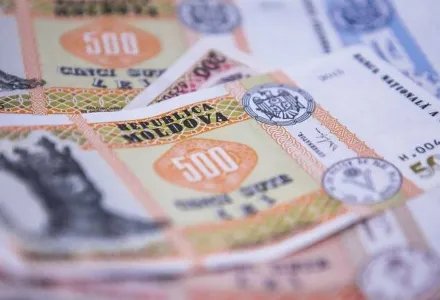
Moldovan taxpayers set a new record – in one day they contributed 1.5 billion lei to the budget. This happened on March 25.

It is planned to transfer the administration of sectoral public procurement into the hands of private companies. This is part of a large-scale reform of the public procurement system aimed at increasing the transparency and efficiency of the process.

The Customs Service has improved its position in terms of state budget execution. While in January of this year it undercollected excise duties by almost 100 million lei, in two months, in January and February 2026, the revenues of the Customs Service, although not significantly (by 1%), exceeded the funds collected for the same period in 2025.

The average pension in the Republic of Moldova covers only 42% of living expenses, placing the country among the countries with the lowest pension provision in Europe.

The South Korean government is urgently putting the economy on crisis management rails in preparation for worst-case scenarios in the Middle East. The prolonged war in Iran and the blockade of the Strait of Hormuz have dealt a huge blow to the country, which is critically dependent on energy imports.

At today’s meeting, the government approved a draft, according to which pensions and social benefits will rise by 6.84% on April 1 this year.