National Bank
The European Central Bank (ECB) kept rates unchanged, warning that tensions in the Middle East and risks in the oil market could stoke inflation. The baseline forecast is for 2.6% in 2026, but with energy shocks, inflation could rise to 3.5-4.4% depending on the duration of supply disruptions.

The National Bank of Moldova (NBM) is introducing a national Open Banking standard, obliging 15 payment service providers to implement secure API interfaces. This allows users to securely manage accounts with different banks through a single application, which is in line with the European Directive.

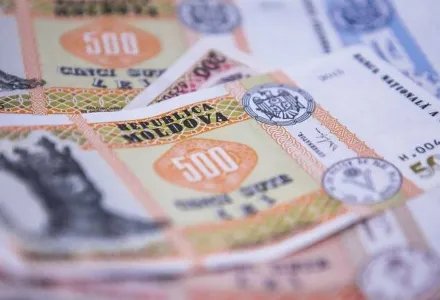
In February 2026, a significant cash outflow was recorded in Moldova: the volume of withdrawals exceeded their receipt in banks by 1,028 million lei, which emphasizes the increase in the population’s preference for cash.
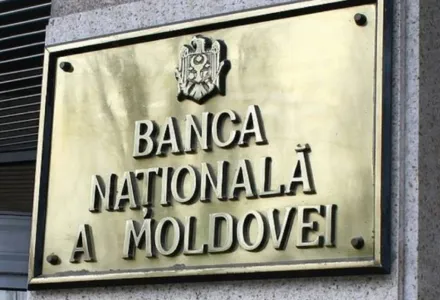
As a result of rising energy prices in the context of the geopolitical situation, inflationary pressures may intensify until the first quarter of 2027, in this regard, the National Bank of Moldova (NBM) partially updated its February forecast and went on high alert .
New standards of consumer protection, on the one hand, and control over the activities of professional participants, on the other hand, are unlikely to cool down demand in the financial market. But, undoubtedly, they will add confidence to both sides of “money relations”.
The Executive Committee of the National Bank of Moldova (NBM) at its March 19 meeting kept the prime rate at 5% per annum, leaving at the current level the norms of mandatory reserve requirements for commercial banks of the Republic of Moldova.

The National Bank of Moldova (NBM) imposed a fine of 3,017,230 lei on the non-bank credit organization Prima Finanțare S.R.L., the largest sanction ever imposed on the non-bank credit market.
IMF Deputy Executive Director Marnix van Reij is on a two-day working visit to Chisinau to hold consultations with the Moldovan leadership on a new cooperation program.

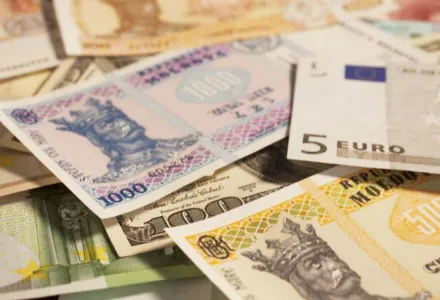
The Moldovan leu started the working week with a slight weakening against the euro and strengthening against the US dollar. In March, the Moldovan leu demonstrates high stability against major world currencies, despite the jump in world energy prices.

MIA’s Instant Payments system today celebrates two years since its launch. During this time, it has become an everyday tool for fast money transfers, allowing citizens to make payments in real time, in a few seconds. Transfers are made directly from online and mobile banking applications, regardless of the working hours of payment service providers.

The National Bank of Moldova (NBM) intends to integrate AI technologies more fully into its activities and has been actively discussing their role at various regional conferences for several years.
Transfers through the European system SEPA, which Moldova joined in March last year, currently account for over 80% of all transferred funds from and to Europe. The National Bank of Moldova (NBM) reports this as its main achievement on the way to the EU, publishing relevant data.
The National Bank of Moldova (NBM) will organize, from 16 to 22 March 2026, a series of events within the International Financial Education Week (Global Money Week) to introduce children and young people to topics that will help them make responsible financial decisions.

In the final report on the country following the expert mission, the International Monetary Fund (IMF) confirmed the NBM’s commitment to the principles of credibility and institutional transparency. The experts recognized the methods used as being in line with the modern international practice, allowing the domestic central bank to conduct an efficient monetary policy and contribute to the stability of the country’s financial system.
The microfinance sector (non-bank credit organizations) in Moldova maintained high profitability at the end of last year, despite the tightening of requirements, reports Logos Press.

The beginning of 2026 is marked by a series of decisions and processes that will largely set the financial trajectory of Moldova for the coming year. The focus is on the National Bank’s policy, inflation dynamics, the state of foreign exchange reserves and the Moldovan leu exchange rate.
The foreign currency cash market in January saw a decline in activity characteristic of the beginning of the year, accompanied by a reduction in buy-sell transactions and an increase in savings sentiment, according to Logos Press.

Crypto-assets of the population are not protected, as their circulation in Moldova is not regulated, and all offers of profitable investments, coming allegedly from the National Bank or other state institution, are false, reports Logos Press.
The Parliament approved by the votes of 57 deputies Maia Pîrcălab as a member of the Administrative Council of the Deposit Guarantee Fund in the banking system for a term of five years, reports Logos Press.

The Moldovan leu has appreciated by 0.59% over the last month and has gained a record 8.93% over the last 12 months, which indicates not only growing confidence in the national currency, Logos Press reported.