



However, the improvement in turnover was not accompanied by a comparable increase in profitability. Total net profit remained almost unchanged at €34.9 billion, whilst net profit margin fell from 3.2 per cent to 3.1 per cent. The number of companies ending the year with a loss rose from 65 to 74.
These are the key findings of the Coface CEE Top 500 – an annual survey of the largest companies in Central and Eastern Europe. As noted by HotNews, the list is compiled by the regional subsidiaries of the international Coface Group. The company specialises in trade credit insurance, commercial risk assessment and business solvency analysis.
The ranking is published alongside an analysis of the companies’ financial results and economic trends in the region. The 18th edition, covering business performance for 2025, was published in 2026. The study thus enables a comparison not only of the scale of individual companies but also of changes in the structure of the regional economy.
Criteria and trends
The main ranking criterion is a company’s turnover. In addition, Coface analyses net profit, the number of employees, the sector, the markets in which the company operates, and the companies’ credit ratings. The ranking is also used to assess the business environment and the risks involved in working with potential partners.
The study notes that financial results continue to be affected by rising labour costs, weak external demand and intensifying international competition. In particular, export-oriented sectors have come under pressure due to weak demand in Germany and tensions in international trade.
This means that an increase in sales alone does not guarantee an improvement in a business’s financial position: to maintain margins, companies have to boost productivity, control costs and increase value added.
Which countries and sectors are most strongly represented
Poland remains the leader in terms of the number of companies in the ranking – 172 firms. It is followed by the Czech Republic with 73 companies and Hungary with 62. Romania is represented by 59 companies and ranks fourth in terms of the number of participants.
The combined turnover of the Romanian companies included in the ranking rose by 6.2 per cent to €106.7 billion, notes HotNews. This is one of the most notable results among the region’s largest economies. Growth was driven primarily by the retail and automotive sectors.
Poland’s Orlen retained first place in the overall ranking. The Czech company Škoda Auto remained in second place, whilst third place was taken by Jeronimo Martins Polska – the operator of the Biedronka chain of shops.
The automotive and transport sector was the most widely represented, with 94 companies. However, the sector’s performance remained mixed due to weak European demand and increased competition from Chinese manufacturers.
Other notable sectors included retail, construction and energy. The defence industry stands out in particular: the combined turnover of the four major companies in this sector included in the ranking increased by 49 per cent.
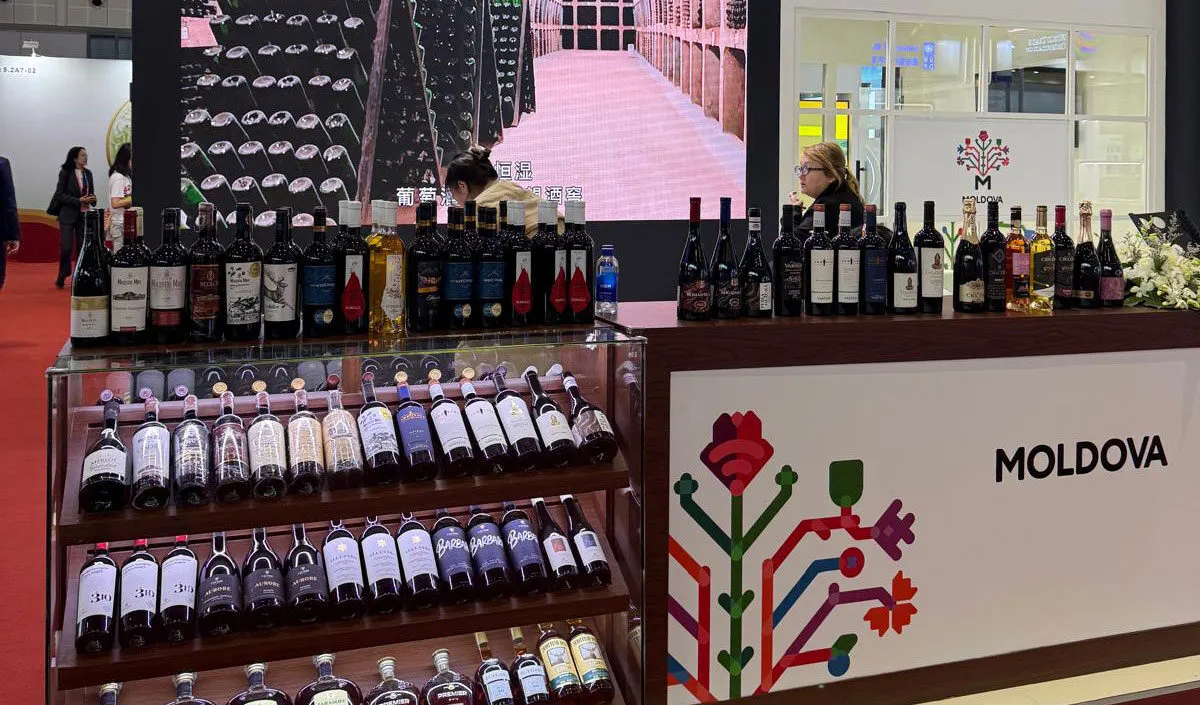
Why Moldova is not included in the ranking
Moldova is not included in the ranking of the 500 largest companies in Central and Eastern Europe. According to the methodology published by Coface, the study covers 12 countries: Bulgaria, Croatia, the Czech Republic, Estonia, Hungary, Latvia, Lithuania, Poland, Romania, Serbia, Slovakia and Slovenia.
The methodology for the 2025 edition applied a minimum annual turnover of €300 million. Financial services providers – in particular, banks, insurance companies, leasing firms and brokers – were excluded from the study. Companies that had not provided their financial results by the time the list was finalised were also excluded.
These conditions are important for interpreting the ranking. It is not a universal list of the largest enterprises in all countries of the region: first, the geographical scope of the study is defined, and then companies are assessed according to financial criteria. Turnover and profit figures are given in euros.
If the geographical scope of the ranking were extended to include Moldova, the country’s largest companies could be potential candidates – provided they meet the requirements regarding turnover, sector, financial reporting and other criteria.
Based on publicly available data, it can be argued that the largest Moldovan companies – such as Energocom JSC (turnover of over 20 billion lei / ~1 billion euros), Moldovagaz JSC (~€860 million) or the retailer Moldretail Group / Linella chain (~€427 million) – could, based purely on financial indicators, qualify for inclusion in this list, but are not included due to the study’s methodological restrictions regarding the list of countries.
The potential list is not limited to the energy and retail sectors. Other major Moldovan companies worth mentioning include Fly One, Orange Moldova, DITA Estfarm, Kaufland Moldova and Metro Cash & Carry Moldova, all of which could qualify for inclusion in the Coface CEE Top 500.
What the ranking reveals about the region’s economy
The study shows that the largest companies in Central and Eastern Europe have, on the whole, returned to sales growth, though they are facing pressure on profitability. Business competitiveness increasingly depends on the ability to boost productivity, keep costs in check and shift towards activities with higher added value.
For Moldova, this ranking is of interest as a tool for comparing the largest local enterprises with businesses in neighbouring countries. Even without the country’s inclusion in the official list, a comparison of turnover, profits, employment and sectoral structure allows for an assessment of the scale of Moldovan companies within the regional context.
This story was translated with the assistance of artificial intelligence.The translation was also reviewed by the Logos Press editorial team.
Follow our updates
Have information for the newsroom? Share it with Logos-Press

























Comments
0No comments yet. You can start the conversation.
Comments are open to readers with a Logos Press account.
Sign in to comment