

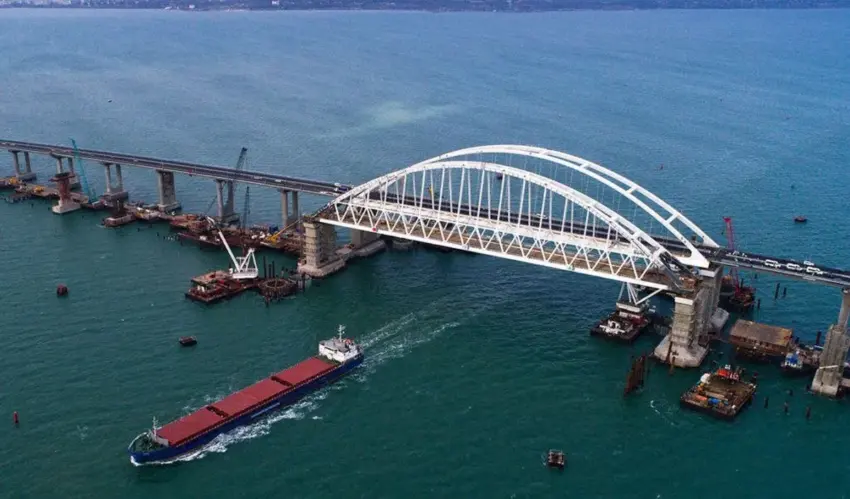
Temporary permits for vessels to sail out have been issued by the port authorities of Temryuk and Kavkaz. Applications became possible from Monday, 26 October. Vessels that are ready to sail and fully crewed may apply, reports Bloomberg, citing three informed sources.
Commercial shipping in the Sea of Azov was suspended on 10 July due to the threat of Ukrainian attacks. Before the situation escalated, around a third of Russia’s seaborne wheat exports passed through the Sea of Azov. Clearly, a single instance of grain traffic through the Kerch Strait does not equate to a resumption of exports. Ships still risk coming under attack from drones whilst passing through the Black Sea. Nevertheless, the operation proved valuable.
“The initial reaction of the grain market was swift – prices fell,” noted Bertrand Esterle, a commodities broker and vice-president at StoneX.
According to him, few believe that the resumption of port operations will significantly alter the risk landscape. However, against the backdrop of reports that permits had been issued for the transit of grain from the Sea of Azov to the Black Sea, wheat futures on the Chicago exchange fell by 2.8 per cent on Wednesday 28 October, reaching their lowest level since 1 July.
Logos Press comment. Clearly, the Russian authorities’ authorisation for grain transit through the Kerch Strait is a ‘ball thrown onto the opponent’s side of the pitch’. In other words, it is a provocation aimed at continuing (or halting) attacks on civilian dry cargo vessels. It is not (critically) important whether the opponent reacts to this provocation. What is important is that one of the key trading platforms in the global grain market has already reacted to it – and quite vigorously at that. Consequently, this very clearly confirms the hypothesis that the opening of new ‘grain corridors’ in the Black Sea will lead to a very significant fall in prices for many (if not all) types of grain and oilseeds.
This story was translated with the assistance of artificial intelligence.The translation was also reviewed by the Logos Press editorial team.
Follow our updates
Have information for the newsroom? Share it with Logos-Press






















Comments
0No comments yet. You can start the conversation.
Comments are open to readers with a Logos Press account.
Sign in to comment