

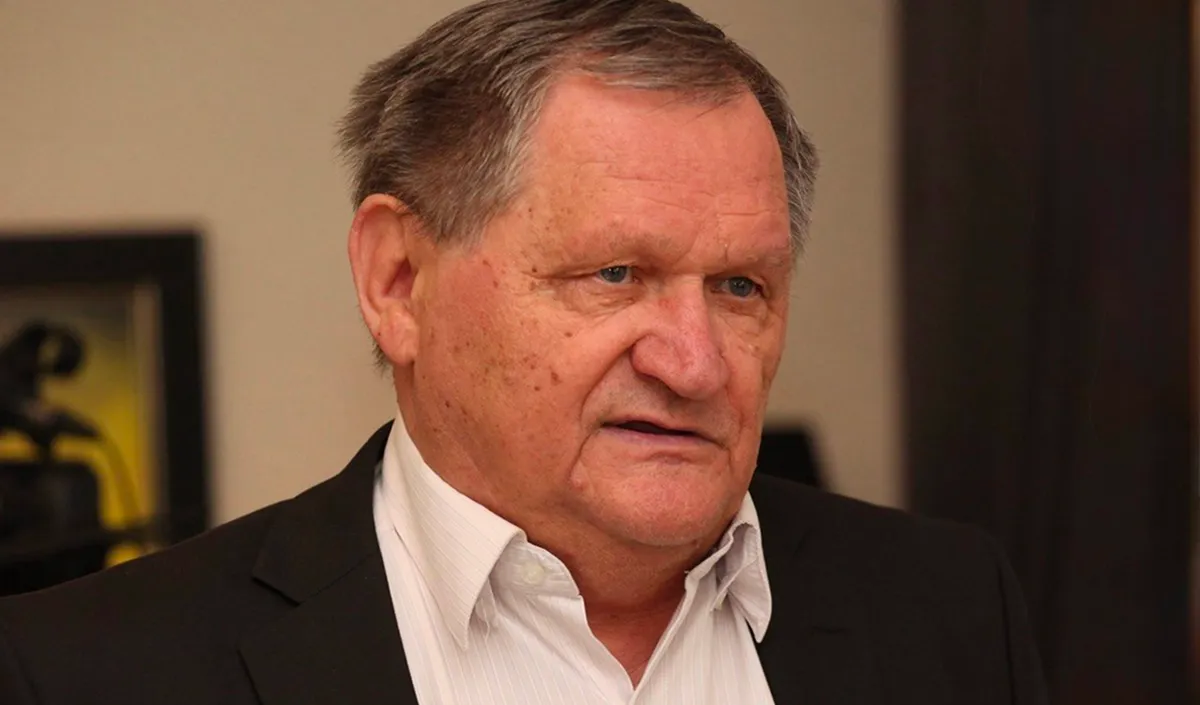
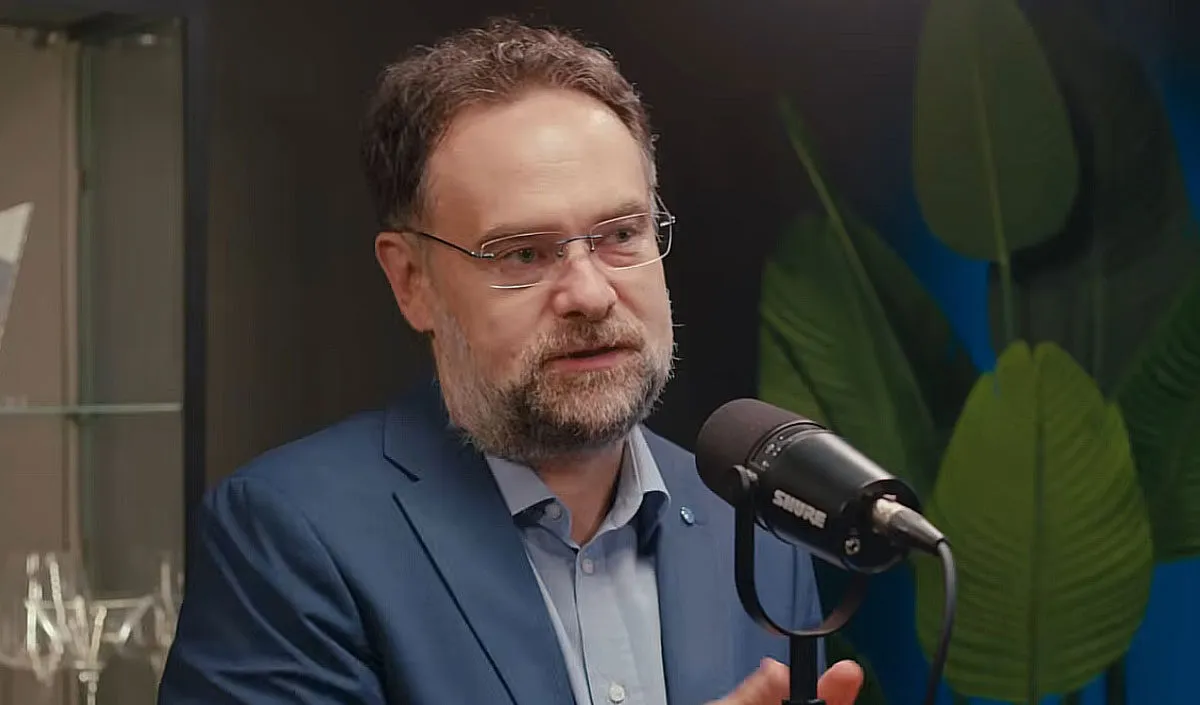
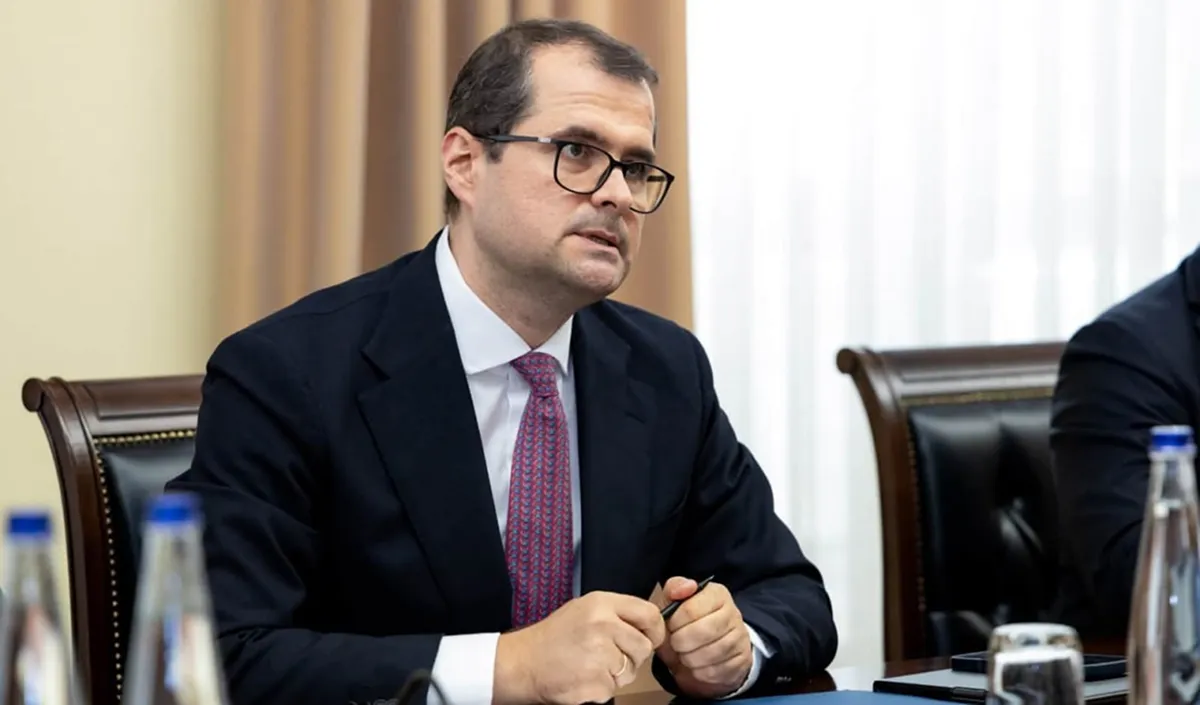
Alexandru Muravschi
Former Minister of Economy Alexandru Muravschi, who spent many years working on international projects specifically focused on developing models for administrative-territorial reform in Moldova, draws attention to another issue – the effectiveness of managing the new administrative units. He considers this to be a key aspect of the reform and believes that it is precisely this aspect that raises the most questions.
“As I have noted on numerous occasions, the government, in its desire to create something entirely of its own, is proposing a model that is utterly absurd from the point of view of administrative efficiency,” writes Alexandru Muravschi on his social media page. “Three levels of administrative-territorial governance remain: the national level and two local levels – regions instead of districts, and municipalities and villages (communes). … But what matters most to us are the functions and powers vested in these bodies.”
The Romanian experience
According to the author, the shortcomings of the Moldovan reform are clearly evident when compared with Romania. He cites the model of territorial governance applied on the other side of the Prut.
‘In Romania, the highest representative governing body of a județ is the Județ Council (Consiliul Județean), headed by a chairperson. It is responsible for the socio-economic development of the entire județ (county) and coordinates the activities of the councils of the communes and towns within its jurisdiction.
The main powers of the County Council are:
- Budget and economy: Drafting, approving and implementing the county’s local budget; setting county taxes and charges; managing the county’s public and private property.
- Infrastructure and transport: Construction, maintenance and modernisation of district roads; organisation of public transport between settlements within the district.
- Public services: Organisation and management of social care institutions (children’s homes, shelters, centres for people with disabilities), as well as water supply, sewerage and waste disposal services at county level.
- Culture, sport and tourism: Funding and management of cultural facilities of county significance (museums, libraries, theatres); support for local sporting and tourism initiatives.
- Territorial development: Approval of county spatial development plans (PATJ) and town planning regulations.
State control and executive authority in the județ are exercised by the prefect, who is appointed by the central government of Romania and acts as its official representative within the județ. He heads the decentralised state services (ministries and departments) at local level.”
Alexandru Muravschi emphasises that the administrative-territorial reform in Moldova in 1998–99 was carried out along roughly the same lines. However, just as the reform began to show its first positive results following the first two difficult years of adaptation, it was completely abolished in 2003 with a PCRM majority in parliament; this proved to be a major mistake, and the country lost more than 20 years operating within a district system that had become ineffective.
Reform is long overdue, but it must not be carried out merely for the sake of reform
“Therefore, the need for reform is not merely ripe, but has long since become overripe. But this does not mean that one can do whatever one pleases,” says the former Deputy Prime Minister.
He notes that there is currently no point in discussing the number of city councils, rightly believing that the outcome will depend not on their number, but on the effectiveness of the city council management structures being formed, their powers, staffing, and so on. He also believes that larger city councils have sufficient potential to deliver positive results.
“The problem lies at the next level, namely in replacing the 32 districts with 3 regions. And, once again, it is not a question of numbers, but of the functions and powers of the new structures,” notes Muravsky. He goes on to explain his position:
As you have seen above, these are the powers vested in county councillors in Romania. In the model proposed by the government, the regions will be responsible solely for implementing infrastructure projects and, possibly, for the partial development of territories, again in the form of regional projects. And THAT IS ALL. In other words, precisely what the Regional Development Agencies (RDAs) currently do, operating in each of the five established development regions.
Our regions will not possess any of the other powers held by a county in Romania. These powers will, in part, be entirely delegated to municipalities, towns, villages and communes, whilst some of the most important ones (healthcare, education, social security, law and order, etc.) will be exercised directly by central authorities. In other words, on the one hand, the plan is to strengthen local authorities through consolidation, whilst, on the other hand, to strengthen direct centralised control by taking many sectors away from local authorities.
The region will, in effect, have no independent budget, as all infrastructure projects are funded by the Regional and Local Development Fund, which is managed by the relevant ministry. Projects are initiated at the grassroots level – in municipalities, towns, villages and communes – and are forwarded to the Regional Development Agency (ARR), where they are selected; subsequently, the overall programme of projects is approved at central level and funding is allocated…
The system has been operating in this way for over 15 years, with only minor changes. Is the government planning to change anything? What exactly? There has been no word on this as yet.
What will the elected representatives – the regional councillors – actually do? They have no money. Will they meet a couple of times a year simply to vote on approving a preliminary list of projects prepared for them by ARR staff? And then meet again to approve the allocation of funds earmarked by the ministry amongst the projects?
So is it really worth organising some sort of region-wide election just for this, to elect a completely useless council?
And why is that? Simply because we have plenty of people keen to be ‘original’, to come up with anything at all, just so they’re seen as the author – as though they’ve thought of something that no one has ever done before. And in this respect, our ‘clever clogs’ in government have outdone everyone, even though the paths to reform have already been trodden many times over.
I’ve cited the example of Romania for quite obvious reasons, and I believe it best fits our situation. But we could also draw on the experience of other small countries such as the Czech Republic, Hungary, Austria and so on, where the names of the administrative units differ from those in Romania, but their functions and powers are, for the most part, identical.
And so my conclusion at this stage is: it is better to do nothing than to carry out such a reform – if you’ll pardon the expression.
This story was translated with the assistance of artificial intelligence.The translation was also reviewed by the Logos Press editorial team.
Follow our updates
Have information for the newsroom? Share it with Logos-Press










Comments
0No comments yet. You can start the conversation.
Comments are open to readers with a Logos Press account.
Sign in to comment