


Photo by Gonzalo Fuentes/Reuters
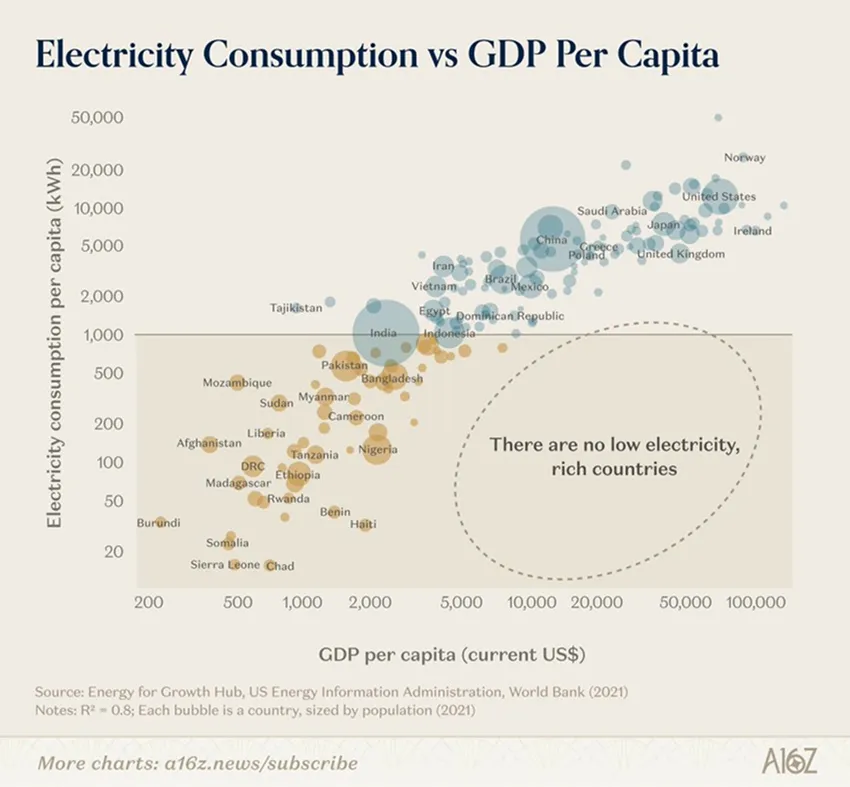
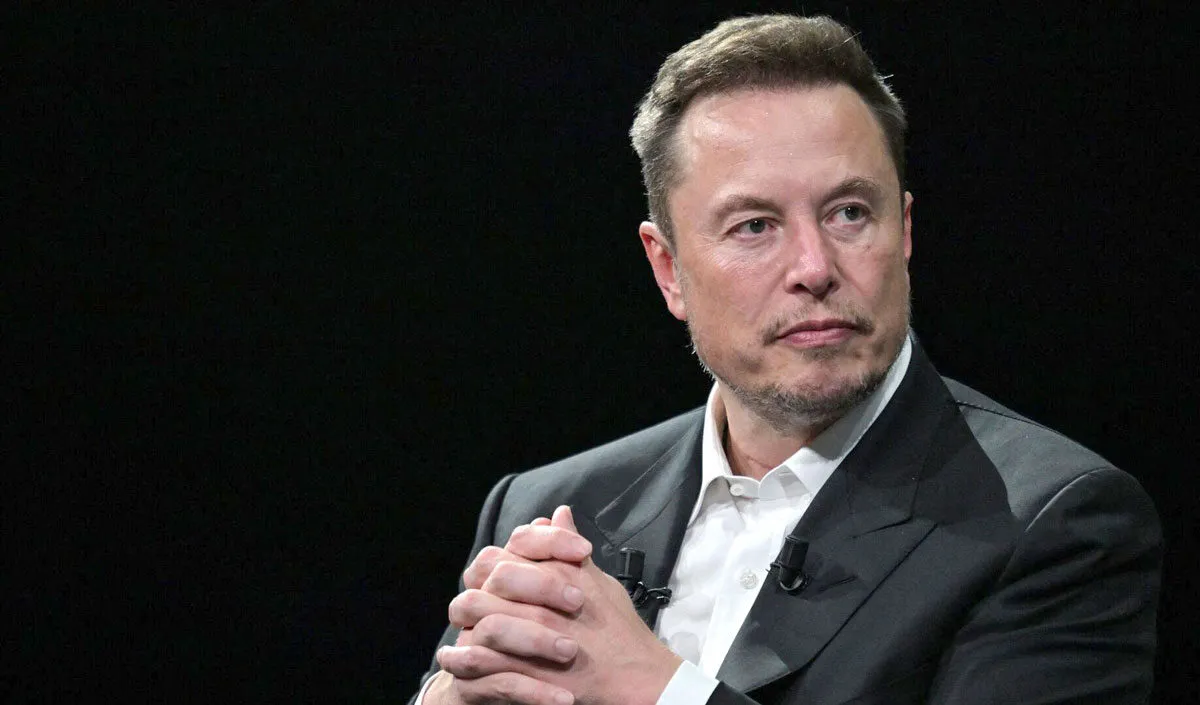
The entrepreneur set out his position on the social media platform X, commenting on a chart from the venture capital firm Andreessen Horowitz (a16z) which illustrates the link between per capita electricity consumption and per capita GDP.
Electricity and prosperity: what the statistics show
“Electricity generation is the best indicator of the true strength of any major economy,” wrote Musk.
The a16z chart compares per capita electricity consumption and per capita GDP based on 2021 data. According to the analysis presented, the coefficient of determination R² is approximately 0.8, indicating a strong statistical correlation between the indicators in the sample used.
The chart illustrates a general trend: high-income countries tend to consume more electricity per capita. The size of the circles in the chart reflects population size, allowing for the scale of national economies to be taken into account.
However, in the comments, many users point out that a statistical correlation does not imply a direct cause-and-effect relationship. High electricity consumption may accompany the development of industry, infrastructure and the service sector, but does not in itself guarantee growth in productivity or household incomes. Economic outcomes are also influenced by technology, the quality of institutions, the structure of production and the efficiency of resource use.
Energy capacity is becoming a constraint on AI
At the same time, the issue of energy is taking on added significance against the backdrop of the rapid development of artificial intelligence. Modern data centres require significant amounts of electricity, and the expansion of computing power depends not only on the availability of graphics processing units, but also on the ability to ensure their power supply.
This aspect was highlighted by former Intel CEO Pat Gelsinger in a conversation with representatives from a16z. In his view, over the past 10–15 years, the decommissioning of coal-fired power stations in the US has been largely offset by the introduction of renewable energy sources, meaning the country’s total energy capacity has remained virtually unchanged.
“In the age of AI and digital technology, energy capacity equals economic potential,” Gelsinger stated.
He also noted that the development of artificial intelligence infrastructure could face constraints due to a lack of accessible electricity. Building data centres and purchasing large quantities of GPUs becomes pointless if it is impossible to provide them with the necessary power.
Gelsinger cited nuclear power as one avenue for expanding energy supply, noting its ability to provide stable baseload generation. He also highlighted the dependence of renewable energy supply chains on China.
This story was translated with the assistance of artificial intelligence.The translation was also reviewed by the Logos Press editorial team.
Follow our updates
Have information for the newsroom? Share it with Logos-Press





















Comments
0No comments yet. You can start the conversation.
Comments are open to readers with a Logos Press account.
Sign in to comment