

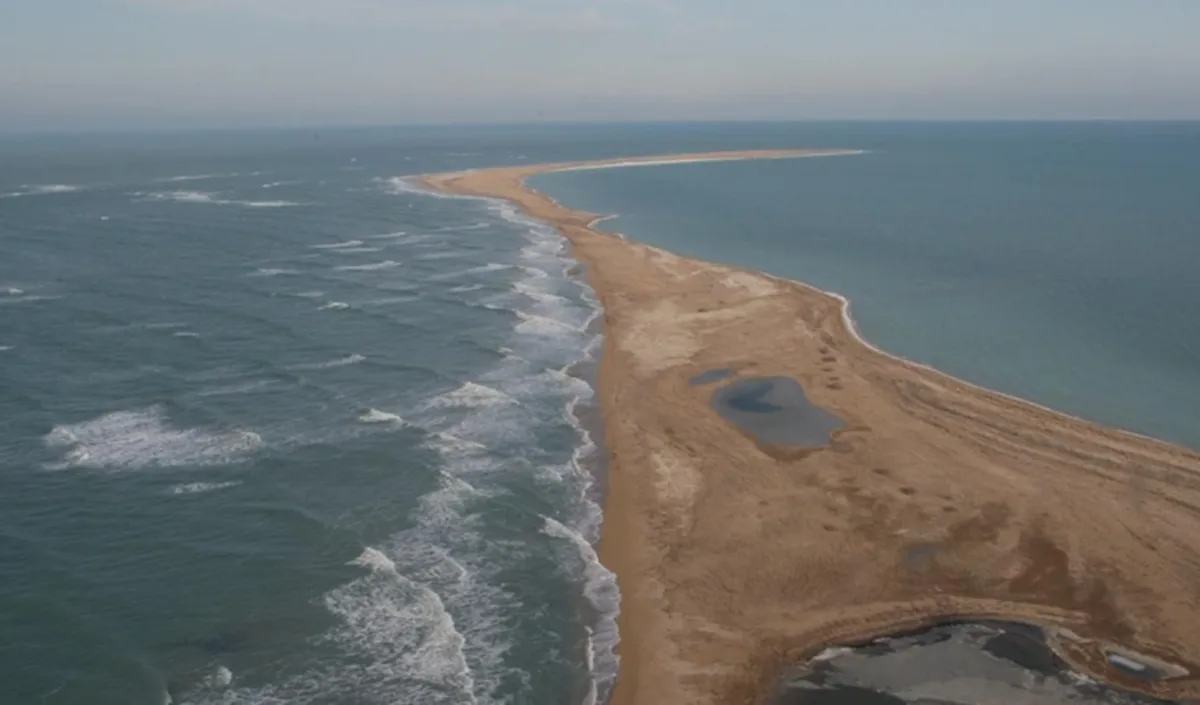
The decision was taken on 9 October at the first Caspian Environmental Summit in Turkmenistan. The shallowing of the Caspian Sea affects not only the ecosystem, but also port operations, transport routes, the investment attractiveness of coastal regions and employment.
The commission will begin its work in 2027
The summit took place in the Avaza National Tourist Zone and was chaired by the President of Turkmenistan, Serdar Berdimuhamedov. It was attended by the presidents of Azerbaijan, Iran, Kazakhstan and Russia — Ilham Aliyev, Masoud Pezeshkian, Kassym-Jomart Tokayev and Vladimir Putin.
Following the meeting, the parties signed a resolution providing for the establishment of a commission comprising deputy heads of government from Azerbaijan, Kazakhstan and Turkmenistan, as well as high-ranking representatives from Iran and Russia.
The commission is tasked with identifying the causes of the Caspian Sea’s falling water level and developing coordinated, comprehensive measures to counter the negative consequences of the sea’s shallowing. It is planned to form specialist working groups involving government bodies, experts and specialists from the five countries.
The governments are to appoint their representatives within three months. The commission’s first meeting will take place in Azerbaijan in the first half of 2027. It is expected that the rules of procedure will be approved at that meeting. Subsequent meetings will be held in turn in the countries of the Caspian region, according to the Azerbaijani news agency ARA.
The shallowing of the Caspian Sea threatens ports and investment
In their speeches, regional leaders also viewed the environmental problem as an economic challenge.
Azerbaijani President Ilham Aliyev stated that the area of the Caspian Sea has already shrunk by more than 20,000 square kilometres. According to him, a further drop in water levels affects coastal ecosystems and complicates the operation of ports and other infrastructure facilities.
“Preserving the Caspian’s unique ecosystem is a shared responsibility of all Caspian states,” Aliyev emphasised.
Russian President Vladimir Putin, for his part, highlighted the impact of the sea’s shallowing on the economies of the coastal regions. He linked the decline in sea levels to a reduction in investment attractiveness, job losses and a deterioration in the quality of life for the populations of the Caspian regions.
Kazakhstan’s President Kassym-Jomart Tokayev called for the pooling of international efforts to preserve the Caspian Sea and to establish a consolidated portfolio of the most promising projects. This was reported by Kazinform.
– These projects must cover both the marine area and the river basins that feed the Caspian Sea. We must restore water flow, river deltas and wetlands, and bring hydraulic structures up to standard. Grants, preferential loans and other channels of climate finance can and must play a supporting role in this work,” the agency quoted the President of Kazakhstan as saying.
International cooperation — the next stage
Turkmenistan advocates the development of cooperation among the Caspian states and collaboration with international partners, including within the framework of the UN. The protection of the marine environment and the sustainable use of natural resources are also highlighted as priorities on the regional agenda.
According to Turkmenportal, Turkmenistan is promoting the Caspian Environmental Initiative, which was presented in 2023 on the sidelines of the UN General Assembly.
The establishment of the commission brings the issue of sea-level decline into the framework of ongoing intergovernmental cooperation. However, specific measures to stabilise sea levels, the timelines for their implementation and sources of funding will form part of the tasks for further cooperation between the five countries.
For the Caspian states, the key outcome will be whether they succeed in transforming the agreed mechanism into joint monitoring, scientific assessment of the causes of the shallowing, and practical measures to protect the region’s ecosystem and economic infrastructure.
This story was translated with the assistance of artificial intelligence.The translation was also reviewed by the Logos Press editorial team.
Follow our updates
Have information for the newsroom? Share it with Logos-Press










Comments
0No comments yet. You can start the conversation.
Comments are open to readers with a Logos Press account.
Sign in to comment