



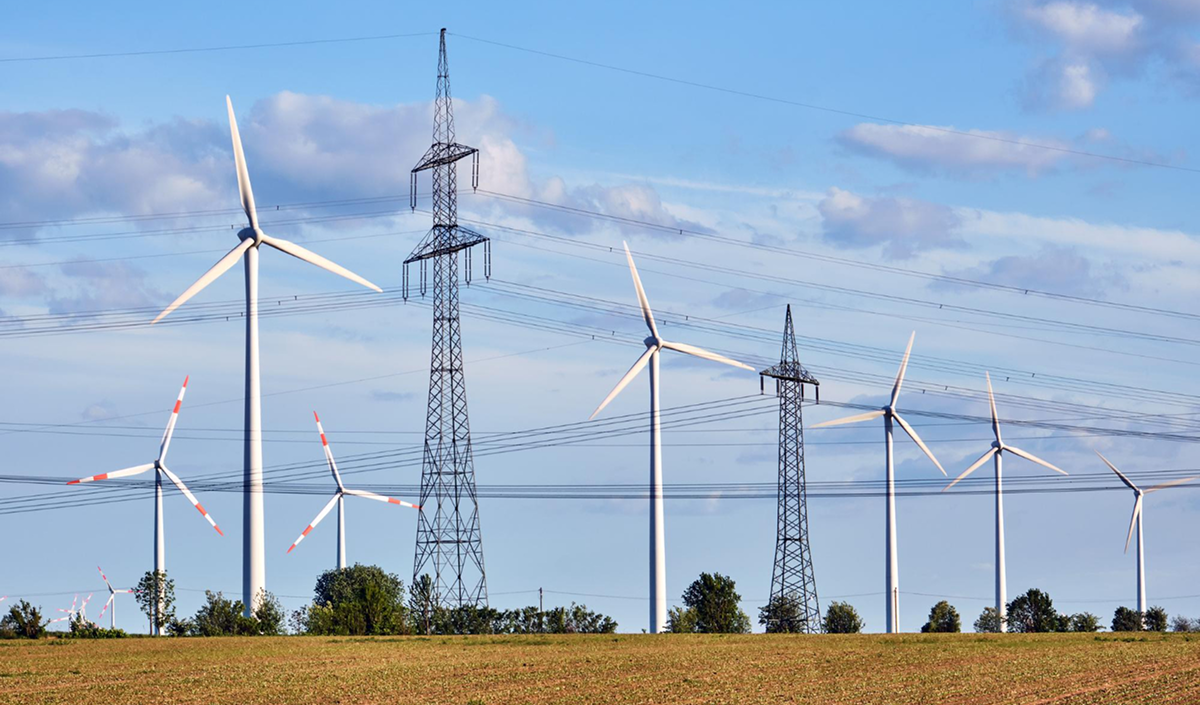
Within such communities, citizens, local authorities and businesses will be able to collaborate more easily, jointly producing, using, storing and managing energy, including from renewable sources.
Until now, although Moldovan legislation provides for the establishment of renewable energy communities and civic energy communities, there has been no legal form tailored to their specific characteristics. Four pilot projects, launched with UNDP support in Moldova in the settlements of Logenești, Coculia, Chișinău and Codru, were registered using existing legal forms, such as limited liability companies and public associations. Experience has shown that these forms do not fully reflect the specific characteristics of energy communities and the principles governing their operation.
This is a new legal form
Thanks to the new legal framework, communities will be able to be established as non-profit and apolitical associations with legal personality. Subsequently, in accordance with legislative provisions, they will be able to apply to the National Energy Regulatory Agency for recognition as a renewable energy community or a civic energy community.
Members of such communities may include individuals, local authorities, municipal enterprises, small and medium-sized enterprises, housing associations, state institutions and other eligible organisations. Membership will be voluntary and open, and decisions will be taken on the basis of the ‘one member, one vote’ principle, so that members retain control over the community’s activities.
At the same time, the legal framework will facilitate the transfer of real estate and energy infrastructure owned by local authorities to communities holding member status. To simplify the establishment process, the National Centre for Sustainable Energy (CNED) will draw up and publish a model constitution/articles of association, which interested individuals and legal entities may use.
The communities’ activities will focus on developing joint projects for the production and use of energy, including from renewable sources, as well as for its storage and management. The intended benefits will be economic, social or environmental in nature, both for the participants and for the community in which they operate; however, the distribution of profits amongst the participants will not be the primary objective.
Freedom of choice
The use of this new organisational and legal form will not be compulsory, and members will still be able to choose other forms provided for under sector-specific legislation. Furthermore, the establishment of such communities will not entail any additional taxes, duties or expenditure from the state budget. Sources of funding may include membership fees, income from their own activities, donations, grants and other lawful sources.
The creation of a tailored organisational and legal framework will pave the way for the expansion of pilot projects and the launch of new energy initiatives at local level. Through decentralised renewable energy generation, communities will be able to contribute to reducing energy costs and enhancing local resilience.
This story was translated with the assistance of artificial intelligence.The translation was also reviewed by the Logos Press editorial team.
Follow our updates
Have information for the newsroom? Share it with Logos-Press















Comments
0No comments yet. You can start the conversation.
Comments are open to readers with a Logos Press account.
Sign in to comment