In his speech at the summit itself, Russian President Vladimir Putin called for the UN Security Council to be expanded to include countries from Asia, Africa and Latin America, notes The Insider.
The publication states that, in Putin’s view, within the UN, leading Western countries are making efforts to contain their growing geopolitical rivals. This leads to disruptions in the functioning of the international system and reduces the effectiveness of multilateral structures.
Putin added that Moscow “attaches the utmost importance” to preserving the UN’s central role in world affairs, The Insider reports.
Not just the UN
Meanwhile, the finance ministers and central bank governors of the BRICS member states have called for reforms to the International Monetary Fund (IMF), the World Bank and other international financial institutions, in order to increase the influence of developing and emerging economies on decision-making.
At the same time, the bloc’s member states intend to accelerate work on cross-border payments and the expansion of settlements in national currencies, reports Reuters.
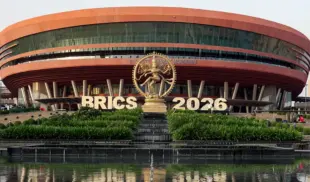
A statement to this effect by the BRICS finance ministers was adopted in Mumbai on the eve of the bloc’s leaders’ summit in New Delhi. The document states that the growing share of developing and emerging economies in global production and economic growth necessitates reform of the global economic governance system.
As Reuters notes, the BRICS countries intend to press for international financial institutions to become more representative, transparent and accountable. Above all, this involves giving greater weight to the economic clout of developing countries when shaping the governance mechanisms of these organisations.
A focus on national currencies
Another key area of focus has been the development of the bloc’s own financial infrastructure.
The finance ministers of the BRICS countries have backed further work by a special payments group on the interoperability of national payment and information systems. The aim is to create practical mechanisms for cross-border payments that would be faster, cheaper, more accessible, more transparent and more secure, Reuters explains.
The countries are also discussing the use of national currencies for trade settlements and investments. However, the wording of the document remains fairly cautious: the focus is on voluntary cooperation and taking national priorities into account, rather than on creating a single BRICS currency or formally abandoning the dollar.
Particular attention is paid to the development of the New Development Bank (NDB). The countries have supported expanding its capacity to mobilise resources, diversify funding sources and increase lending in national currencies. The bank is seen as a tool for financing infrastructure and other projects in the Global South.
Unilateral trade restrictions are hampering trade
BRICS finance ministers also expressed concern over unilateral trade and financial measures, including tariff increases and non-tariff barriers.
In their view, such measures distort international trade and are inconsistent with World Trade Organisation rules. This position takes on particular significance against the backdrop of intensifying trade conflicts and growing uncertainty for the global economy.
It is worth recalling that, in its current composition, BRICS comprises 11 countries, and its economic agenda is broadening: from the reform of international financial institutions and payment infrastructure to the use of artificial intelligence and the development of trade.
For the global financial system, the most significant aspect of the current BRICS agenda appears to be the combination of two processes: calls to increase the representation of developing countries in existing institutions and the parallel creation of their own mechanisms for financial cooperation. Experts note that how far these initiatives can progress will depend on the ability of the BRICS countries to coordinate their positions and turn political statements into a functioning infrastructure.
Follow our updates
Have information for the newsroom? Share it with Logos-Press