World markets
Global brands are urgently reducing their presence in the Middle East amid a sharp escalation of the conflict between Iran, Israel and the US. Major retailers and luxury houses are temporarily closing stores or transferring them to a limited mode of operation in the Gulf countries in an effort to minimize risks for employees and business.

Turkey has been making intensive efforts through its peace-oriented diplomacy “to achieve just and equitable solutions to problems through dialogue and negotiations” against the backdrop of the war in Iran.

There is a poorly concealed irritation in the Trump administration amid depleting air defense missiles and negative public sentiment about war with Iran.

Rapidly growing in recent years, real estate markets in the Middle East have come under pressure from the military conflict. Although the destruction in the Gulf countries is minimal, the “echo of war” is already affecting the business activity of investors, according to Logos Press.

E-commerce giant Amazon has closed its fulfillment center in Abu Dhabi, suspended deliveries across the region and instructed its employees in Saudi Arabia and Jordan to stay home.

European financial markets are under strain as the U.S. and Israeli war against Iran renews fears that an energy shock could exacerbate inflation. The region is almost entirely dependent on oil and gas imports. The price of Brent crude has risen nearly 10% since Friday, while natural gas prices in Europe have jumped 50%.
Moldova has initiated procedures to establish diplomatic relations with Nauru, one of the smallest states in the world, smaller than only the Vatican and Monaco.

Since World War II, between 40,000 and 60,000 tons of chemical weapons have fallen to the bottom of the Baltic Sea. Conventional weapons, such as landmines, account for hundreds of thousands of tons more. Both weapons are toxic, but their disposal can be difficult under international law.

China’s official business activity index (PMI) for the manufacturing sector remained below the 50 mark for the second consecutive month, indicating a continued contraction in output amid weak domestic demand and low investment.

Exchange prices for gas in Europe on Monday afternoon sharply accelerated growth – up to 32%, exceeding $515 per thousand cubic meters. The main reason – the world’s largest gas supplier, Qatar’s state-owned energy company QatarEnergy announced that it would stop producing liquefied natural gas (LNG) at all of its facilities due to drone attacks on its facilities.

This year, the state budget envisages 56.4 million lei for the payment of Moldova’s membership fees to international organizations. This is by 2.4 million lei (4.4 percent) more than the approved amount for 2025 and by 5.4 million lei (10.7 percent) more than the actual expenditures of the previous year.
The sharp increase in geopolitical tension in the world after the start of the Israeli and US military operation against Iran affected a noticeable jump in quotations of oil and gold mining companies on the Moscow Exchange.

In 2025, Christie’s confidently crossed the $1 billion mark in luxury sales (excluding private transactions), demonstrating one of the most dynamic periods in recent years. The key driver of growth was young collectors, as well as the notable strengthening of digital sales channels.

China has taken an important step in regulating its fast-growing humanoid robotics industry by promulgating the first national system of standards. They cover the entire production chain and life cycle of humanoid robots and embodied artificial intelligence (AI).

The updated BYD Denza Z9 GT has set a new bar in the electric car segment, claiming a record CLTC range of up to 1,036 kilometers. The manufacturer emphasizes that this is one of the highest figures among mass-produced electric cars on the Chinese market. The model is equipped with a proprietary Blade battery with a capacity of 122.496 kWh, which provides such an impressive result.

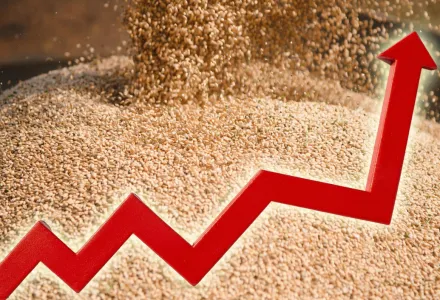
In the short term, the growth of exchange quotations for wheat will continue. Grain prices are always tightly linked to oil prices and the US dollar exchange rate. Attacks on Iran have already been converted by rising oil prices and strengthening of the dollar. In this nexus, a rise in the prices of fast traded agri-food commodities is inevitable.
Bitcoin pulled back to $66,700 as traditional markets opened with the first opportunity to react to the weekend’s military escalation, with oil soaring to $77 and Asian stocks falling 1.4 percent.

Oil futures rose sharply by more than 8% in early trading on Monday, reaching a multi-month high. In the first trading after the attacks on Iran, Brent crude, the international benchmark, rose 13% to reach $82.37 a barrel. However, it later corrected slightly and rose another 7% in London.

Financial markets in the UAE have temporarily suspended operations amid a sharp aggravation of the situation in the region. The decision was taken to protect investors and stabilize the financial system.

In issuing warnings about the “disappearance of Western civilization,” U.S. President Donald Trump and Vice President J.D. Vance often invoke the United Kingdom, and especially London, to substantiate their views.