News about EU
With financial support from the European Union, new social services for children with severe disabilities will be introduced in Moldova.

One in two Moldovan high school graduates is considering studying abroad. Against this backdrop, competition among countries for international students is growing, as is the demand for consulting services regarding admission to foreign universities. Petru Descalescu, director of the “Excel” Information and Education Center, discussed how the preferences of Moldovan high school graduates are changing, which fields of study are most popular in 2026, and what obstacles applicants face.

A few days before the NATO summit in Ankara, the German chancellor and the leaders of the Baltic states agreed in Berlin to strengthen deterrence against Russia, increase defense spending, and expand aid to Ukraine.

Former Romanian Prime Minister Victor Ponta compared the political scandal that led to the resignation of Moldovan Prime Minister Alexandru Munteanu to the situation in Romania, stating that, unlike in Chisinau, in Bucharest, politicians implicated in scandals do not take any responsibility.

Kyiv and Berlin have established a working group to facilitate the return of Ukrainians of draft age who have left the country illegally. The mechanisms are already being discussed officially, but the details have not yet been disclosed.

On Friday, Ukraine and Moldova cleared another hurdle on their path to joining the European Union. EU member states unanimously agreed to open another cluster of accession negotiations with Ukraine and Moldova—on external relations. An official ceremony is expected on July 14.

The Republic of Moldova presented its achievements, current environmental challenges, and ways to improve regional cooperation on environmental protection at the second EU4Green Recovery East regional meeting in Paris.

European Central Bank (ECB) President Christine Lagarde has not ruled out the possibility of stepping down early to participate in France’s political process. At the same time, the ECB president ruled out running for office herself or endorsing another candidate.

The government will review the issue of adjusting the minimum wage in consultation with employers’ associations and labor unions at least once a year.

Moldova ranked 5th in the National Cybersecurity Index (NCSI)—a global ranking compiled by the Estonian e-Governance Academy—surpassing countries with long-standing traditions in cybersecurity and IT security, such as the United States, France, and Germany.

Ukraine is tightening controls over its organic food market. The country’s parliament recently passed a new law on state regulation of organic production, distribution, and labeling of organic products.

Turkey has submitted an official application to the European Payments Council (EPC) expressing its intention to join the Single Euro Payments Area (SEPA). The document emphasizes that Ankara’s participation in this area will enable faster, safer, and cheaper cross-border transfers, which will give a powerful boost to mutual trade and investment with European Union countries.

European airlines and airports have called on the European Commission to allow EU countries to temporarily suspend the digital Entry/Exit System (EES) in July and August. The industry warns that the new checks have already led to hours-long lines, flight delays, and the risk of disruptions in the midst of the peak vacation season.

Europe is the fastest-warming continent on the planet: its climate is changing at roughly twice the global average rate. As temperatures continue to rise, a key question arises: Is Europe prepared for a hotter future?

The Ministry of Labor and Social Protection is discussing a bill with social partners that would, for the first time, establish a legal framework in Moldova for work through digital platforms. The bill is intended to define the status of workers in the platform economy—delivery couriers, online service drivers, digital service providers, and other professionals working through mobile apps and online platforms—and to strengthen the protection of their labor rights.

The constitutional reform initiated by Hungary’s new government has reignited the debate over the rule of law in the European Union. Although the current government is presenting the changes as part of democratic reforms following the Viktor Orbán era, the process of adopting them has already drawn criticism from human rights organizations and attracted the attention of European institutions.

This week, the heads of the Ministry of Agriculture, Food, and Industry (MAIA) and the ANSA agency made a working visit to Brussels (Kingdom of Belgium). The visit’s itinerary included a series of high-level meetings with representatives of the European Commission.

The Volkswagen crisis is no longer just a problem for a single automaker. Large-scale layoffs and the possible closure of plants in Germany are becoming one of the most visible signs of the structural decline of European industry, which is rapidly losing ground to its Chinese competitors.

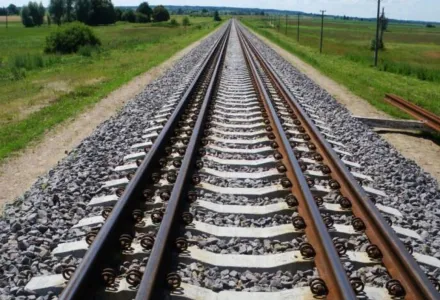
The European Commission is urging Ukraine to accelerate the expansion of the European rail network in the country. The new transport link is intended to provide a direct connection to the EU’s transport system. Officials in Brussels note that such steps will facilitate integration into the Trans-European Transport Network (TEN-T) and aid in the country’s post-war reconstruction. This was reported by the Odessa Journal website.
Google lost its appeal against a record EU antitrust fine of $4.7 billion, a case that had been ongoing since 2015. The European Court of Justice upheld the fine imposed on Google of approximately 4.1 billion euros ($4.67 billion) for alleged anti-competitive practices.